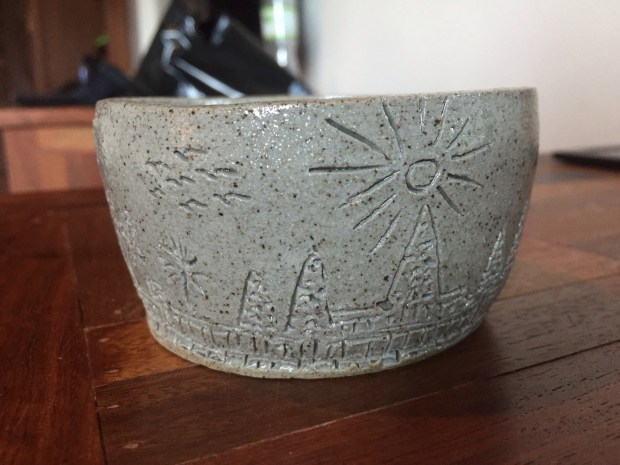
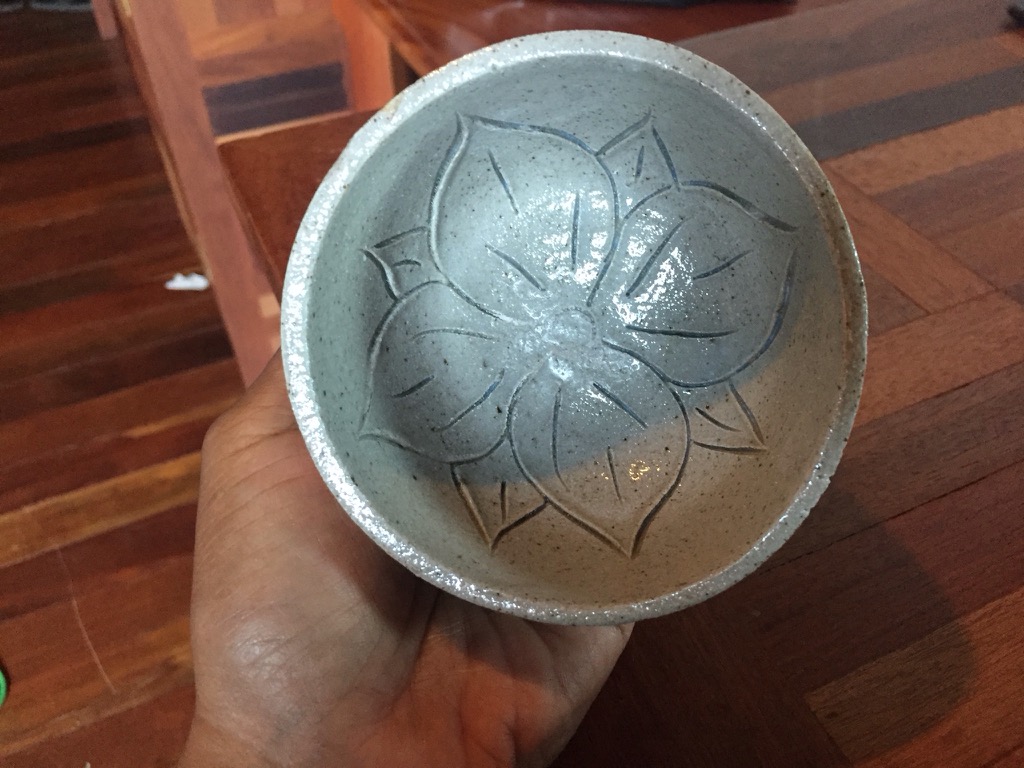
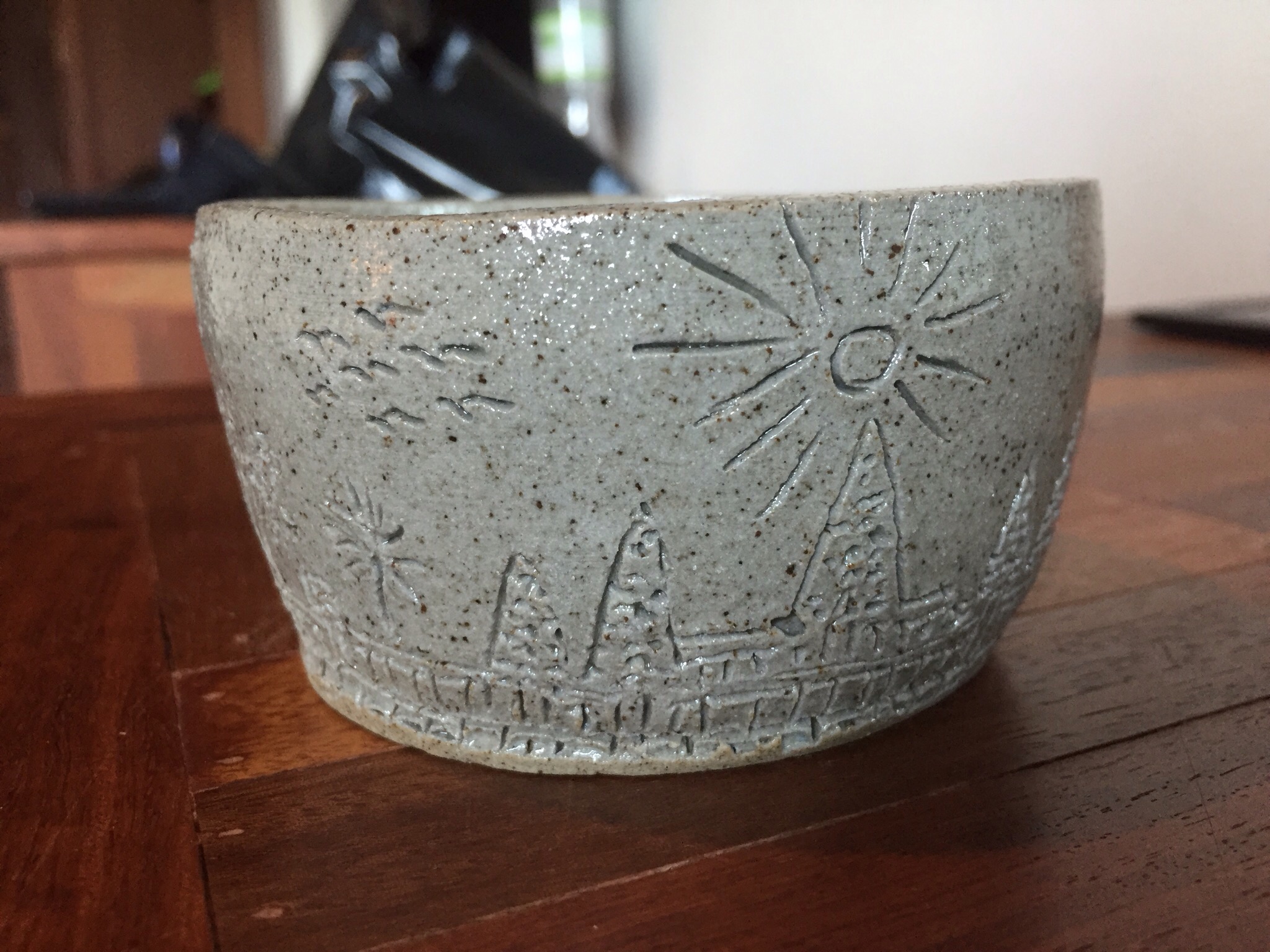
How to start with the last few wonderful days? Muddy, sweaty, tired, and exhilarating. We took a day off after templing and took a pottery class at the Khmer Ceramics center, learning from Deaf instructors who are hired there, and finishing up with passable pieces of ceramic work to take home with us. All of the art decoration Eric and I totally did by ourselves and did NOT have ANY help from the talented artists there. Nope, none at all.

The next day, we had booked a tour with Grasshopper tours, where we would bike through the countryside around Siem Reap in the morning and then kayak in Lake Tonle Sap in the afternoon, through a mangrove forest and then around a floating village. Grasshopper also asked us if we would come with them the next day for filming some promotional material! Of course, we signed up. I’ll write a bit about that day in thenext post.
We met our wonderful guide, Hang, who had grown up in a village on the outskirts of Phnom Penh with his seven brothers and sisters. We started by riding out through the city of Siem Reap. For the kids I found this a bit harrowing especially when the girl got a bit too friendly to a turning motorbike driver, who was trying to get through the intersection quickly to avoid the nearby policeman from noticing she wasn’t wearing a helmet.
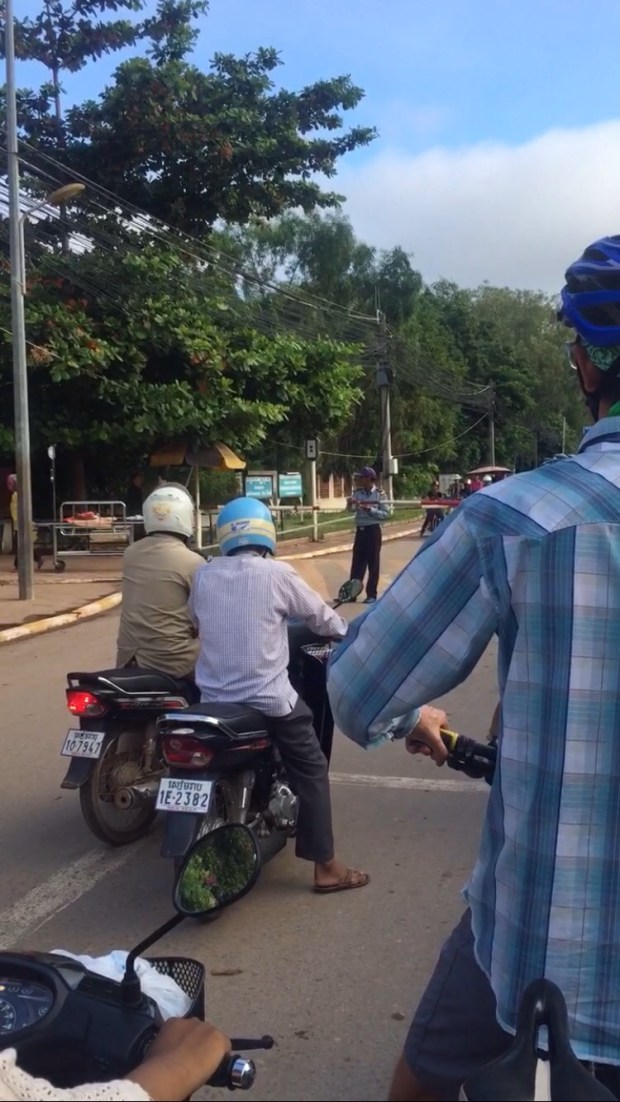
Stopped on the road near the children’s hospital for a baby to be transferred from one ward to another, IV pole hanging
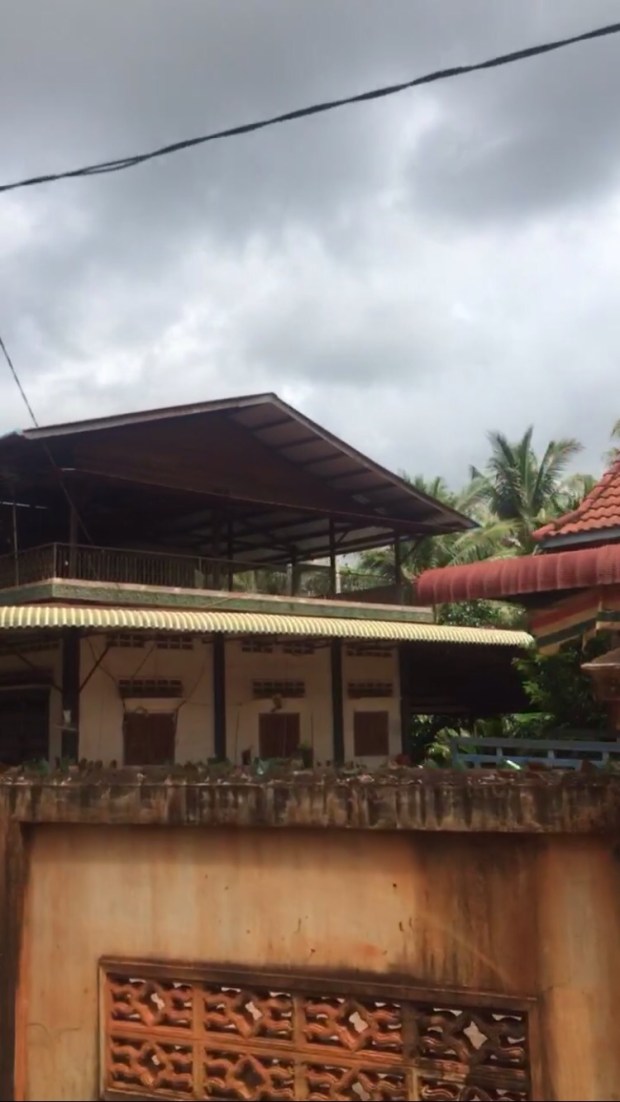
Once we were out of the city the riding became much more relaxed. As we went along the dirt back roads, the houses changed in character from clearly suburban ranch style homes to more rural homes in villages, largely placed upon stilts. Even these houses, though, I was surprised to see looked relatively large from what I was expecting. We later learned that the people who owned these houses were considered relatively wealthy by village standards, and that most of them had saved and then spent to buy the house, and inside would be sparsely decorated.

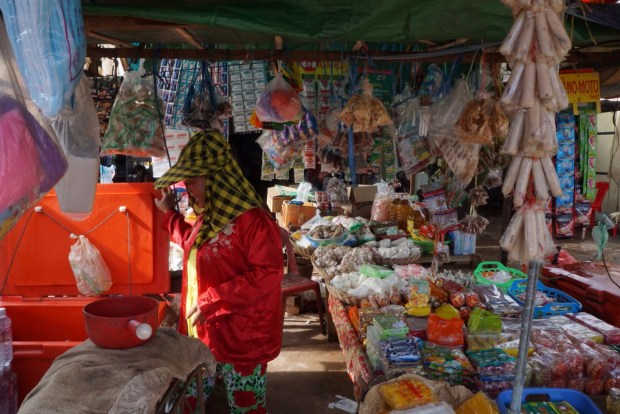
We stopped at a local market and tried some delicious street food! When I was younger, I would eat all of that stuff and not think twice, but I’m a little more cautious now since I really don’t want to get sick so it was nice to have a guide to help us eat stuff that was “safe” to eat. I’m getting soft in my old age. We had steamed rice cakes, puffed bread, and my favorite, battered deep fried bananas. YUM.

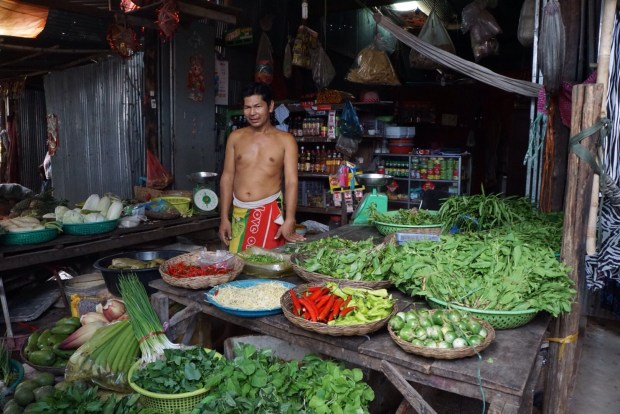
We turned the corner of the market and jumped as the fish sellers had tubs of fish STILL MOVING for sale as they slowly asphyxiated. You’d pick your fish or meat, the sellers would crack it open on a handy slab of rock and prepare the fish for you, while the flies had first dibs. Mmmm, fish with a side of maggots. The kids were a bit squeamish about this all, and scurried through the fish and meat stalls without stopping much.

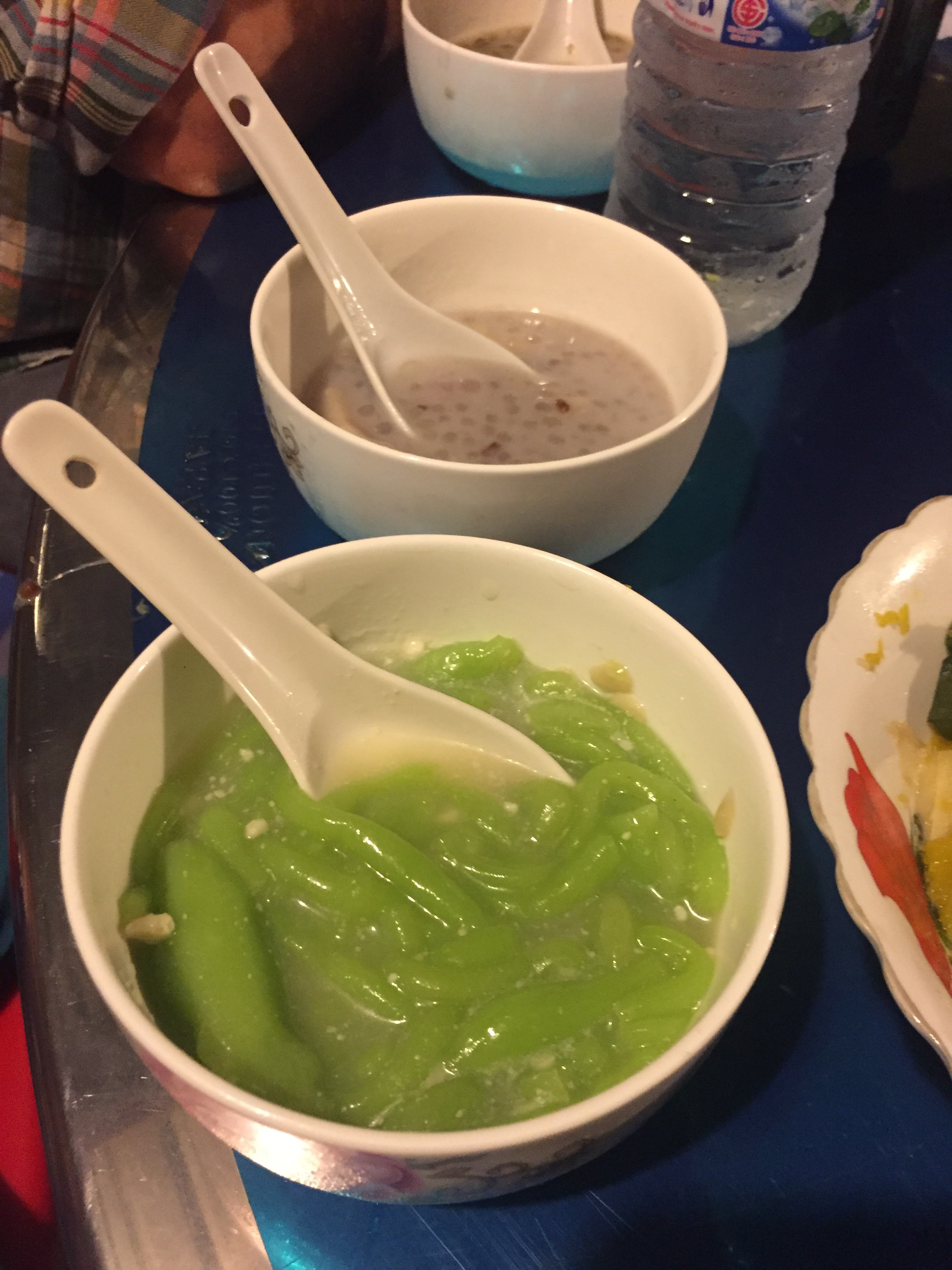
Onward to our next rest stop, a roadside stand to eat cambodian fish noodle curry, Num banh chok, which was incredible. The flavors were so fresh and unlike anything I’d had in a restaurant so far.

the boy chows down on cold noodle salad

stopping at the side of the road for a snack of sticky rice and beans, grilled in bamboo
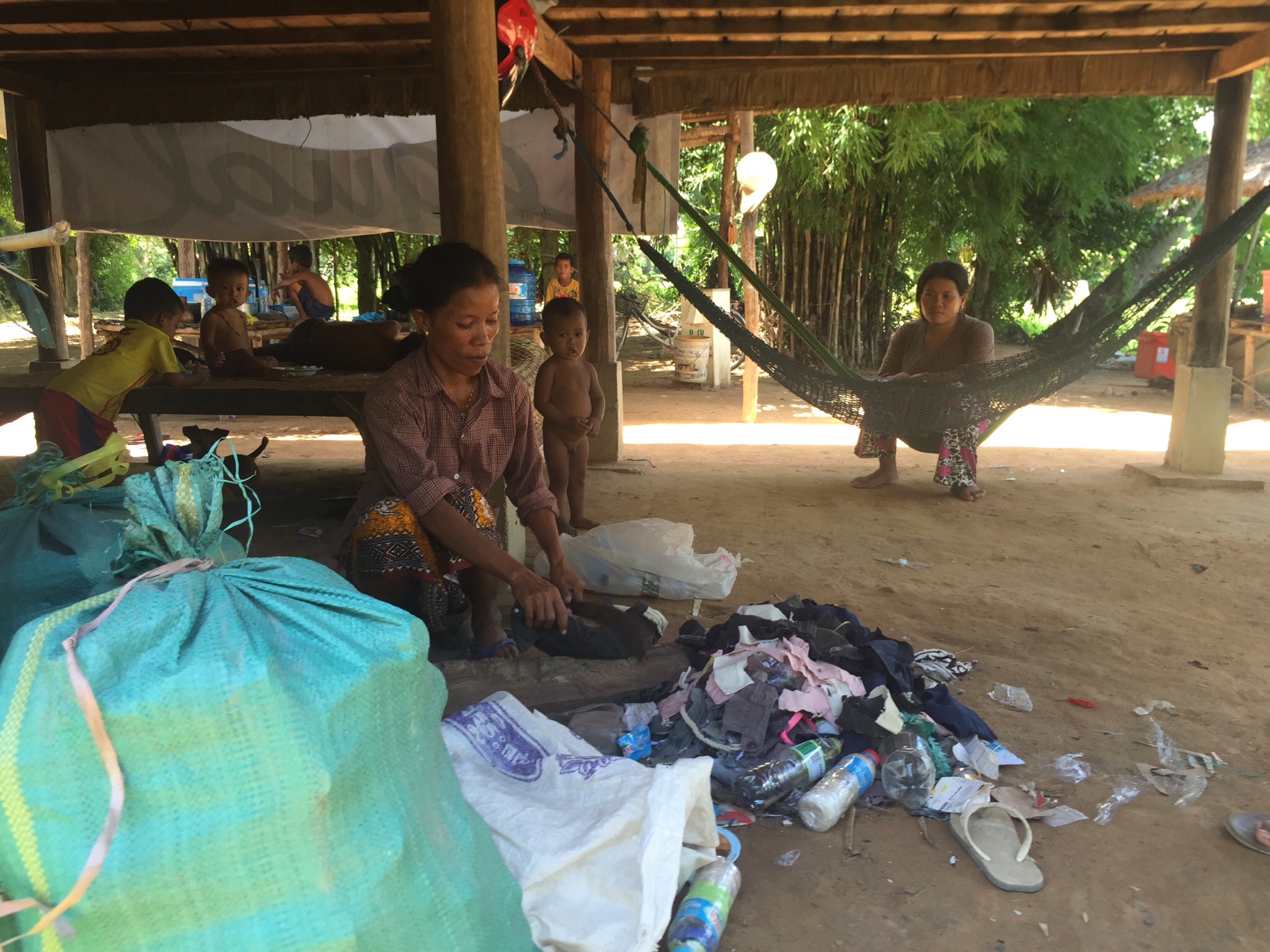
We finished our 30 km bike ride at a raised house, where we were met by Lee, a young man who works for an NGO called Husk. Husk has a setup in Cambodian villages where they try to create sustainable patterns in poverty level one and two citizens (earning < $2.50/day) to break the cycle. As part of this, they have created a school in Cambodia for supplemental English education for local kids. To be accepted at the school, the kids must attend public school full time as well. For many local villagers, this is unrealistic because they need the kids to be out making money, especially during tourist season when they can send the kids out to beg or sell postcards and trinkets. For this reason, they strongly encourage against buying from children – if tourists keep buying from kids, it perpetuates the cycle of poverty as they will be sent out to beg instead of kept home from school. This isn’t a perfect solution, as then the families may not have enough money to survive. To support vulnerable families they have a few options. One is that the Husk building cores are made of plastic bottles stuffed full of fabric and other plastic bags. These are put into a chicken wire core and cemented over to make walls. They pay or trade for these bottles, and on our walk around the village we saw women hacking fabric into strips with a machete and stuffing them into plastic bottles. (There’s lots of kids around as they’re on break right now, not just not going to school.)
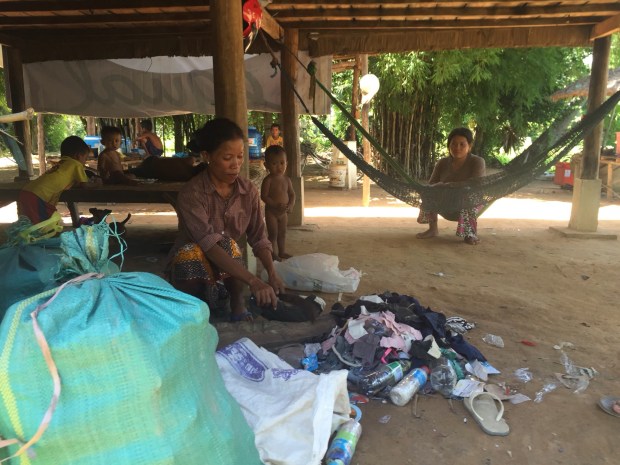
There’s also a seamstress shop where they make toys and other soft items to sell to raise money. Husk chooses it’s villages carefully, avoiding those that have corrupt chiefs who would only line their own pockets with cash and aid. They also are trying to create a second generation of leaders – we met young women from the village who could not speak any English a few years ago, and were now teachers at the school! They also teach environmental stewardship, encouraging the use of trash bins instead of litter. The work they are doing there is truly fantastic, and we’ve all committed to helping out more as we can.

The super friendly ladies of the sewing workshop. With the help of the guide to translate, we shared a lot of laughter with them!
After this, it was a ride and then a boat trip to kayaking! There are a few floating village communities on Tonle Sap Lake, the most famous of which has now become a tourist zoo, according to what I’ve read. Where we went was nothing like that, and other than one or two occasional tourist boats speeding through, we saw little of it. We started with a kayak tour through a mangrove forest, where our guide kept scooping his hand through the water to catch large water snails which he planned to fry up for his dinner! He offered a few to us, but being the generous souls we are, we did not want to take any of his snails and declined.

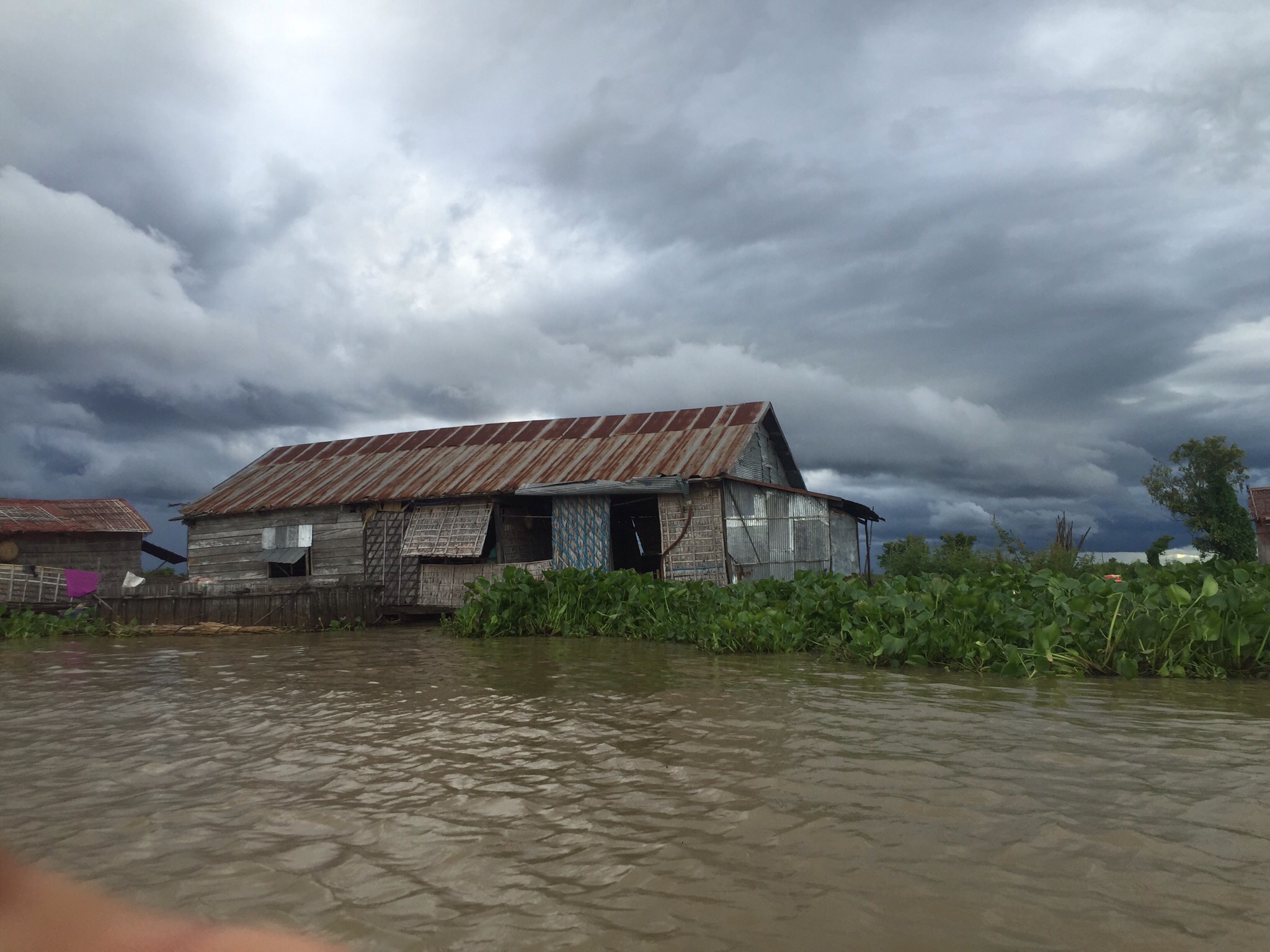
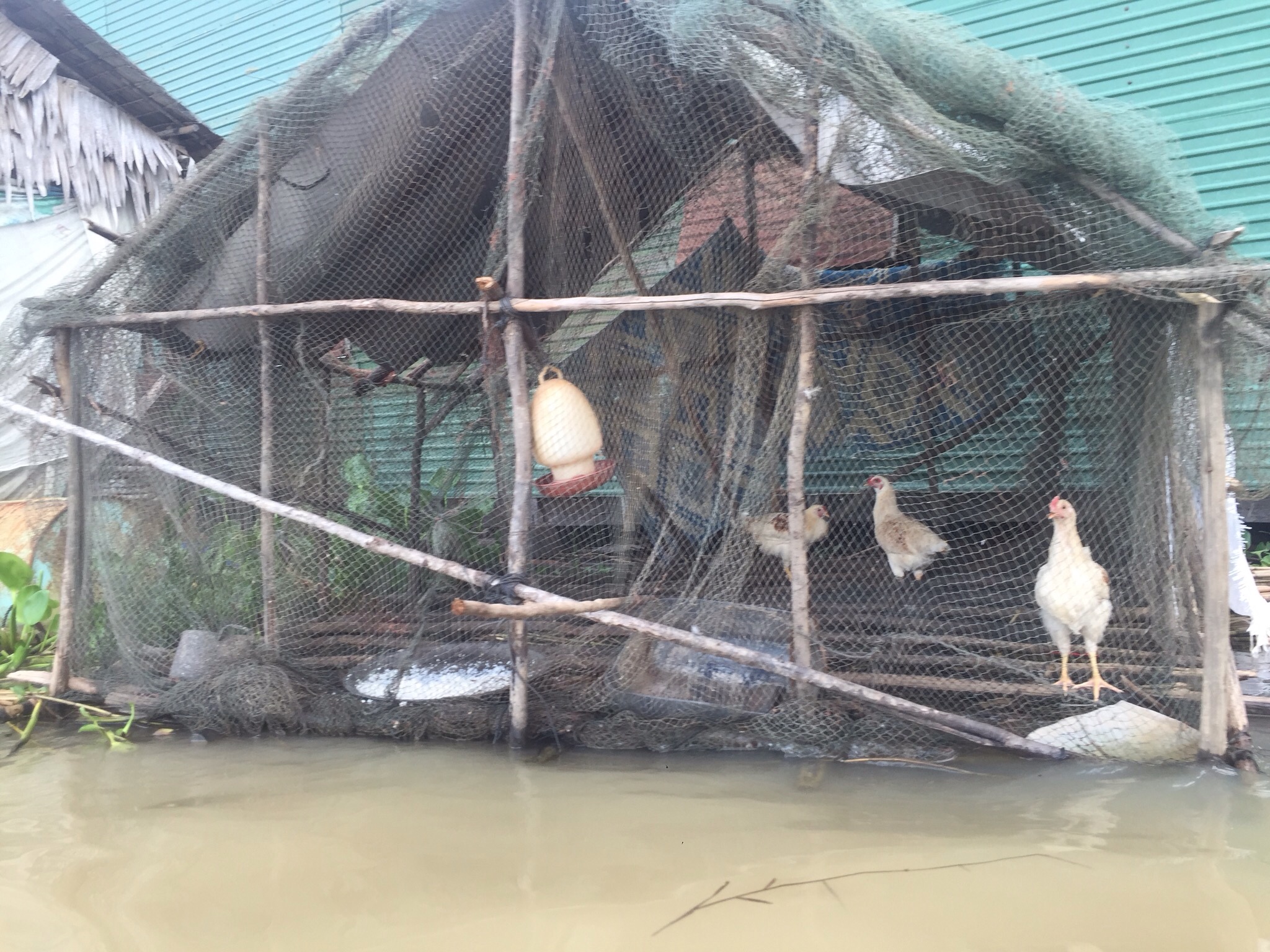
We came back to paddle through the floating village, and it’s not extreme to say that the village absolutely blew my mind. The houses are suspended on bamboo rafts, and move according to the water levels in the lake which varies greatly by season. People have everything on rafts – there are small restaurants, convenience stores, even chickens & pigs living on the water!


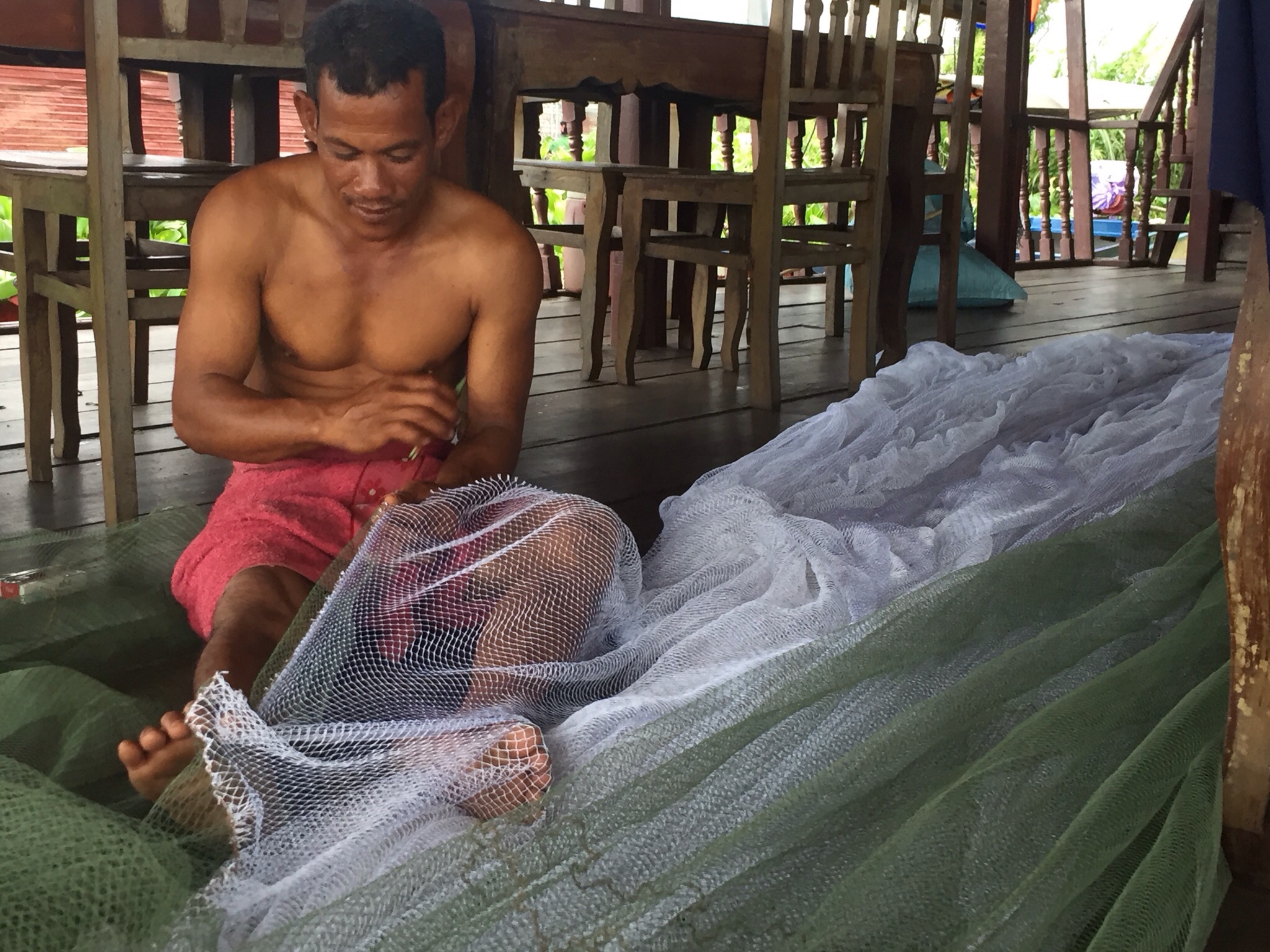
mending fishing nets
We passed by a fixed building which was a school. As the season gets wetter, the houses move farther away from them and kids may have to paddle their boats for 2 km to get to school every morning. It was something that none of us could really imagine, living out on the water, rarely touching solid land. Weddings happen in the houses by moving a house or two and a restaurant together to have enough room for a party. It’s something I’m still thinking about, in that the way of life was something almost unimaginable for me before. I mean, the small villages with farms and chickens and naked children running about…I expected that and have a vague notion of what that life looks like, even before we got a closer view today. But never have I seen anything like the people who live their life on the water, rowing from home to home or village to village, waiting for the rains to come to know when it’s time to tow the houses to a different spot.
A note about poverty tourism: the phenomenon of (usually) Western tourists paying to see people living in poverty is a controversial one and raises the question of exploitation. Do we go into the villages as a form of entertainment and something to discuss while we have an expensive meal back in the city? I don’t know that I would call it entertainment, but for us it was deeply illuminating, even for what we thought we knew. I think that you can come to places like Cambodia and see the temples and the museum and leave, eat in the tourist district, stay in very comfortable hotels, and not get a sense of how many people live here. I think it’s actually important to visit places like the villages, and it was important to me that my children see homes and lives in the world that look nothing like ours. As much as possible, before taking a picture of someone I would ask if it was okay, by indicating with my camera, and almost everyone was happy to be in a picture. I also asked our tour guides if it would be okay to take pictures, and since they clearly knew the people in the villages I figured it would be okay. Nearly everyone we met or swam by in the villages we would exchange a friendly “hello” and namaskar, and if we had questions they could be relayed through our guide. They also get money by charging entrance fees at the boat docks which are shared among the residents, and so your tourism does help to support the community here. I always wonder what would it be like if I was gardening in my front yard and a busload of tourists drove up, decamped, snapped pictures and then left. For many reasons, we avoid tours like this, and this is the main one.
Grasshopper tours employs Cambodian cycle guides who love their country and want to share it with you on a small scale level, which is a very different feeling. So, no I don’t feel bad about this. I think we’re all better off seeing more of the world and how people live in it, and also doing our best to do it responsibly and in a way that treats them as people and not objects.
-s








 fretzes on the loose