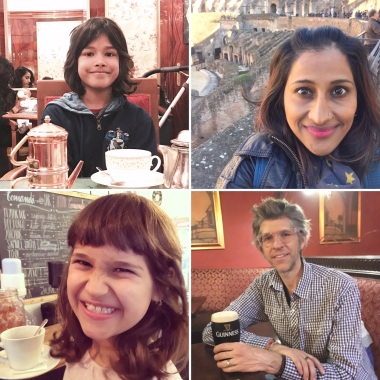
In which I get felt up by a python and have a day I’d rather forget in Saigon.

We loved Ho Chi Minh City, or as the locals still call it, Saigon. . As before, I’m glad when we decide to spend more time in one place instead of bouncing around every few days. We came in on a Friday and had a flight to Tokyo the following Friday. On Tuesday, though, we went near a bookshop and they had all sorts of Totoro merchandise. As we were excitedly looking through it, a little spark went off in the back of my brain. “Self,” I thought to myself, ” do you vaguely remember how you moved your plane tickets to Tokyo back by a few days because of when you’re going to the Totoro/Studio Ghibli museum?” And I replied “Why, yes, now that you mention it I do remember something of the sort. But I wouldn’t have completely forgotten when I’d booked a plane ticket by two days, would I?” At which point I retorted “Have you met yourself? You’re the same person who once spent an hour looking for eyeglasses SHE WAS WEARING AT THE TIME.” Oh yeah. See? This is why I like talking to myself. Endless support!
A call to Japan Airlines confirmed that we were indeed booked on the flight the next day and not Friday. I had a small panic attack over this, and needed to call two overseas JAL offices to figure out a solution. Thank goodness for internet calling capability. Out of sheer luck, we were able to move the ticket to Thursday at no additional cost and change our Air BnB reservation as well, but man, those were some anxious hours. 
We awoke on Wednesday to take a boat tour of the Mekong Delta. I’ll say here that this wasn’t really my cup of tea. I’ve written before about how I dislike bus tours where you walk through areas like you’re in a human zoo, and this was sort of the same but on a boat. It was a small tour and the reviews were excellent, so we thought we were in for a treat, but we weren’t impresed. The kids felt the same way, especially after some of the really small scale experiences we’ve had. Still, there were some interesting tidbits to be had and some great pictures that I’ll share here. 
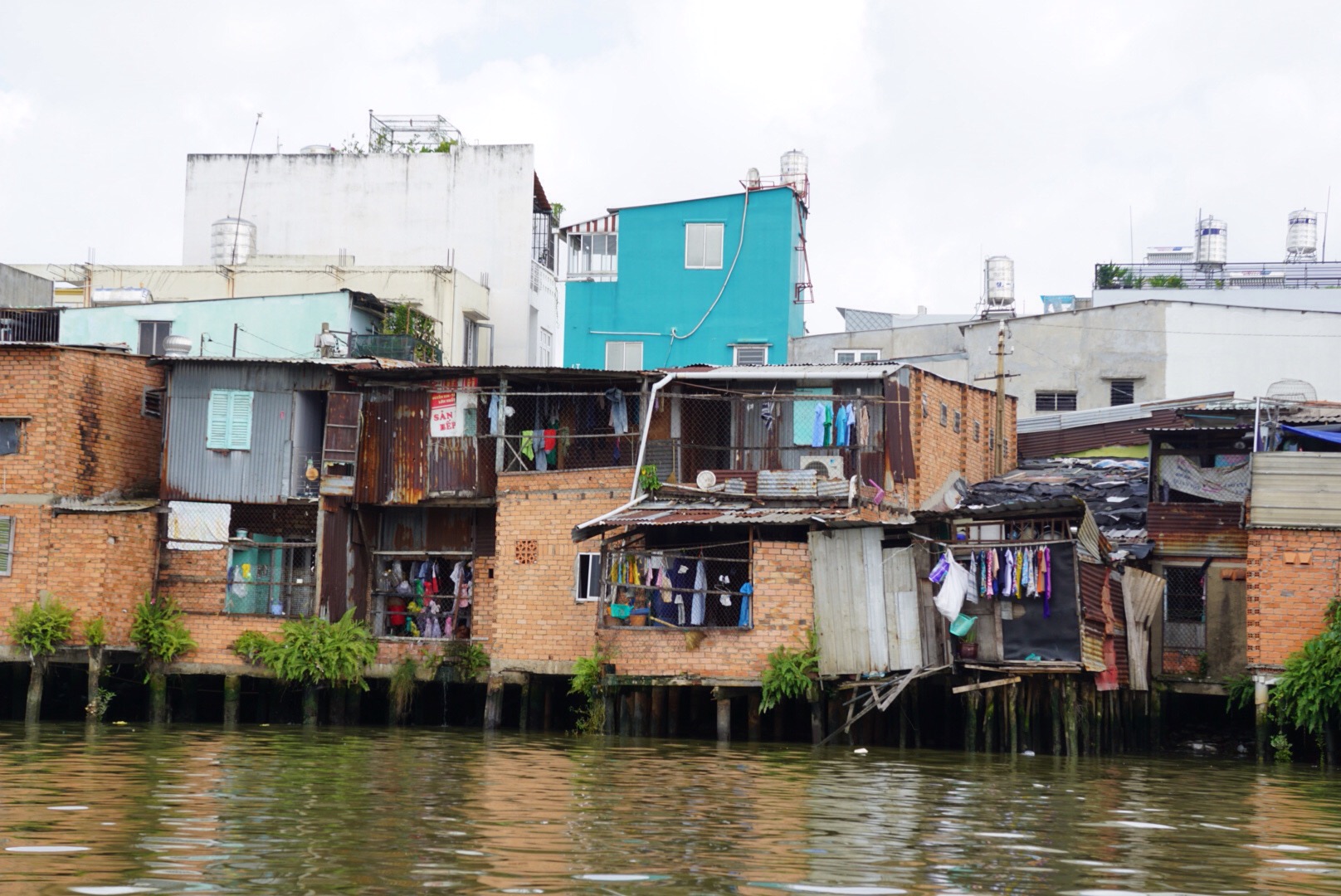
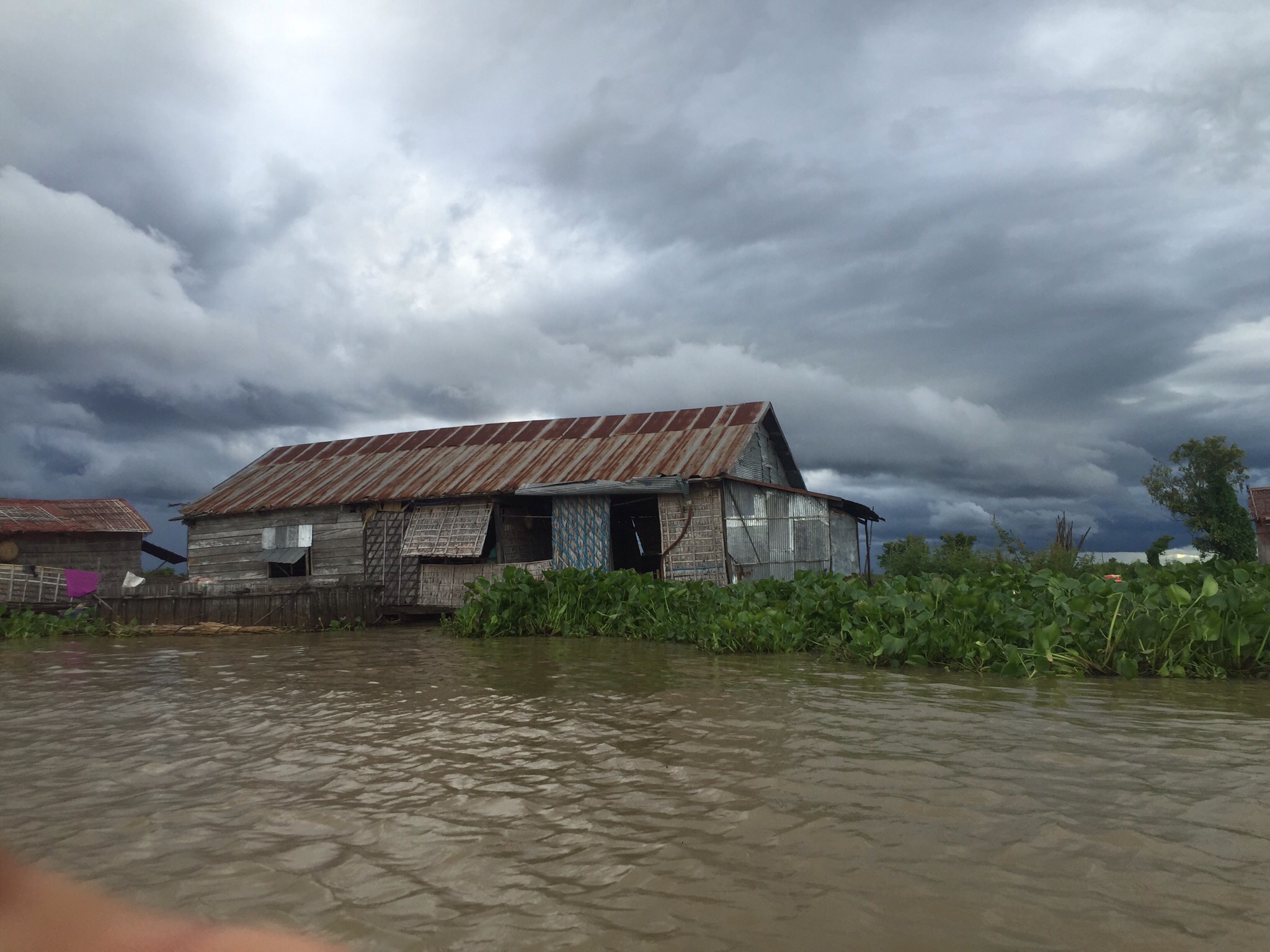
We started off by heading through the slums of Saigon. Remember how I talked about not wanting to be those people heading through the slums in a bus, disembarking and taking pictures? Well, we became those people in a boat. Sigh. These houses border the river around Saigon. Our guide told us that the government is trying to move them but doesn’t really provide enough for them to afford even a small apartment on the city outskirts. Moving to the country isn’t an option because of a lack of jobs and opportunities for their children so here they stay. The front of the houses face a busy street and often have a shopfront, so it’s not even clear that the back faces the river. 


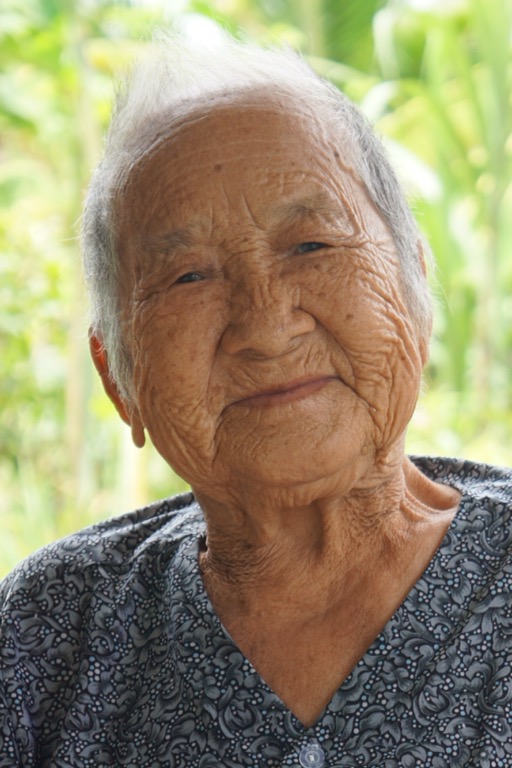
Next stops were a buddhist temple and then a look at a small village along the Mekong Delta. We met a family who raises pythons to sell for meat and skin and had some close encounters with them! The little 90 year old grandma who lives there let me take some pictures of her. I love pictures of the elderly – so many stories in the lines in their faces. The tour took us by an orphanage that was run by Buddhist monks as well. I don’t know how I feel about this – it was different than I was expecting, with children growing up clearly well fed and receiving an education in a clean environment, but overall it felt weird to me to have this be a stop on a tourist tour. I didn’t take any pictures therebecause it just felt odd. 
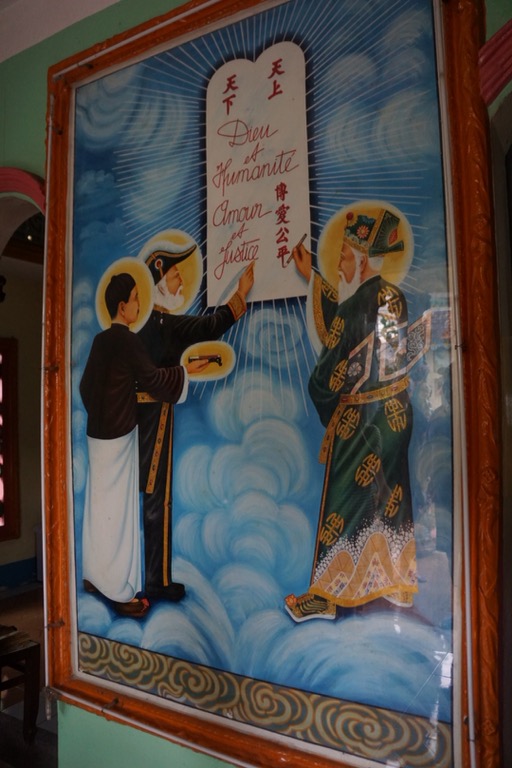
In the village was the Cao Dai temple, which has as its holy people the Buddha, Confucius, Sun Yat Sen, and…Victor Hugo. Yes, even the Vietnamese appreciate the French Revolution. 

We had a tasty meal at a local house, then back to Saigon and past the huge Heineken billboards that frame the riverside. 


Our next day was probably the first overall worst day of the trip. Everyone was crankly, snappish. I’ll just relay how dinner went as an example. I wanted to find a place for bun chay, or vegetarian noodle salad, and found one that didn’t seem too far but not quite walkable. We managed to get a taxi and when he let us out…we had left all the cash back at the apartment. Eric and the kids got out and walked to the restaurant and I stayed with the driver to get cash. By the time the driver found a working ATM and I paid him, it was nearly double the fare! He dropped me off where he had left the rest of my family, but they were nowhere to be seen. I didn’t realize it, but the restaurant was in the backpacker district. Loud, bright lights, tons of people vying for your attention and asking if you want a massage. I later learned that Eric was offered some “fine ladies” a few times when the kids were a few steps behind. 
No one I asked knew where the restaurant was. I had to stop in at a hotel and ask them to google it. I got there and found my family waiting for me, and I was annoyed they hadn’t waited at the spot to go together. And then the food wasn’t that great! Ugh. We tried to make up for it by having a beverage at a rooftop bar but the boys just whined about how it was too high up for them and how they felt vertiginous and spent the time looking away from the edge. It was ladies’ night at the bar, so I thought things might be looking up, but then they handed me a free drink of…a strawberry daquiri, possibly one of the worst alcoholic cocktails known to woman. 
So the day ended, and I suppose one bad day out of the last six weeks isn’t bad, but I could have done without the insult of a strawberry daquiri. 

-s
In which we pay to ride and experience claustrophobia in the Cu Chi tunnels

We’ve arrived in Ho Chi Minh City, or as the locals prefer to call it, Saigon. After a day of relaxing we booked another Grasshopper bicycle tour, met our guide Nguyen, and were off. Man, it was hot and humid. Due to our inability to convert inches to centimeters and thinking we’d have a chance to fit the kids for bikes, one of the bikes was almost comically small. Thankfully, the boy took this one and did just fine with it.

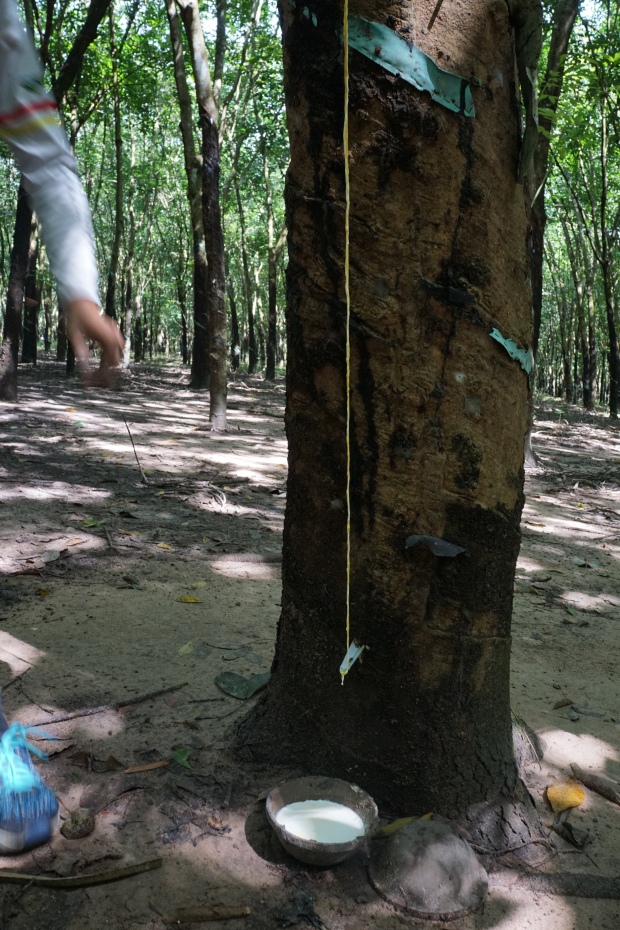
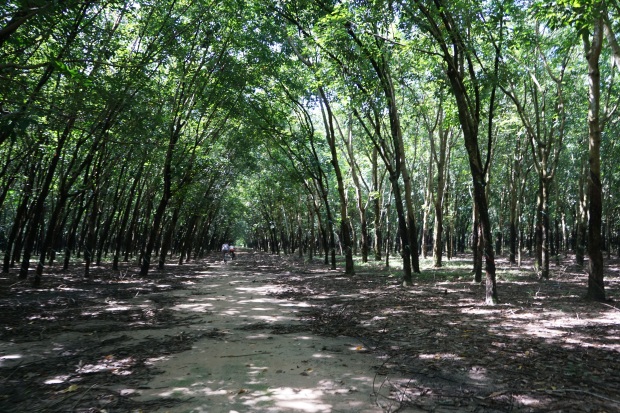
It was a muddy, bumpy ride through the countryside, and it was so fun! Passing by rubber plantations, we stopped at a rice paper making factory, where almost all the work is done by hand. You know those little lines when you get the sheets? It’s from them drying on the bamboo mats! I always just thought they were decorative.

DSC03679.JPG

DSC03680

tapping the rubber tree

We stopped at a local roadside stand for a snack, and our tour guide told us that it was owned by a former Viet Cong. Eric asked if it was weird for him to have Americans in the shop, and Nguyen answered “No, here in Vietnam we forgive and forget after the American war.” (The Vietnam war is called the American war here) So surprising, given that the Vietnam war still has such a strong and negative legacy in our country and that there was so much damage inflicted by us on their country as well.

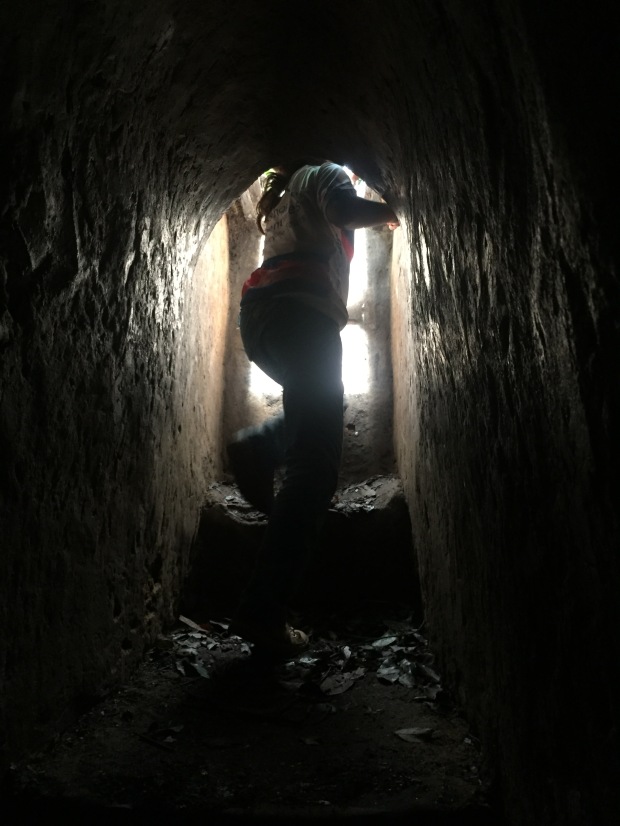
After 30 km of riding, we arrived at the Cu Chi tunnels. With the bike tours, you go to the far side of the tunnels, less visited by foreign tourists, much quieter and more of the original size entry holes preserved. These were a large series of underground tunnels that the Viet Cong used to hide from and attack American troops during the war. They were so well hidden that Americans only found about a third of the tunnels, even after carpet bombing the area. The tunnels were all dug by hand, a vast network of 75 miles near Saigon, with exits popping up every five to ten meters or so. The tunnels have three layers to them, a top layer just below the ground, and then subsequent layers about 7-10 meters below the previous. There were booby traps in case American soldiers did make it through. Air vents were disguised as termite mounds, and the entrances were barely large enough for me to fit through. After crawling through them for 30 meters, my heart started to pound and fear took over. I’m not normally claustrophobic, but to be in a tight space in utter darkness…I don’t know how the VC were able to stay down there for weeks at a time.

DSC03716

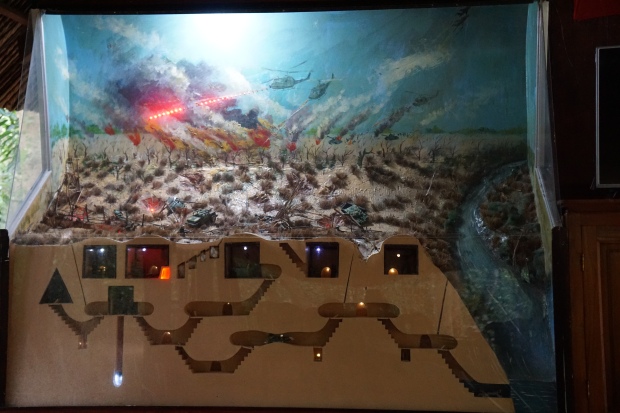
Diorama of the tunnels at the site


IMG_6984

Inside the tunnels, at the exit point. So cramped and tiny, even the girl had to stoop

DSC03729

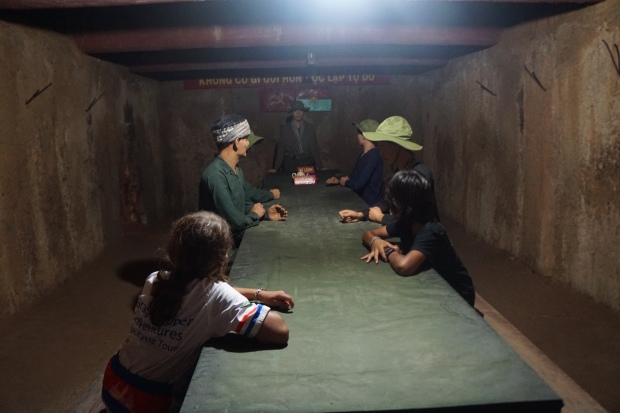
Creepy mannequin recreations of rooms under the tunnel, here’s a meeting house where the kids take part in a planning session

A lovely meal on the riverside after that, then back home to Saigon, and all in all a delightful day.

-S

In which I take stock again

It’s time for another installment of what’s working, what’s not.

Needs improvement

  1. City arrivals. We always somehow end up in a new place hungry, tired, cranky and hot and someone starts crying. Sometimes that someone is me. It just takes a couple hours between the plane and actually getting the place we stay and then getting food somewhere, and someone has a breakdown somewhere in there. The boy, when he is hungry, is truly terrifying. Ravana wouldn’t stand a chance against him and would run away whimpering in fear.
  2. Learning to relax midday like the locals do. Here in the tropics, there is morning activity and then evening activity, because it is brutally hot and humid in the middle and only the idiot tourists are out. This is really where it helps to have a place right downtown, where it’s easy to head back to and chill in Air-con comfort until it cools off.
  3. ATM fees. Man, they get you with every withdrawal. It’s hard to know exactly how much money you need especially when you’re withdrawing millions in local currency and your head starts to swim. In hindsight, we should only withdraw the absolute maximum amount every time as there is always a way to spend it, and many places do not accept credit cards. More than once we did not have enough cash and had to run to the nearest ATM to withdraw more. There are banks that do not charge ATM fees and reimburse you for international ones, and perhaps it would have been wise to use one of those, but since we have so many automatic payments arranged through our current bank, it felt like too much work.
  4. Getting through the airport. Why won’t my kids just shut up while we got through security, immigration, or customs? Why must they use this time to ask the million questions they have saved up? Why do they say at customs “Hey Mom, what about all that US money you have?” (for the record, I only had $200 in cash on me, not declarable!) Holy god, it’s maddening and has led to some…unpleasant moments in the airport.


What’s working:

  1. Still, the pacing and flexibility. We don’t have anything planned when we get into a country, and this has been great. When we got to Cambodia, we weren’t sure how the weather would be as rainy season is unpredictable, and because we weren’t booked we skipped the beach and spent more time in Siem Reap and had a wonderful experience because we could do things at a nice clip instead of feeling like we had to squeeze it all in.
  2. Bike tours. Absolutely love exploring countries by bicycle with a guide! You get to see things up close, talk to people, smile, engage, and interact. So different than taking a tour bus or just going from point A to B in a car. On a bike you see the countryside, the houses, stores, hear weddings and parties taking place, and all the kids really do run out and wave and say “hello!” to you as you go by. If you like to ride, absolutely take a bike tour. We’ve done two with Grasshopper and they have been fantastic, and are planning on taking more as we come across them.
  3. Smiling. Every time we smile at someone and say hello, we are greeted with the same on return. This has been true everywhere we go, even to people who may at first seem standoffish. Having the kids is also a natural icebreaker, especially the girl, who attracts attention everywhere she goes. We’ll go to a restaurant and the waitress will start talking to her and then just absentmindedly strokes her hair for the next ten minutes while she chats with us.
  4. Finding places to stay. We’re learning that there’s a huge difference in staying outside city center and not. Our perfect place is just a few streets away from the main drag, where traffic and partying noise is low at night, but still walkable to where we want to go. Most of the times we have booked a place for a few nights when we get in, get a lay of the land and then book for the rest of the time according to what our plans are and where we want to be. This does take a lot of time of searching though, as there is an overabundance of available places. We are also almost exclusively using air bnb’s. As a family, it is SO much nicer to have a living room and bedroom so you don’t all have to go to bed at the same time, and the price isn’t that different.
  5. Money. We’re more or less on budget for the trip, though SE Asia has been a bit pricier than I had anticipated. While we could stay in hotels that cost $20/night for a room, we wanted something a bit nicer. While it’s costing us less than a comparable room would in the States, it’s not dirt cheap. Food is moderately priced for us as well, since we’re less likely to eat at roadside stalls.
  6. Saying “yes.” When you have an opportunity, take it! We did the photoshoot in Siem Reap, and then the photographers got a job in Saigon and asked us to take part! We got to do a free night motobike tour and eat delicious street food and hang out with young Vietnamese people, and it wouldn’t have happened if we’d turned down the initial offer.

Tips/Tricks/Advice

  1. Do not, I repeat do NOT, under any circumstances, use the colored, highly perfumed toilet paper for any, shall we say, vigorous cleaning. Developing a contact dermatitis in sensitive areas is NOT fun. Ask me how I know (ouch, and thank goodness for the prescription hydrocortisone cream we have with us). I recommend watching youtube videos on bum gun use and learning to use same. The bum gun is a water sprayer attached to the toilet, looks just like the sprayer you have next to your kitchen sink. After use, you only need a square or two of TP to lightly pat yourself dry.
  2. I highly recommend having all visas you need done prior to arrival if you are travelling with kids. Vietnam and Cambodia both have visa on arrival services, but there is a line for it and after a flight even one more line with the kids can break you all. In Bali it was a visa right at the immigration desk, no extra waiting, thank goodness.
  3. We loved the Indonesian and Cambodian food, but needed breaks every now and then. One of my most delicious meals in Cambodia was a veggie burger I had at an expat bar. Mmmm. I no longer have disdain for people I see eating Burger King in foreign countries. Sometimes you just need a taste of home.
  4. Plastic water bottles are everywhere and unavoidable. To try and save at least a few, I would boil water in the electric kettle provided in nearly every room, let it cool overnight and then refill a bottle. Some places have large water cooler bottles for refill which is nice.
  5. If you travel to Cambodia, make sure all your money is crisp and new looking! The main currency there is the US dollar, but if bills are at all old looking, they won’t take them. I had withdrawn a $100 bill from an ATM there that had a tiny, 1/8 inch tear in one edge and they almost didn’t accept it. Check money whenever you get it and ask for crisp new looking bills only, else plan on just hanging onto it until you get back to the States.
  6. There are some games in the Family on the Loose book that came in really handy. First is mini Olympics, done in waiting areas or even in line. Basically, a set of directions or challenges can keep kids going for a long time. Like, run to that pole, go around it three times, jump up and down ten times, then come back. Another is timing how long they can stand on one foot, or hop, or something like that if there isn’t open space. We also use the dinner games of choosing a category and then having to go around the table, each answer starting with the last letter of the one before it.
  7. Bali, Cambodia and Vietnam are easy places to travel with the kids, with the exception of crossing the street. Do as the locals do, wait for a bit of a gap and then WALK across in a brisk, steady fashion so the motorbikes anticipate your movement and go around you. Don’t run pell-mell across the street. If you have a child who tends not to pay attention and daydream at inopportune moments, hold their hand. Again, ask me how I know.

Items gained:

  1. Some new clothes, souvenirs. Eric and I got cool sneakers in Cambodia to wear around instead of our sad, torn up running sneakers. I’m not getting rid of those yet though because I think there is still mud in our future. We also got custom made leather flip flops in Siem Reap, leaving behind our nearly trashed other ones. I usually leave them in the hotel rooms – I don’t think anything is thrown out here, someone will take them and find a way to make them usable again.
  2. Herschel backpack. That cheap messenger bag I liked? Well, let’s focus on the cheap aspect as it began disintegrating. In the Bali Airport I just bought a nice Herschel backpack and have loved it. Point is: take good gear with you. Side bonus though, I gave the messenger bag to the Balinese clerk who was absolutely delighted to have a free bag.

Items lost

1.My shit, a few times.

-s


In which we like pina coladas, eat a home cooked meal, and of course, street signs. 

As I mentioned in the last blog post, we were invited to be in the promo materials for Grasshopper cycling! We met our photographer, videgrapher, new guide and off. We went back to the village we visited yesterday and met with the sewing ladies again, and there was a lot of sweetness and laughter all around. On our walk through the village, a little girl of maybe five yelled out in perfect English, “How are you?” We replied, “good, how are you?” And she replied, “I am happy!” Then, to show off, she started singing “Head, shoulders, knees and toes” and we all joined in with her. Our HUSK guide told us that she was one of the students at the school, and a particularly bright one.
Our evening was to be more riding through the outskirts of Siem Reap, but the rain came in and didn’t letup, so we instead retired to dinner at a local woman’s house. I asked her name but the guides just told me we call her “Aunty,” so Aunty it was. The food was delicious, and different than anything you get in a restaurant. I compared it to what I ate at home growing up every day – simple curried vegetables, dal, poli (roti)- to what you eat in an indian restaurant – palak/saag panner, tandoori chicken, etc. One dish was eggplant mixed with egg, another was stir fried morning glory leaves with garlic, and the third we had was a pumpkin stew, all with steamed rice. Tasty!

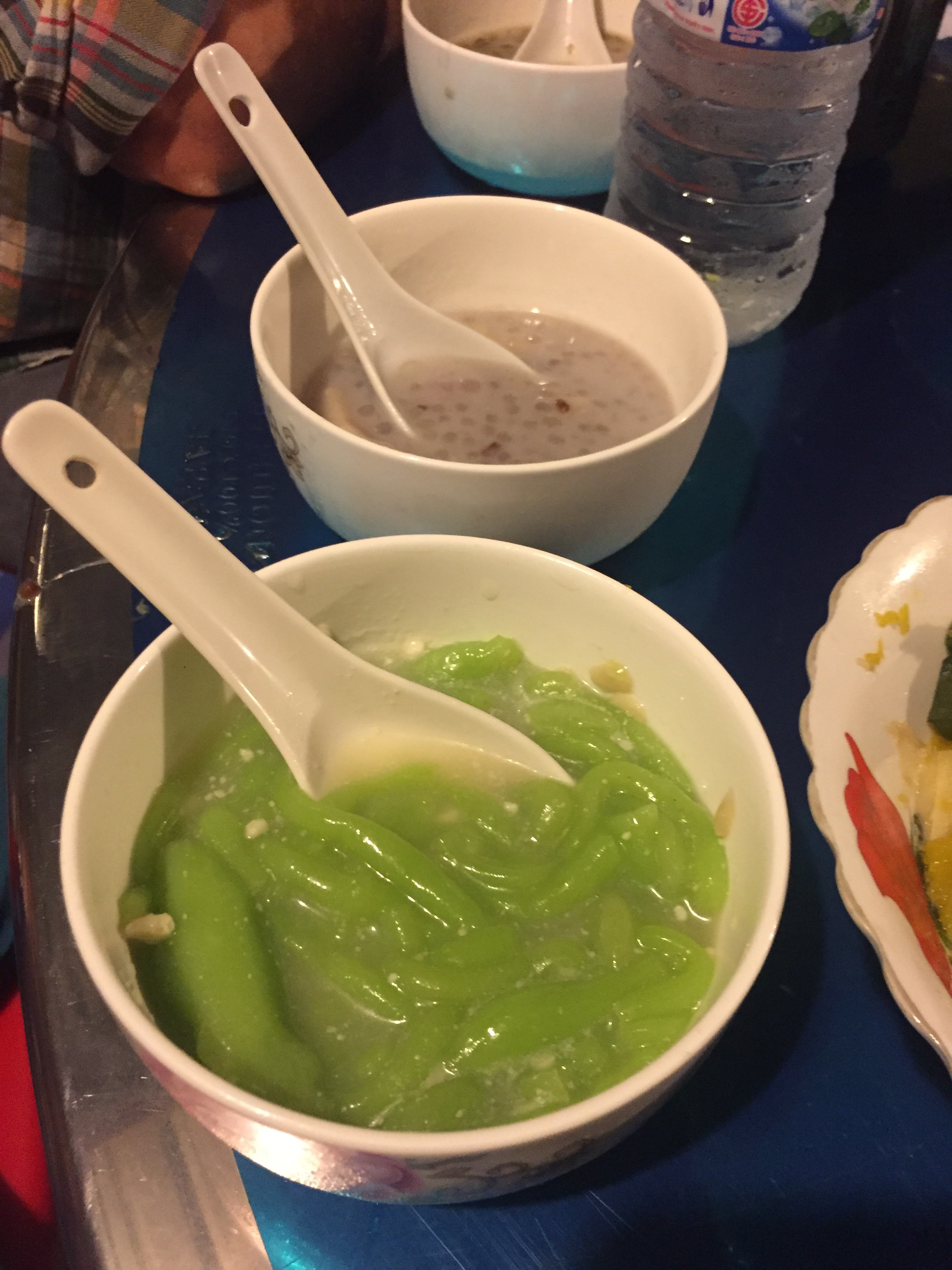
gelatinous green dessert. not my favorite.


Our last day in Cambodia we did a little last minute shopping and then went to see the Phare Circus, an acrobatic group comprised of former street children, and it was heart stopping. Jump roping with a rope on fire, high flips and acrobatics, arial dance, like being at cirque du soleil, only where we’re three feet away from the performers! The foundation also has an art school in Battambang, where they have over 1200 students learning art & theatre, again all from disadvantaged families. 


A few last thoughts on Cambodia – 
This for me, was a place of wonder and also of intensity. Eric has done a better job of conveying this in his series of posts, but I know we have all been deeply affected by what we’ve seen and the people we’ve talked to. To have a country where an entire generation of thinkers and intellectuals was simply wiped out, and to leave in it’s place something of societal rubble means that there are decades of rebuilding, and it’s evident everywhere you go. The top news stories are that of the trials of Khmer Rouge leaders, those implicated in forced marriages, and again these were all forty years ago. We met so many bright young Cambodians who would be unable to get a higher education, as the system requires a lot of money and graft at higher levels. Even for a village education over the secondary school level, the government offers scholarships for poor children for tuition only. This doesn’t cover supplies, uniforms, or most importantly transportation. If the nearest school is four to five kilometers away, they need a bicycle, but the cost is prohibitive for many of these families. The real work of help in this country is ALL being done by NGOs, and there are many. We have mentioned several of them in our posts, HUSK Cambodia, Cambodian Handicraft Association, Phare Circus, and the Khmer Ceramics Center were ones we personally stopped by and used. If you’re so moved, please click on any of the links above and give even a little – your dollar goes very far here. 
Everyone we met was very friendly and open, with the exception of the few times we clearly left tourist Cambodia like when I went to find hair ties in the market. People weren’t unfriendly at that point at all, we were just ignored, and fair enough. I would love to return to this country and spend more time here, coming during dry season when we can visit the beaches, the elephant rescue centers, and the other cities as well. 
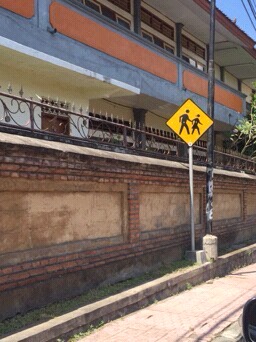
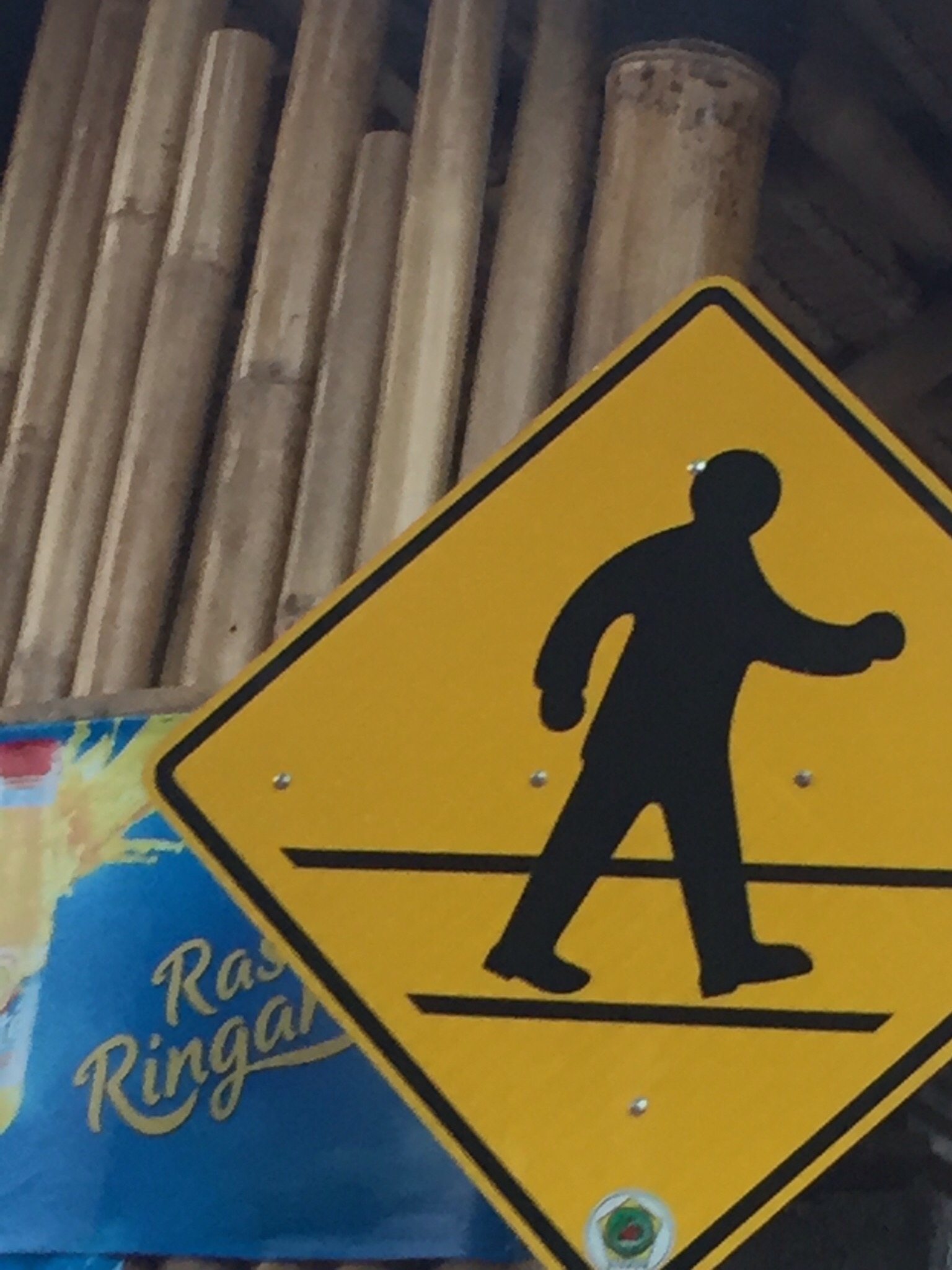
And last but not least, the street signs!

Even on the street signs the kids know to run because the motorbikes and tuk tuks don’t stop for anyone. 

Here is where the well coiffed children are found. 


No Tuk tuks in this lane. Surprisingly, this sign was actually respected in Siem Reap where they had separate divided lanes for tuk tuks and motorbikes. 

There is no “I” in team! We are all in this together cambodian people!


Heres’ one where you just project your own feelings onto the “no” sign. I just started singing “No woman no cry” everytime. 


Here are the limbo players! Watch out!! Or, you may be struck by Zeus and given superhero powers. I can’t decide.

And last but not least, our official theme song of Cambodia, sung whenever, well, we got caught in the rain.

–S

In which we cycle through the country, and kayak through a forest

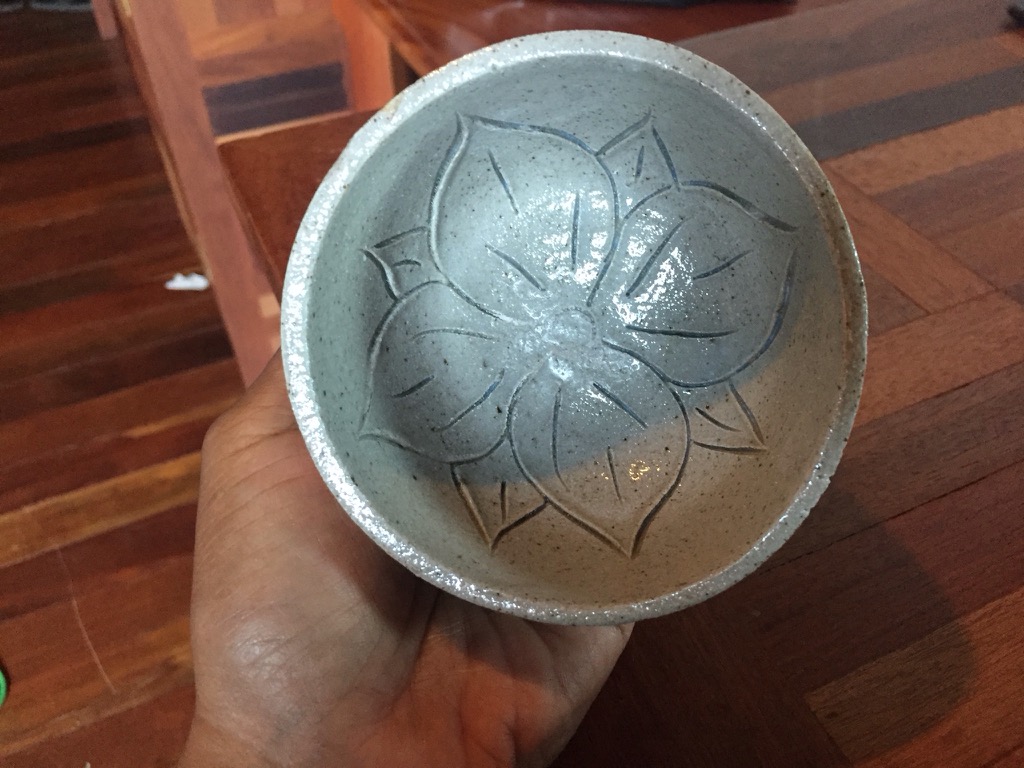
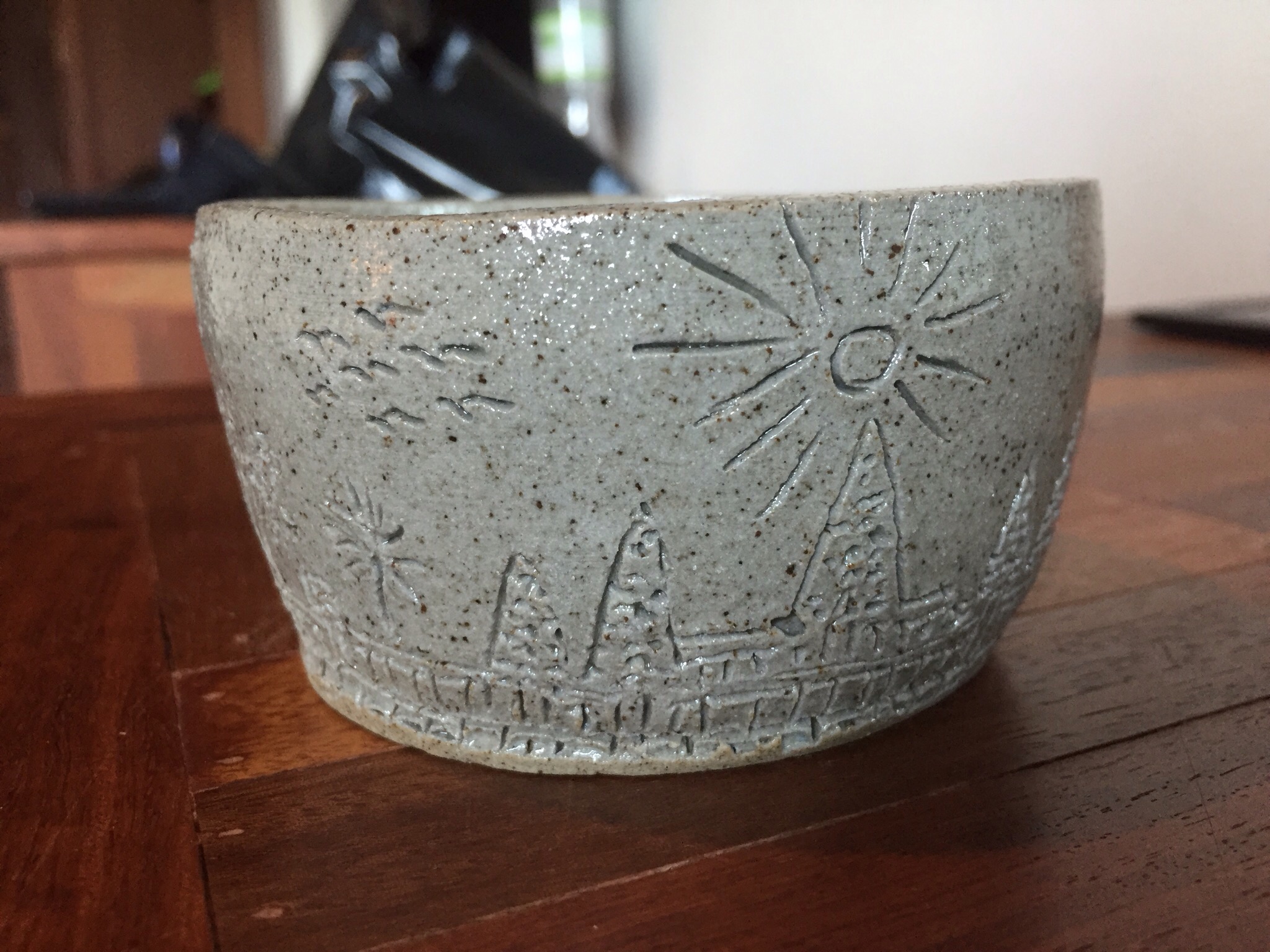
How to start with the last few wonderful days? Muddy, sweaty, tired, and exhilarating. We took a day off after templing and took a pottery class at the Khmer Ceramics center, learning from Deaf instructors who are hired there, and finishing up with passable pieces of ceramic work to take home with us. All of the art decoration Eric and I totally did by ourselves and did NOT have ANY help from the talented artists there. Nope, none at all. 


The next day, we had booked a tour with Grasshopper tours, where we would bike through the countryside around Siem Reap in the morning and then kayak in Lake Tonle Sap in the afternoon, through a mangrove forest and then around a floating village. Grasshopper also asked us if we would come with them the next day for filming some promotional material! Of course, we signed up. I’ll write a bit about that day in thenext post. 

We met our wonderful guide, Hang, who had grown up in a village on the outskirts of Phnom Penh with his seven brothers and sisters. We started by riding out through the city of Siem Reap. For the kids I found this a bit harrowing especially when the girl got a bit too friendly to a turning motorbike driver, who was trying to get through the intersection quickly to avoid the nearby policeman from noticing she wasn’t wearing a helmet. 

Stopped on the road near the children’s hospital for a baby to be transferred from one ward to another, IV pole hanging

Once we were out of the city the riding became much more relaxed. As we went along the dirt back roads, the houses changed in character from clearly suburban ranch style homes to more rural homes in villages, largely placed upon stilts. Even these houses, though, I was surprised to see looked relatively large from what I was expecting. We later learned that the people who owned these houses were considered relatively wealthy by village standards, and that most of them had saved and then spent to buy the house, and inside would be sparsely decorated. 


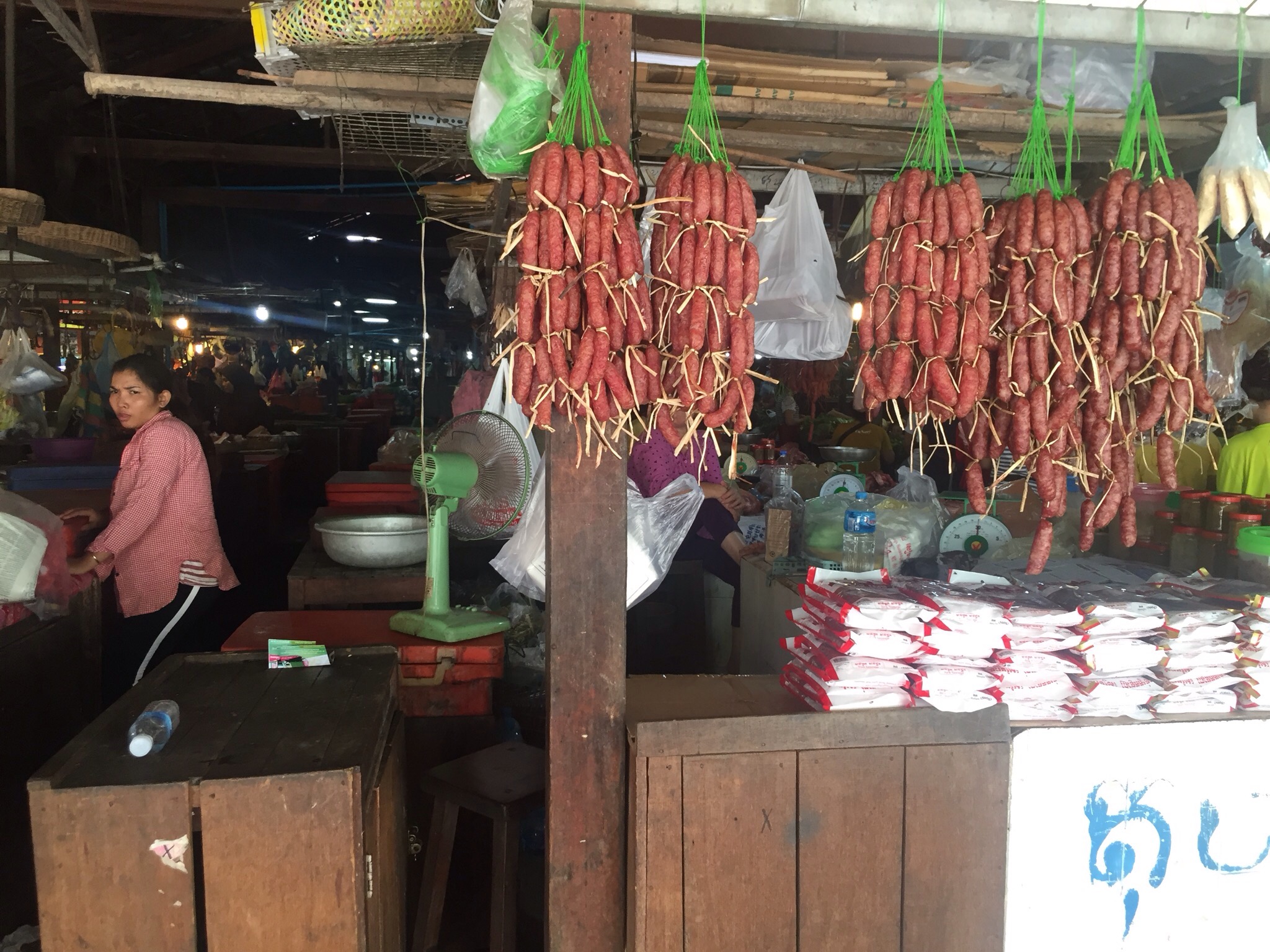
We stopped at a local market and tried some delicious street food! When I was younger, I would eat all of that stuff and not think twice, but I’m a little more cautious now since I really don’t want to get sick so it was nice to have a guide to help us eat stuff that was “safe” to eat. I’m getting soft in my old age. We had steamed rice cakes, puffed bread,  and my favorite, battered deep fried bananas. YUM. 


We turned the corner of the market and jumped as the fish sellers had tubs of fish STILL MOVING for sale as they slowly asphyxiated. You’d pick your fish or meat, the sellers would crack it open on a handy slab of rock and prepare the fish for you, while the flies had first dibs. Mmmm, fish with a side of maggots. The kids were a bit squeamish about this all, and scurried through the fish and meat stalls without stopping much. 


Onward to our next rest stop, a roadside stand to eat cambodian fish noodle curry, Num banh chok, which was incredible. The flavors were so fresh and unlike anything I’d had in a restaurant so far. 

the boy chows down on cold noodle salad


stopping at the side of the road for a snack of sticky rice and beans, grilled in bamboo


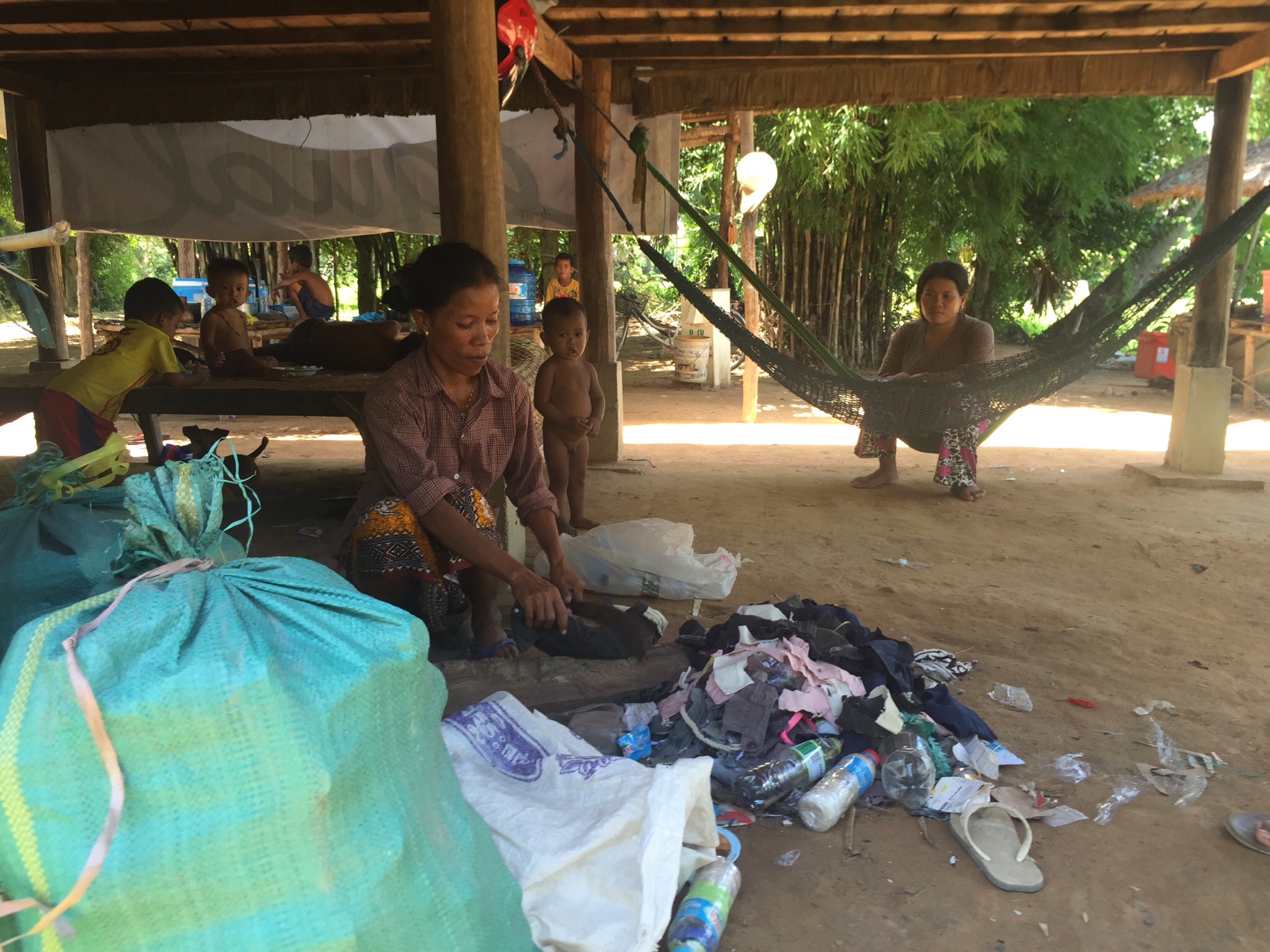
We finished our 30 km bike ride at a raised house, where we were met by Lee, a young man who works for an NGO called Husk. Husk has a setup in Cambodian villages where they try to create sustainable patterns in poverty level one and two citizens (earning < $2.50/day) to break the cycle. As part of this, they have created a school in Cambodia for supplemental English education for local kids. To be accepted at the school, the kids must attend public school full time as well. For many local villagers, this is unrealistic because they need the kids to be out making money, especially during tourist season when they can send the kids out to beg or sell postcards and trinkets. For this reason, they strongly encourage against buying from children – if tourists keep buying from kids, it perpetuates the cycle of poverty as they will be sent out to beg instead of kept home from school. This isn’t a perfect solution, as then the families may not have enough money to survive. To support vulnerable families they have a few options. One is that the Husk building cores are made of plastic bottles stuffed full of fabric and other plastic bags. These are put into a chicken wire core and cemented over to make walls. They pay or trade for these bottles, and on our walk around the village we saw women hacking fabric into strips with a machete and stuffing them into plastic bottles.  (There’s lots of kids around as they’re on break right now, not just not going to school.)


There’s also a seamstress shop where they make toys and other soft items to sell to raise money. Husk chooses it’s villages carefully, avoiding those that have corrupt chiefs who would only line their own pockets with cash and aid. They also are trying to create a second generation of leaders – we met young women from the village who could not speak any English a few years ago, and were now teachers at the school! They also teach environmental stewardship, encouraging the use of trash bins instead of litter. The work they are doing there is truly fantastic, and we’ve all committed to helping out more as we can. 

The super friendly ladies of the sewing workshop. With the help of the guide to translate, we shared a lot of laughter with them!


After this, it was a ride and then a boat trip to kayaking! There are a few floating village communities on Tonle Sap Lake, the most famous of which has now become a tourist zoo, according to what I’ve read. Where we went was nothing like that, and other than one or two occasional tourist boats speeding through, we saw little of it. We started with a kayak tour through a mangrove forest, where our guide kept scooping his hand through the water to catch large water snails which he planned to fry up for his dinner! He offered a few to us, but being the generous souls we are, we did not want to take any of his snails and declined.


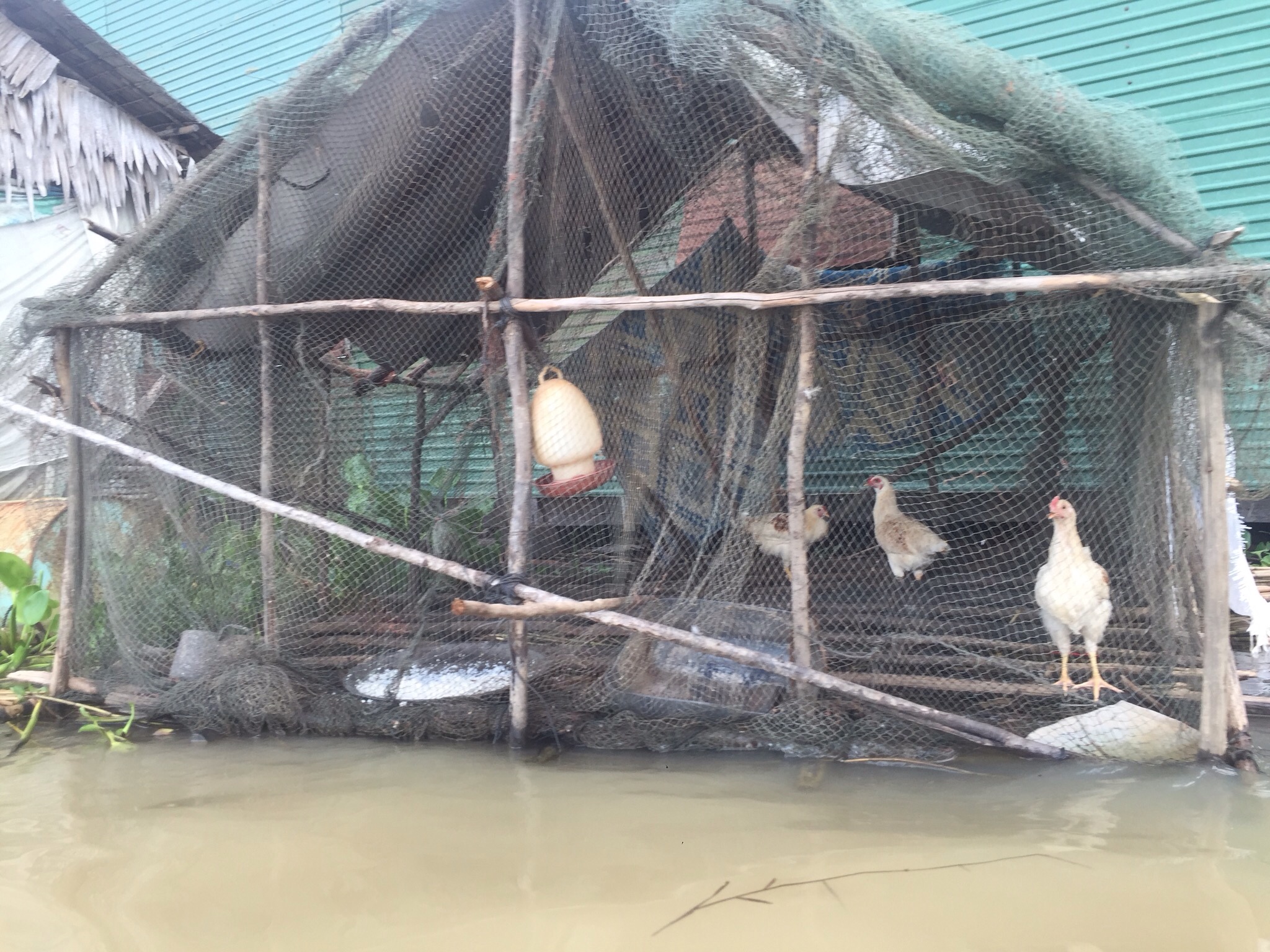
 We came back to paddle through the floating village, and it’s not extreme to say that the village absolutely blew my mind. The houses are suspended on bamboo rafts, and move according to the water levels in the lake which varies greatly by season. People have everything on rafts – there are small restaurants, convenience stores, even chickens & pigs living on the water!


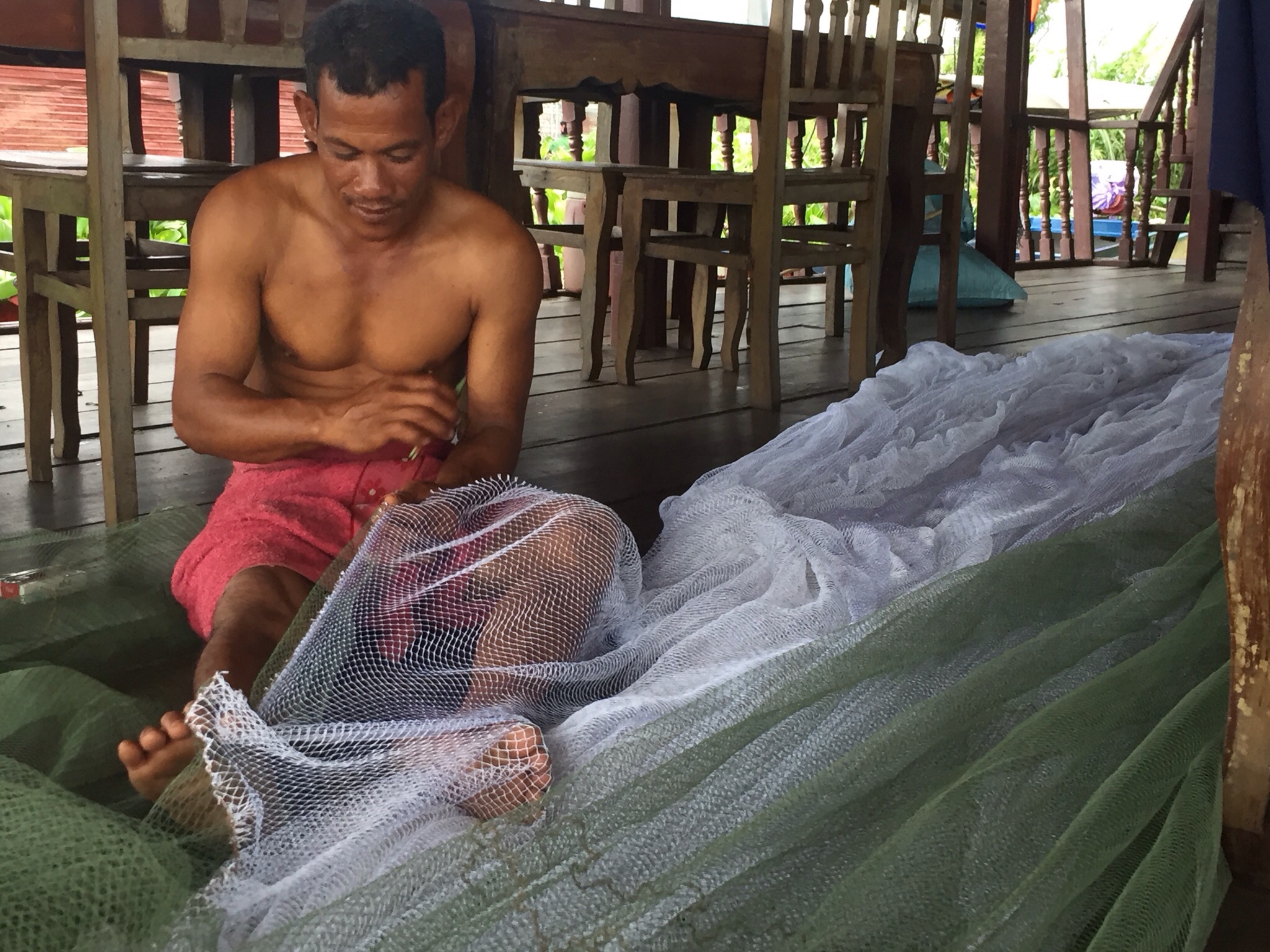
mending fishing nets


 We passed by a fixed building which was a school. As the season gets wetter, the houses move farther away from them and kids may have to paddle their boats for 2 km to get to school every morning. It was something that none of us could really imagine, living out on the water, rarely touching solid land. Weddings happen in the houses by moving a house or two and a restaurant together to have enough room for a party. It’s something I’m still thinking about, in that the way of life was something almost unimaginable for me before. I mean, the small villages with farms and chickens and naked children running about…I expected that and have a vague notion of what that life looks like, even before we got a closer view today. But never have I seen anything like the people who live their life on the water, rowing from home to home or village to village, waiting for the rains to come to know when it’s time to tow the houses to a different spot. 
A note about poverty tourism: the phenomenon of (usually) Western tourists paying to see people living in poverty is a controversial one and raises the question of exploitation. Do we go into the villages as a form of entertainment and something to discuss while we have an expensive meal back in the city? I don’t know that I would call it entertainment, but for us it was deeply illuminating, even for what we thought we knew. I think that you can come to places like Cambodia and see the temples and the museum and leave, eat in the tourist district, stay in very comfortable hotels, and not get a sense of how many people live here. I think it’s actually important to visit places like the villages, and it was important to me that my children see homes and lives in the world that look nothing like ours. As much as possible, before taking a picture of someone I would ask if it was okay, by indicating with my camera, and almost everyone was happy to be in a picture. I also asked our tour guides if it would be okay to take pictures, and since they clearly knew the people in the villages I figured it would be okay. Nearly everyone we met or swam by in the villages we would exchange a friendly “hello” and namaskar, and if we had questions they could be relayed through our guide. They also get money by charging entrance fees at the boat docks which are shared among the residents, and so your tourism does help to support the community here. I always wonder what would it be like if I was gardening in my front yard and a busload of tourists drove up, decamped, snapped pictures and then left. For many reasons, we avoid tours like this, and this is the main one. 

Grasshopper tours employs Cambodian cycle guides who love their country and want to share it with you on a small scale level, which is a very different feeling. So, no I don’t feel bad about this. I think we’re all better off seeing more of the world and how people live in it, and also doing our best to do it responsibly and in a way that treats them as people and not objects. 

-s

In which we visit the temples of Angkor Wat and the laundry luck runs out

Our initial plan had been to spend a few days at the beaches of Sihanoukville, but the monsoon weather laughed at our idea of a few idyllic beach days. Instead we decided to just head to Siem Reap and spend more time there. We left Phnom Penh by way of a six hour bus ride through the Cambodian countryside, reaching Siem Reap in the evening and settling into our hotel for the night. Searching for a hotel in Siem Reap is not for the faint of heart, as there are over 200 hotel options as well as guesthouses and air bnbs. We got so sick of poring over seemingly identical options that we just picked one and booked two days there as a start. Turned out, the rooms were dark and dingy and it was a hotel that seemed to cater exclusively to Chinese tourists. This is not in an of itself a bad thing, but I felt like a secondary tourist attraction at breakfast time when the Chinese would openly stare at me. I guess this is what the statues at Angkor Wat feel like. Huh.
We spent the next day wandering around Siem Reap, orienting ourselves, and finding a new place to stay. Having read travelogues that talk about a pleasant stroll through town and happening upon the perfect little guesthouse, this was what I imagined. Instead, we found ourselves sweating in the tropical heat to check out “air bnb”s that were just hotels, and not very appealing ones at that. I finally looked at a hotel on the side of the river, which was lovely, with wooden ceilings and a quaint, airy feel. I actually bargained a bit for the price (!) and we had a new place to stay.

Siem Reap is far more pleasant than Phnom Penh. While there are still every manner of vehicle going every which way on the streets, there are far fewer of them and you can actually breathe the air. I was surprised by how touristy Siem Reap is. The main drag is actually called “Pub street” and is decorated with lanterns. I’m sure in the wee hours of the night this becomes a rowdy alleyway! There’s still plenty of actual town life, as seen in the market pics below. 

old market in Siem Reap

Yesterday we went to visit the temples of Angkor Wat, and saw “the big three,” Angkor Wat, Angkor Thom and Ta Prohm. Our tour guide gave us the option to leave at 5 am for sunrise or 9 am if we wanted to leave later. Eric gave me a look when I chirped, “Oooh, the sunrise tour at 5!” However, I made the executive decision that we’d do it. I mean, when will we ever  be here again? We all sleepily made our way out of the room with all our luggage as we were checking out of that place and met our guide, San Pork, who was funny, energetic and a delight to spend the day with. Once at the ticket booth, they asked to see the kids’ passports to verify they qualified for the under 12 free ticket. Everyone looked at me as I am the official holder of the passports. I looked at everyone with a “Oh, sure!” smile on my face and took one step back to go to the car to get them. At this point, I froze and the blood drained out of my face as I realized I had left the passports in the hotel room safe, which was about a twenty minute drive away. As I am dark skinned, the draining of the blood did not change my outward appearance, but I assure you it happened. Eric just looked at me like I was a rank idiot.
Our guide smooth talked the ticket sellers into letting us visit, we called the hotel (who didn’t understand me at all and just thought I wanted to book another night), and then we took off for Angkor Wat.
Angkor Wat is a 900 year old temple in the middle of a vast set of temple complexes and ruins and is known as the largest religious site in the world. Each wall surrounding the temple is nearly a kilometer long, and it’s oriented in cardinal directions. I wonder how ancient peoples did this – did they have some type of compass or did they just watch for the movement of the sun?
Sunrise, unfortunately, was not happening due to the thick cloud cover, but this did make the morning cooler. We sat at a little outdoor overpriced tourist restaurant and the kids and I ordered bread and butter, expecting a few pieces of toast. Instead, we each had a full sized baguette plopped in front of us, balancing precariously on a tiny plate, while the chickens clucked around us hopefully. We looked at each other and just started laughing. We ate what we could and bagged up the rest as San said we could give it to some kids along the way.
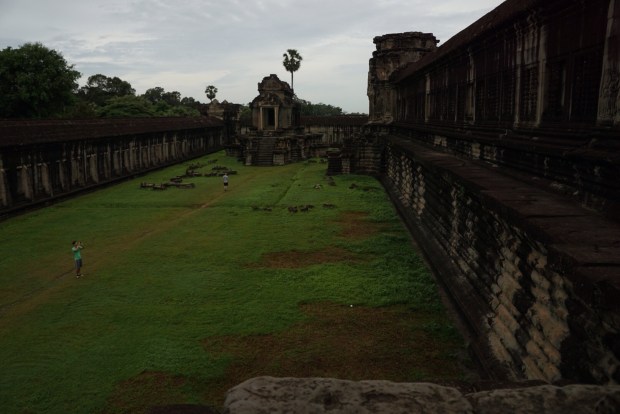
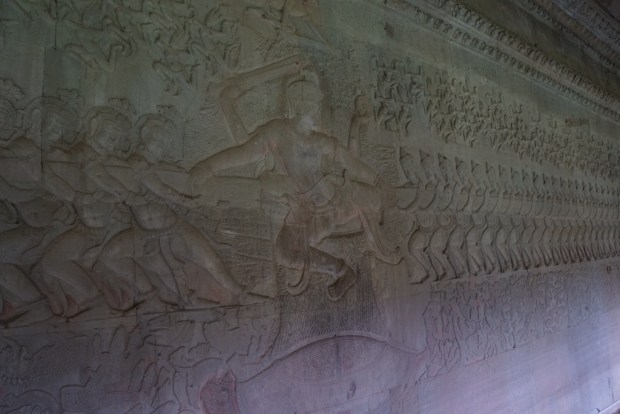
Angkor Wat is, of course, beautiful. Every superlative you’ve heard is accurate. Sandstone walls covered in green lichen surround courtyards. The external walls are carved in stunning bas relief sculpture depicting Hindu epics and myths. Angkor Wat has had significant restoration efforts over the years, hampered by the civil war and looting, and there is still a long way to go.

img_1135-1

DSC03439

vincent came with us to Angkor Wat! The roving macaque monkeys frightened him a bit.

img_1136-1

Churning of the sea of milk bas-relief sculpture

at the very center of Angkor Wat


We left Angkor Wat, retrieved our passports, and then drove to Prom Preah, noted for the trees that have seemingly eaten up the temple there and also for Angelina Jolie cavorting about them half dressed as Lara Croft in Tomb Raider. When Angkor Wat was initially found prior to restoration, it looked much like this. The trees burrow themselves into the foundations of the stone, and split it apart. Eventually, our guide told us, the government will have to cut the trees down to preserve the site. It almost seems a shame in a way, to reckon with the forces of nature to reclaim itself from the stones.

img_1140

DSC03484
Last was Angkor Thom, a later temple on the site which was erected during the time of buddhism. Large peaceful faces gaze out upon you from four sides of each tower – the king did this to preserve the peace between Hindus and Buddhists as the country was in a state of religious transition. Hindu? No problem! These are the four faces of Brahma! Buddhist? All good! These are all depictions of Buddha looking out upon you.


We went back to Siem Reap and checked into our new hotel. We’d been awake and going for eight hours and it was JUST barely 1 PM. Oof. Eric gathered the clothes to drop off at a local laundry and the kids took showers, and after a bit of down time we decided to head into the city. I’ll replay the ensuing conversation for you:
Me: “Hey kids, get dressed so we can get out of here!

Both kids, wearing only a shirt “Umm…we have no pants.”

Me: “Angkor WHAT?!?!”

So, when Eric had been gathering clothes for laundry, the kids were playing a game on the iPad and didn’t want to stop. Instead of actually checking to see what was clean or not, they just chucked ALL of their clothes into the laundry. Which would not be ready until tomorrow. As you might imagine, Eric and I were not pleased with this situation. The boy had to dry his swim shorts off with a hair dryer and we put the girl in a nightdress with a pair of the boy’s boxers underneath and made for the market where we got her a pair of baggy pants for $2.50. Honestly.

In which I share a few of my thoughts on the Killing Fields visit

On our second full day in Phnom Penh,  we went to the Genocide Museum and the Killing Fields. Eric and HappyFrog have written excellent posts about our visits there, so I will only add on a few thoughts of my own. I, too, was of course horrified. Not only by what we saw, not only by what happened, but also because unlike the Holocaust this tragedy is not nearly as well known though is similar in terms of pain and loss of human life. I was also struck by how recent it all is. We’ve spoken to a few Cambodian people here who speak English – our guide at the museum, a taxi driver, and our tour guide, all of whom tell of their family’s history with the Khmer Rouge. Everyone here has lost people, everyone here has a story to tell. It was only forty years ago that the regime ruled Cambodia, and the people who were young during that time are only now middle aged adults. 
The audio tour at the Killing Fields gives you perspective of this, with survivors telling their tale of how they survived. Some ran to the borders and were able to flee. Our taxi driver’s father had been born as a child of farmers, so even though he was a doctor when the regime took over, he was able to do the work and “pass” for a rural farmer and thus avoid imprisonment and death. One of the survivors of the Tuol Sleng prison was on a truck with his wife and infant child to the Killing Fields. The truck had to stop and somehow he and his wife were able to run, she with the child in her arms. She was struck, and the baby fell to the ground, still crying, but in that moment he could only think to flee. He lives with the guilt of leaving his child. Most of the soldiers of the Khmer Rouge were no more than teens at the time, either brainwashed by them or forced into service because if you didn’t comply, you were dead yourself. These young soldiers have not been persecuted, instead our guide told us that they are to be forgiven for their heinous acts and considered as victims themselves. She also told us that almost all people of that time have significant psychiatric issues related to the trauma. 
I wonder, how as a people and a country do you heal after a time like this?
-sf

In which we make it to Cambodia and learn that the rain is NOT kidding around

We made it to Bali by way of a two hour layover in the Singapore Airport. I had told the children that in Singapore it is illegal to leave a toilet unflushed, and the boy gleefully taunted the girl with this fact, as she has a reputation for leaving…shall we say “presents” for us in the bathroom. He was extremely disappointed to find out that they do not check the toilets after each use, and that irresponsible bathroom goers could get away scot-free. The kids also had their first experience on Singapore Airlines, which is of course THE BEST, and really, really want all of the rest of our flights to be with them in the future. If only. 
We’ve had a few days in Phnom Penh and are on our way to Siem Reap now. Phnom Penh can be described the way large cities in developing countries are always described in travel guides, which is sprawling, congested and polluted. And while the country and culture are millenia old, the city is a fairly new one in a way, rebuilding itself after the destruction wrought by Pol Pot and the Khmer Rouge government which only ended in 1979. When the Khmer Rouge took power in 1974, the citizens of the city were ordered to leave and go live in the countryside, where they were put into forced farming labor camps. After the fall of the Khmer Rouge government, there was a return to Phnom Penh, but the city had seen destruction and it was first come first serve with regards to taking propery, so it wasn’t as if everyone just settled back into place. Add to that that approximately 40 percent of the population died during the 4 years of their rule, and you only begin to get the idea of what the city has been through. 
We settled into our flat, a nice duplex very close to the Genocide museum, which is made largely of concrete as are most buildings here. Next to us was a large open air restaurant called “Five Guys Fresh Beer” which is the only microbrewery in the country, as far as I was able to find out. We tried the beer, and I’m sorry to say that for beer snobs such as ourselves, it resembled nothing more than a watery homebrew you might be proudly offered by the potbellied suburban dad with a man cave in his garage. If this is you, I’m sorry. I’m sure your beer is delicious. 
After New Zealand and Australia, where an average lunch could easily cost us $75-100 and we cooked in as much as we could, restaurant meals for the four of us here range about $20-35, so we’ve been eating out and enjoying every bite. Interestingly, the currency in Cambodia is largely the US dollar, so it’s been nice not to have to divide or multiply to make sense of how much we’re paying for things. (They also have the riel and you will get change in riel notes, but everything is listed in American dollars)
Our first day, we hung out in the morning with plans to head to town center, have lunch, then tour the royal palace afterwards and check out some shops. The weather, however, had other plans for us! We learned quickly that when you feel the brisk breeze go through your hair, you’d better find shelter, and fast. 
Roads in Phnom Penh are somewhat harrowing, and are similar to other developing country cities, however were crazier than those in Denpasar mainly because Phnom Penh is much more densely populated. Sidewalks are nonexistent, car lanes are meaningless, motorbikes don’t bother following road signs, and the streets are filled with a mix of open air tuk tuks (a carriage pulled by a motorbike), motorbikes, scooters, taxis and buses. The air is thick with exhaust and your eyes start to water before too long if you’re in an open vehicle. 
We wandered around for a bit before settling on a spot for lunch and then headed to the palace. We stepped outside and noticed that during our lunch, dark clouds had amassed over the city. A strong wind blew through the street. Ah, we’ll be fine! We thought. 
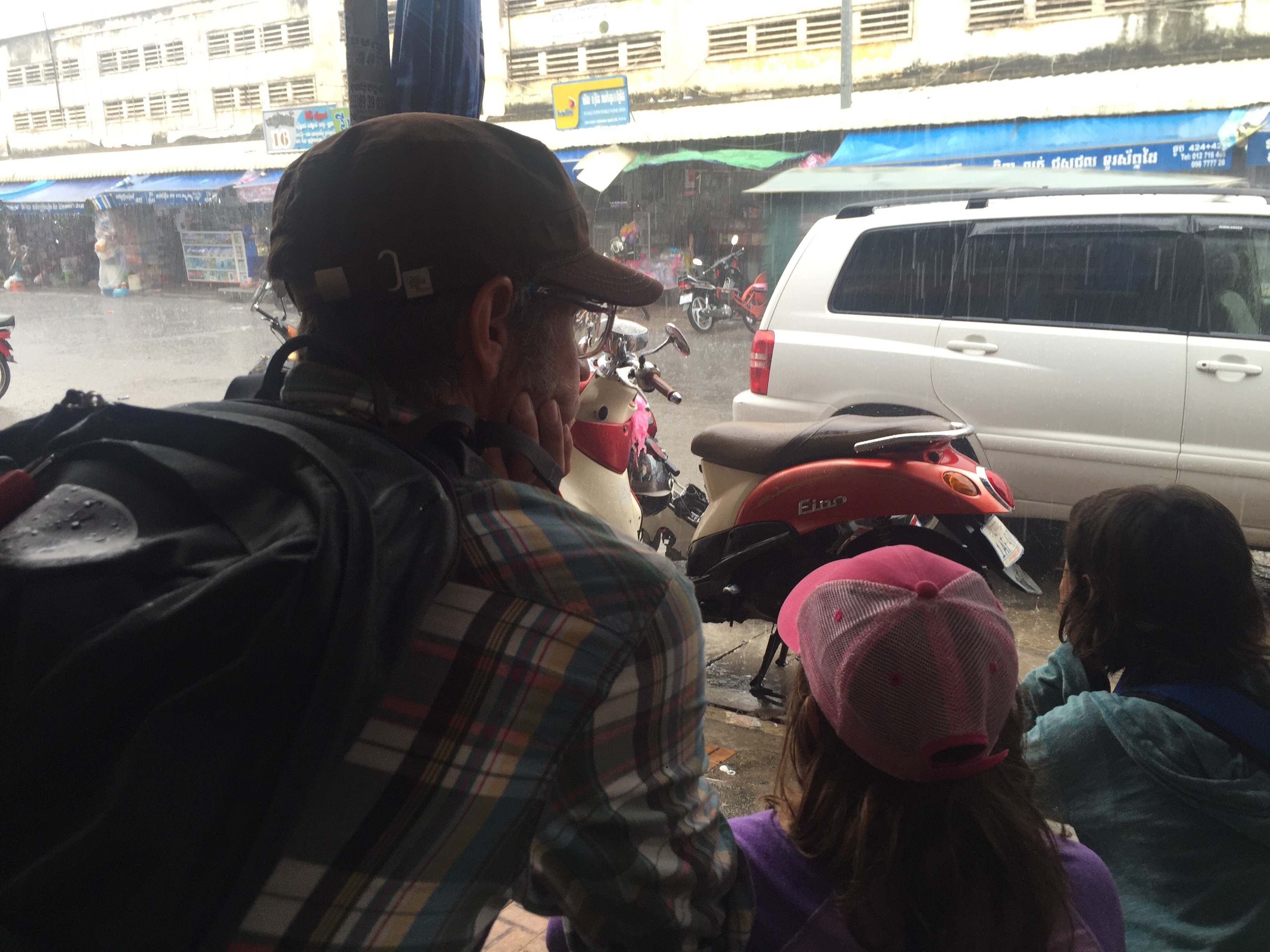
A few drops of rain sprinkled down, and we noticed the street sellers rapidly covering up their stalls. Hmmm. Maybe we should reconsider our plans. No, we can make it, we thought. It’s just a few drops! We kept walking down the street and in about ten seconds the sky opened up and raindrops as big as marble hail descended, nearly drenching us before we dove under a shop awning. Two Cambodian Police officers were sitting there and they took one look at us, the idiot tourists, and kindly offered us seats, pulling out a stack of plastic chairs for us to sit down in and watch the storm thunder along. 


And then we could do nothing but wait. In a way, I was glad of this. One of the things I want the kids to learn (and I could use some of myself, let’s be real) is learning how to wait. In the US, we wait for nothing, and if we have to wait for something it is a great source of annoyance. I remember one patient who had been admitted, gotten labs done, a procedure through radiology, and lunch, and was still annoyed that the whole process had taken SO LONG even though all of that took about four hours, and then he was annoyed that results weren’t immediately available. I actually said to him, “Medicine isn’t like ordering from Amazon. Some things take a little time to figure out.” If there’s bad weather, we usually are able to escape it easily in our cars or our homes. Here, there was nothing to do but wait it out. Soon enough the storm subsided enough to allow us to walk out again, but the streets were too flooded for us to walk to our destination. We hopped a tuk-tuk to some shops a few blocks away instead, thinking that if the rain passed we’d make it to the Palace after all. Cambodia seems to have a big trade in the handicraft market, and many of them advertise that they specifically support disabled people or street children as well. We found some lovely scarves, souvenirs and gifts to bring along, and I even bought myself two dresses, the first new clothing I’ve bought since leaving. 
The rain showed no sign of letting up, and since we’d planned a trip to the Genocide Museum and the Killing Fields the next day, we wanted to get some books about Cambodian history and culture for the kids. We hopped a Tuk-Tuk again and went to the excellent Monument bookstore, where a very nice employee gave us great suggestions for books for ourselves and the kids. After this, we were hot, wet, and tired, and realized that a Palace tour just wasn’t going to happen. Back home we went, to relax and enjoy another night of takeout, but not before a slightly stressful tuk tuk ride.​

​​​


-s
In which I share final thoughts on Bali, and look at the street signs

We loved, loved, loved Ubud. The wonderful, welcoming and genuine people, the delicious food everywhere, the artistic handicrafts, and the feeling of overall relaxation made us wish we had stayed here for two weeks instead of just five days. It’s funny – in the States, I really don’t enjoy meeting new people or being super friendly. I mean, I can do it but all things considered I prefer just hanging out with people I already know and like or even just being alone. While traveling, I’ve become more open overall – I look forward to talking to people and learning about their lives and culture when it’s so different from our own, especially when the people you meet are so genial and want to share their lives with you as well. 
Random thoughts and little things from our stay here:
I couldn’t wait to introduce the kids to the bidet. I gave them fair warning of what it was, but the first time you feel cold water splooshed up your butt is not to be trifled with, and the girl sprang across the bathroom when she first felt it and we had to scramble to prevent the floor from flooding while I cried from laughing so hard. 
Bugs! You stay in the tropics, you get tropical insects. Huge wasps, spiders, ants, *shudder*. There were of course mosquitos as well but not awful, though we’ve all gotten bit. We’ll have to be better in Cambodia, as it’s rainier season there, and I’ve decided that we need an aerosol can of Deet. It just covers better than the spray, despite being worse for the environment. 
Bargaining. I actually LOVE bargaining with sellers. I think it’s fun – there is no way possible that I could negotiate anything that wouldn’t be a good deal to the seller and I know that my tourist dollars are what keep the place going, so my goal isn’t to really get the cheapest price possible, though I don’t like to be completely ripped off. But I love the interaction with the seller, the stock phrases of bargaining – “you give me your best price” “what is your discount?” “Oh no, that is too too much!” Said with a little tongue clicking for best effect of course! I especially like when you’re buying things from the people who have had some hand in making them, as it’s so different from the sterile purchasing of the States, where you can go through an entire transaction and not say a word to another person. 
And, of course, we end with the street signs:


This sign actually means “Hindu Temple,” but I like to think it means “Lego building up ahead.”

Stop here if you need an Auto Metallic. 

Beware of men pushing younger girls into the street. 


Here is where the slender people run across the street. 

This street crossing is for larger people wearing jackets. 


And last but not least, this crossing area is for the people who have grown so large they can no longer wear jackets. Poor guys. 

-s

In which we fail again at seeing the monkeys

Our last full day in Ubud, and we were determined to visit the Monkey Forest! Well, I was anyway. Eric, he is not so interested in the monkeys as he feels we have enough experience with mischievous wildlife without ever leaving our house. I’ll add here that the girl was a massive pill today and part of my desire to go to the monkey forest was to see if they might claim her as one of their own and take her off our hands. She woke in the foulest mood, screaming at the top of her lungs because I said “no” to screen time. She recovered during the day but went back into fit mode at the end of the day, babbling angrily in that way of hers where we have no idea what she’s even talking about. It’s like if you combined Animal’s guttural screams with the nasal wah wah sound of Charlie Brown’s teacher. Sigh. 
Anyway, back to the day at hand. We took the morning off and just relaxed after the busy day yesterday and also scheduled our free foot massages that came with our stay at this Villa. We sat in a room off the side of the infinity pool and blissed out and then did some blogging from this beautiful spot. 

 After noon, we headed into town. I had a few shops I really wanted to visit, the first on my list was Threads of Life. A fair trade fabric and dyeing center that focuses on helping rural communities to be self sufficient and uses natural dyeing methods as well to be environmentally sound. There’s a lot of cheaply produced souvenir stuff around to buy, and I want to try and buy responsibly wherever we go if I can. The displays of ikat dyed fabric and batik were so, so pretty. I picked up a scarf for myself! They had three different patterns and I spent a long time trying to pick out the one I want, finally resorting to the KonMari method and choosing the one that sparked joy when I held it. 🙂 
We stopped in for lunch where I had another big plate of my favorite Indonesian dish, Nasi Champur. This plate was quite different from the first one I had, and if I ever come back here I’m going to create an instagram account where all I do is take pictures of the different plates of Nasi Champur everywhere. Every single thing in this meal was incredible. We’ve eaten mostly Indonesian food while here, and the boy loves it too. The girl…well…hasn’t quite taken to it, but we’re working on it. 🙂


One of the things that was on our must do list for the girl was getting a fish pedicure. We chose the big fish and Eric, the girl, and I got in. The boy took one look at the tank, his eyebrows went up and he shook his head in absolute refusal. There is nothing quite like having a swarm of fish nibble at your feet, and the sensation is, well, unique. 


We decided, at this point, to go back to the wood shop to get the slab table we’d loved yesterday, thinking we’d have plenty of time to get back to Ubud to see the Monkey forest afterwards. I had completely forgotten how long it takes to make things happen in places that are not the US. First, getting a car took a while. Then the traffic took forever. Then we had to negotiate with the wood seller, then of course, when that was all done, my credit card was declined for a possible suspicious transaction! After some time on the phone, it was all cleared up and we are now the proud owners of a large chunk of suar wood that will end up at our house as a table. In about a year. The interaction with the wood seller was pretty funny. The shipping cost to the US ended up being $666, and I noted that this was the number of the Devil in the US! The seller said to me, “No problem, we can make it $750 instead,” with a smile and a knowing look, and I said, “No no no, I’m not much of a believer anyway!” (Side note: it only takes about 2-3 months if you’re having it shipped directly, but since we’re not home for a while we’re having it stay here until we’ll be back since we’ll have to pick it up from the port of Denver ourselves. I have NO IDEA where the port of Denver is.) 
Of course, after all this, the Monkey Forest Sanctuary was almost closed, and we were stuck with the girl, with no chance of returning her to her true people. . We managed to spend 4 days in Ubud and miss the number one tourist attraction here, though we did see a few monkeys wending their way around restaurant patios. I’m a bit disappointed, sure, but there are plenty of other monkeys to be seen around the world and like I’ve said before, it’s impossible to see everything! I also didn’t make it back to any of the ikat fabric shops and I wish we could have done that too. If I could redo one thing it would have been to skip the cremation attempt on the first day and go to the Monkey Forest at that time instead. If I could redo anything else it would be to have simply spent more time in Bali, and this is one of the places on our “must revisit” list. 
-s