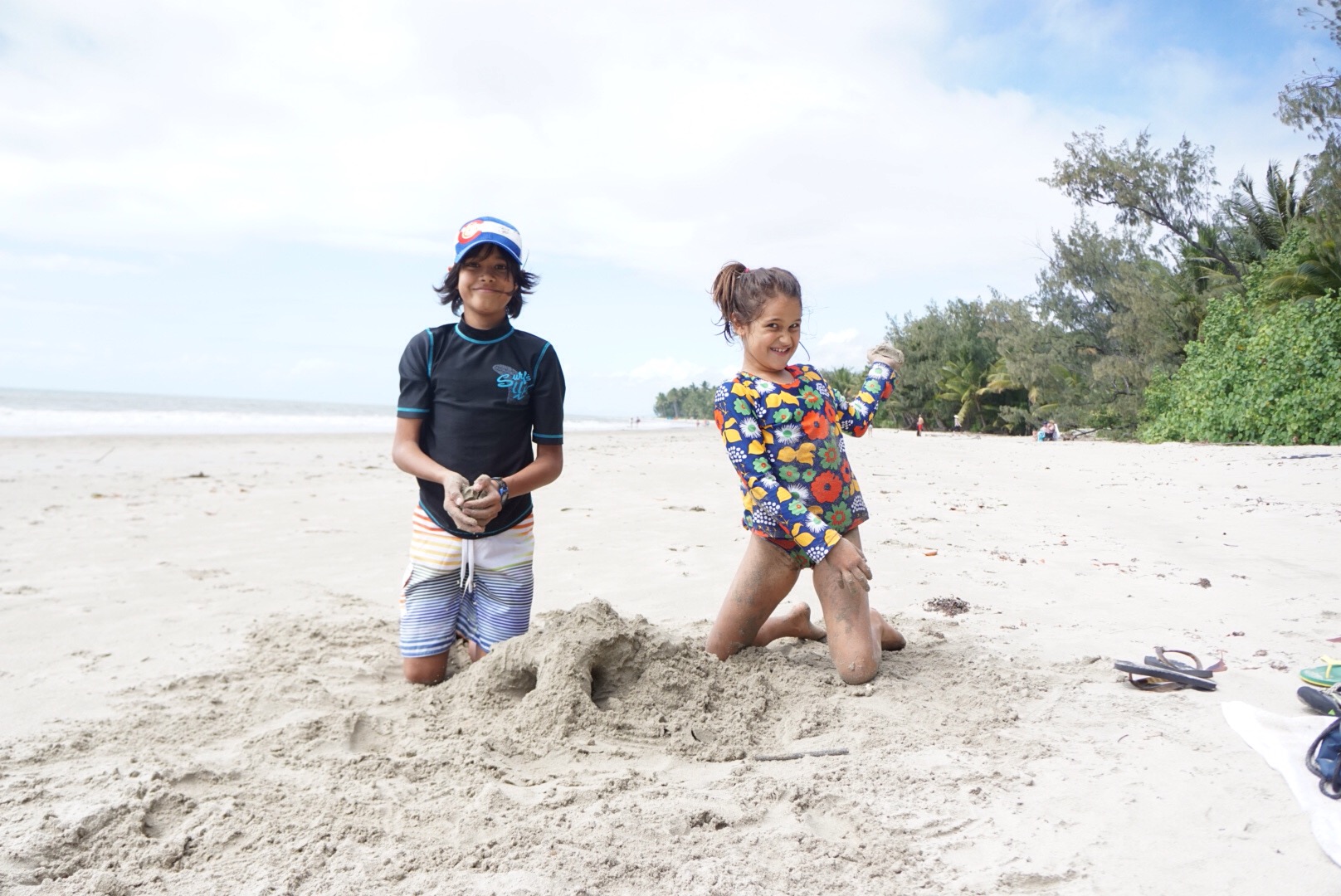
In which I take stock again

It’s time for another installment of what’s working, what’s not.

Needs improvement

  1. City arrivals. We always somehow end up in a new place hungry, tired, cranky and hot and someone starts crying. Sometimes that someone is me. It just takes a couple hours between the plane and actually getting the place we stay and then getting food somewhere, and someone has a breakdown somewhere in there. The boy, when he is hungry, is truly terrifying. Ravana wouldn’t stand a chance against him and would run away whimpering in fear.
  2. Learning to relax midday like the locals do. Here in the tropics, there is morning activity and then evening activity, because it is brutally hot and humid in the middle and only the idiot tourists are out. This is really where it helps to have a place right downtown, where it’s easy to head back to and chill in Air-con comfort until it cools off.
  3. ATM fees. Man, they get you with every withdrawal. It’s hard to know exactly how much money you need especially when you’re withdrawing millions in local currency and your head starts to swim. In hindsight, we should only withdraw the absolute maximum amount every time as there is always a way to spend it, and many places do not accept credit cards. More than once we did not have enough cash and had to run to the nearest ATM to withdraw more. There are banks that do not charge ATM fees and reimburse you for international ones, and perhaps it would have been wise to use one of those, but since we have so many automatic payments arranged through our current bank, it felt like too much work.
  4. Getting through the airport. Why won’t my kids just shut up while we got through security, immigration, or customs? Why must they use this time to ask the million questions they have saved up? Why do they say at customs “Hey Mom, what about all that US money you have?” (for the record, I only had $200 in cash on me, not declarable!) Holy god, it’s maddening and has led to some…unpleasant moments in the airport.


What’s working:

  1. Still, the pacing and flexibility. We don’t have anything planned when we get into a country, and this has been great. When we got to Cambodia, we weren’t sure how the weather would be as rainy season is unpredictable, and because we weren’t booked we skipped the beach and spent more time in Siem Reap and had a wonderful experience because we could do things at a nice clip instead of feeling like we had to squeeze it all in.
  2. Bike tours. Absolutely love exploring countries by bicycle with a guide! You get to see things up close, talk to people, smile, engage, and interact. So different than taking a tour bus or just going from point A to B in a car. On a bike you see the countryside, the houses, stores, hear weddings and parties taking place, and all the kids really do run out and wave and say “hello!” to you as you go by. If you like to ride, absolutely take a bike tour. We’ve done two with Grasshopper and they have been fantastic, and are planning on taking more as we come across them.
  3. Smiling. Every time we smile at someone and say hello, we are greeted with the same on return. This has been true everywhere we go, even to people who may at first seem standoffish. Having the kids is also a natural icebreaker, especially the girl, who attracts attention everywhere she goes. We’ll go to a restaurant and the waitress will start talking to her and then just absentmindedly strokes her hair for the next ten minutes while she chats with us.
  4. Finding places to stay. We’re learning that there’s a huge difference in staying outside city center and not. Our perfect place is just a few streets away from the main drag, where traffic and partying noise is low at night, but still walkable to where we want to go. Most of the times we have booked a place for a few nights when we get in, get a lay of the land and then book for the rest of the time according to what our plans are and where we want to be. This does take a lot of time of searching though, as there is an overabundance of available places. We are also almost exclusively using air bnb’s. As a family, it is SO much nicer to have a living room and bedroom so you don’t all have to go to bed at the same time, and the price isn’t that different.
  5. Money. We’re more or less on budget for the trip, though SE Asia has been a bit pricier than I had anticipated. While we could stay in hotels that cost $20/night for a room, we wanted something a bit nicer. While it’s costing us less than a comparable room would in the States, it’s not dirt cheap. Food is moderately priced for us as well, since we’re less likely to eat at roadside stalls.
  6. Saying “yes.” When you have an opportunity, take it! We did the photoshoot in Siem Reap, and then the photographers got a job in Saigon and asked us to take part! We got to do a free night motobike tour and eat delicious street food and hang out with young Vietnamese people, and it wouldn’t have happened if we’d turned down the initial offer.

Tips/Tricks/Advice

  1. Do not, I repeat do NOT, under any circumstances, use the colored, highly perfumed toilet paper for any, shall we say, vigorous cleaning. Developing a contact dermatitis in sensitive areas is NOT fun. Ask me how I know (ouch, and thank goodness for the prescription hydrocortisone cream we have with us). I recommend watching youtube videos on bum gun use and learning to use same. The bum gun is a water sprayer attached to the toilet, looks just like the sprayer you have next to your kitchen sink. After use, you only need a square or two of TP to lightly pat yourself dry.
  2. I highly recommend having all visas you need done prior to arrival if you are travelling with kids. Vietnam and Cambodia both have visa on arrival services, but there is a line for it and after a flight even one more line with the kids can break you all. In Bali it was a visa right at the immigration desk, no extra waiting, thank goodness.
  3. We loved the Indonesian and Cambodian food, but needed breaks every now and then. One of my most delicious meals in Cambodia was a veggie burger I had at an expat bar. Mmmm. I no longer have disdain for people I see eating Burger King in foreign countries. Sometimes you just need a taste of home.
  4. Plastic water bottles are everywhere and unavoidable. To try and save at least a few, I would boil water in the electric kettle provided in nearly every room, let it cool overnight and then refill a bottle. Some places have large water cooler bottles for refill which is nice.
  5. If you travel to Cambodia, make sure all your money is crisp and new looking! The main currency there is the US dollar, but if bills are at all old looking, they won’t take them. I had withdrawn a $100 bill from an ATM there that had a tiny, 1/8 inch tear in one edge and they almost didn’t accept it. Check money whenever you get it and ask for crisp new looking bills only, else plan on just hanging onto it until you get back to the States.
  6. There are some games in the Family on the Loose book that came in really handy. First is mini Olympics, done in waiting areas or even in line. Basically, a set of directions or challenges can keep kids going for a long time. Like, run to that pole, go around it three times, jump up and down ten times, then come back. Another is timing how long they can stand on one foot, or hop, or something like that if there isn’t open space. We also use the dinner games of choosing a category and then having to go around the table, each answer starting with the last letter of the one before it.
  7. Bali, Cambodia and Vietnam are easy places to travel with the kids, with the exception of crossing the street. Do as the locals do, wait for a bit of a gap and then WALK across in a brisk, steady fashion so the motorbikes anticipate your movement and go around you. Don’t run pell-mell across the street. If you have a child who tends not to pay attention and daydream at inopportune moments, hold their hand. Again, ask me how I know.

Items gained:

  1. Some new clothes, souvenirs. Eric and I got cool sneakers in Cambodia to wear around instead of our sad, torn up running sneakers. I’m not getting rid of those yet though because I think there is still mud in our future. We also got custom made leather flip flops in Siem Reap, leaving behind our nearly trashed other ones. I usually leave them in the hotel rooms – I don’t think anything is thrown out here, someone will take them and find a way to make them usable again.
  2. Herschel backpack. That cheap messenger bag I liked? Well, let’s focus on the cheap aspect as it began disintegrating. In the Bali Airport I just bought a nice Herschel backpack and have loved it. Point is: take good gear with you. Side bonus though, I gave the messenger bag to the Balinese clerk who was absolutely delighted to have a free bag.

Items lost

1.My shit, a few times.

-s


In which we like pina coladas, eat a home cooked meal, and of course, street signs. 

As I mentioned in the last blog post, we were invited to be in the promo materials for Grasshopper cycling! We met our photographer, videgrapher, new guide and off. We went back to the village we visited yesterday and met with the sewing ladies again, and there was a lot of sweetness and laughter all around. On our walk through the village, a little girl of maybe five yelled out in perfect English, “How are you?” We replied, “good, how are you?” And she replied, “I am happy!” Then, to show off, she started singing “Head, shoulders, knees and toes” and we all joined in with her. Our HUSK guide told us that she was one of the students at the school, and a particularly bright one.
Our evening was to be more riding through the outskirts of Siem Reap, but the rain came in and didn’t letup, so we instead retired to dinner at a local woman’s house. I asked her name but the guides just told me we call her “Aunty,” so Aunty it was. The food was delicious, and different than anything you get in a restaurant. I compared it to what I ate at home growing up every day – simple curried vegetables, dal, poli (roti)- to what you eat in an indian restaurant – palak/saag panner, tandoori chicken, etc. One dish was eggplant mixed with egg, another was stir fried morning glory leaves with garlic, and the third we had was a pumpkin stew, all with steamed rice. Tasty!

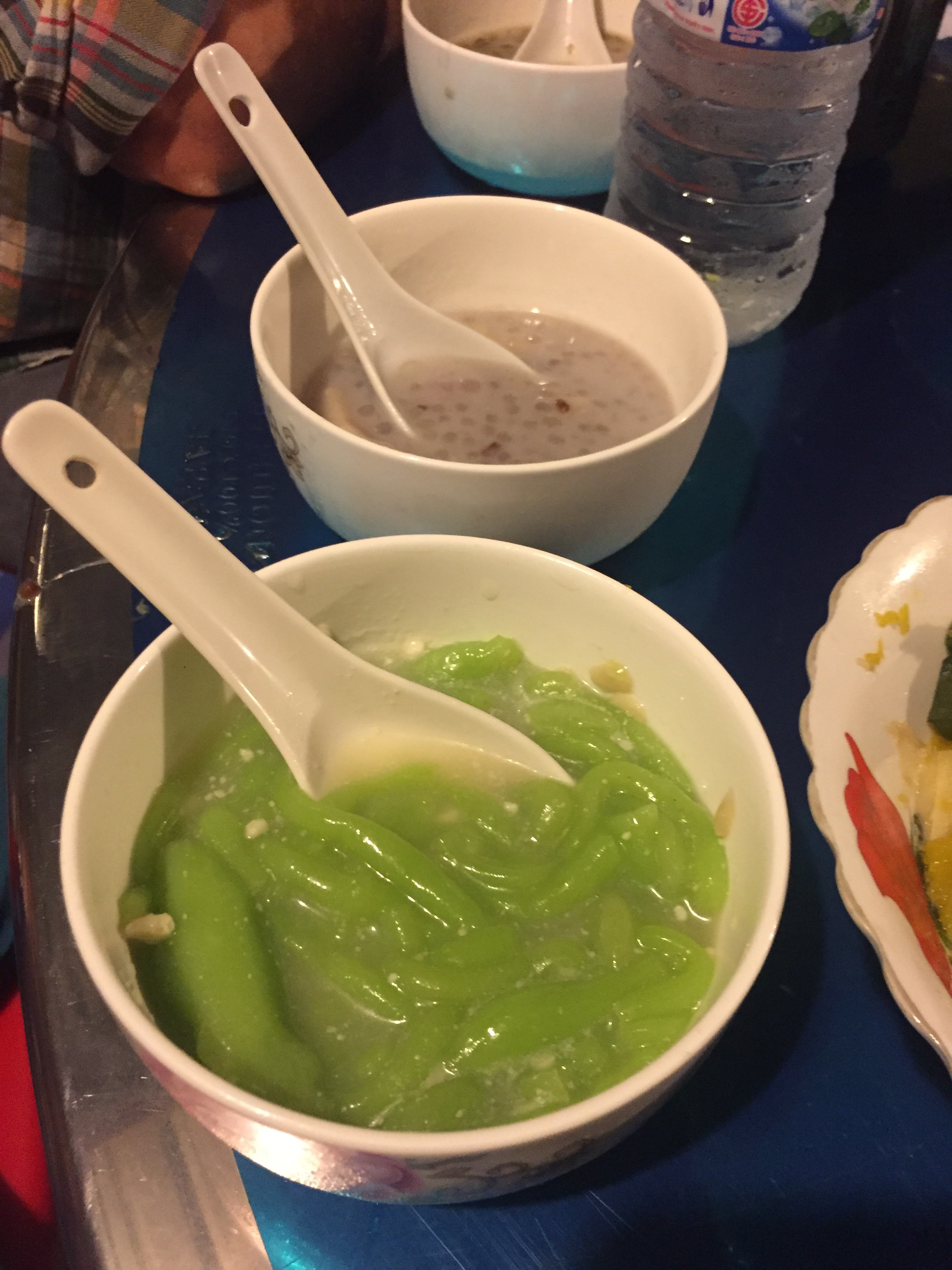
gelatinous green dessert. not my favorite.


Our last day in Cambodia we did a little last minute shopping and then went to see the Phare Circus, an acrobatic group comprised of former street children, and it was heart stopping. Jump roping with a rope on fire, high flips and acrobatics, arial dance, like being at cirque du soleil, only where we’re three feet away from the performers! The foundation also has an art school in Battambang, where they have over 1200 students learning art & theatre, again all from disadvantaged families. 


A few last thoughts on Cambodia – 
This for me, was a place of wonder and also of intensity. Eric has done a better job of conveying this in his series of posts, but I know we have all been deeply affected by what we’ve seen and the people we’ve talked to. To have a country where an entire generation of thinkers and intellectuals was simply wiped out, and to leave in it’s place something of societal rubble means that there are decades of rebuilding, and it’s evident everywhere you go. The top news stories are that of the trials of Khmer Rouge leaders, those implicated in forced marriages, and again these were all forty years ago. We met so many bright young Cambodians who would be unable to get a higher education, as the system requires a lot of money and graft at higher levels. Even for a village education over the secondary school level, the government offers scholarships for poor children for tuition only. This doesn’t cover supplies, uniforms, or most importantly transportation. If the nearest school is four to five kilometers away, they need a bicycle, but the cost is prohibitive for many of these families. The real work of help in this country is ALL being done by NGOs, and there are many. We have mentioned several of them in our posts, HUSK Cambodia, Cambodian Handicraft Association, Phare Circus, and the Khmer Ceramics Center were ones we personally stopped by and used. If you’re so moved, please click on any of the links above and give even a little – your dollar goes very far here. 
Everyone we met was very friendly and open, with the exception of the few times we clearly left tourist Cambodia like when I went to find hair ties in the market. People weren’t unfriendly at that point at all, we were just ignored, and fair enough. I would love to return to this country and spend more time here, coming during dry season when we can visit the beaches, the elephant rescue centers, and the other cities as well. 
And last but not least, the street signs!

Even on the street signs the kids know to run because the motorbikes and tuk tuks don’t stop for anyone. 

Here is where the well coiffed children are found. 


No Tuk tuks in this lane. Surprisingly, this sign was actually respected in Siem Reap where they had separate divided lanes for tuk tuks and motorbikes. 

There is no “I” in team! We are all in this together cambodian people!


Heres’ one where you just project your own feelings onto the “no” sign. I just started singing “No woman no cry” everytime. 


Here are the limbo players! Watch out!! Or, you may be struck by Zeus and given superhero powers. I can’t decide.

And last but not least, our official theme song of Cambodia, sung whenever, well, we got caught in the rain.

–S

In which we cycle through the country, and kayak through a forest

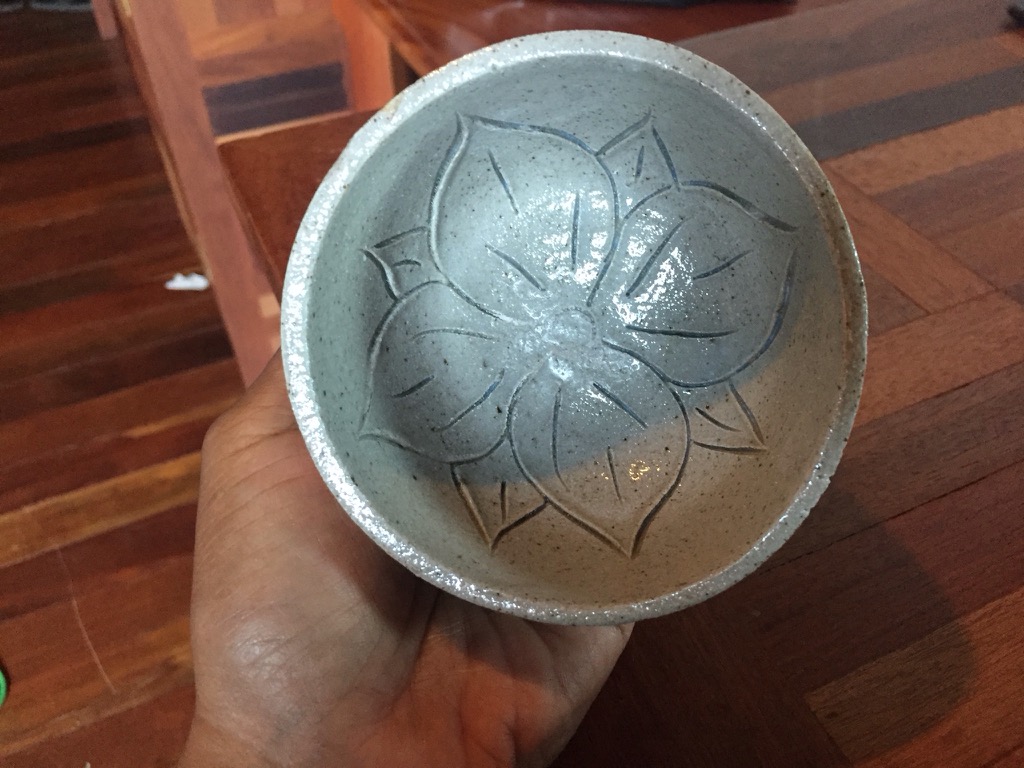
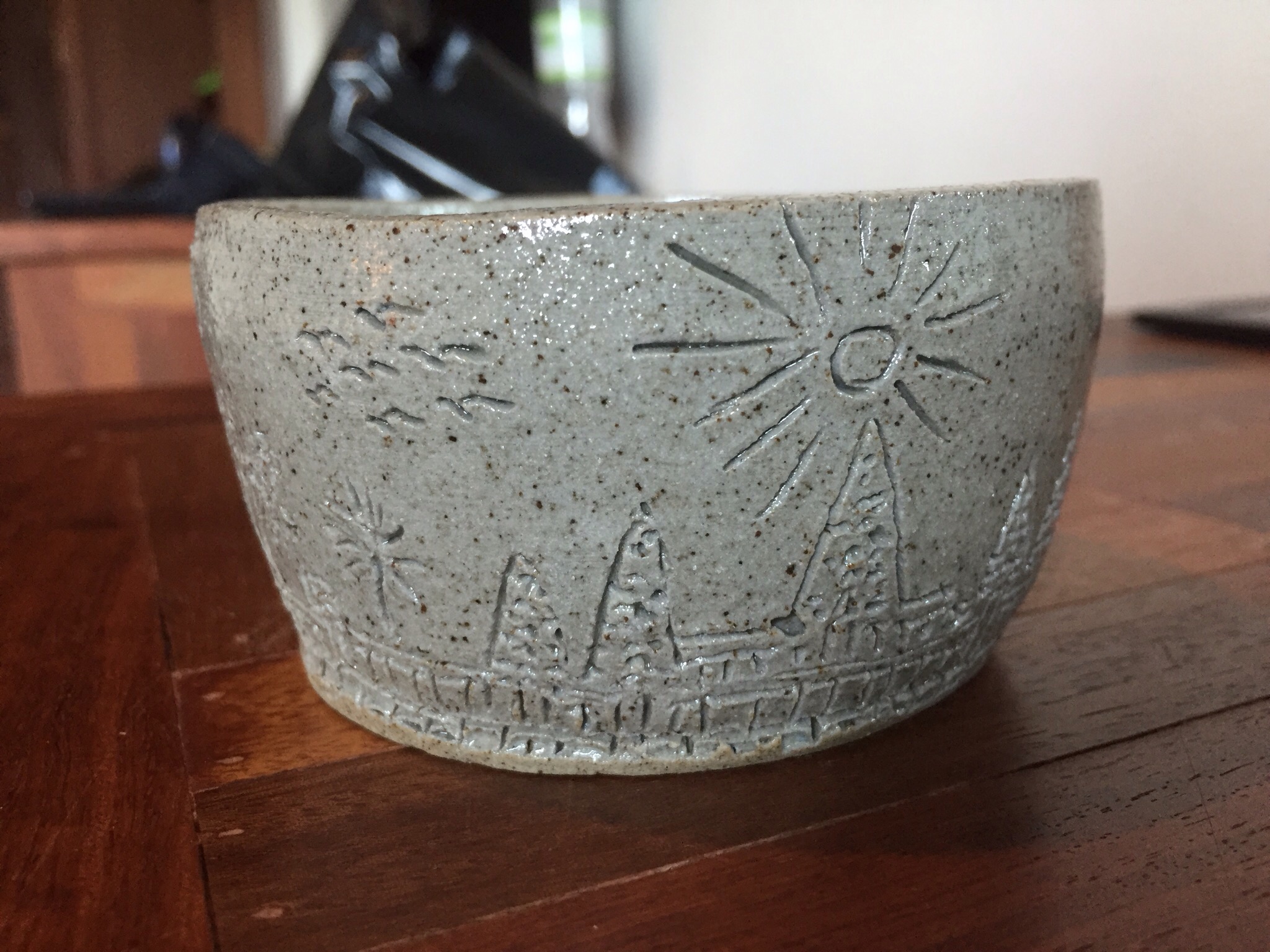
How to start with the last few wonderful days? Muddy, sweaty, tired, and exhilarating. We took a day off after templing and took a pottery class at the Khmer Ceramics center, learning from Deaf instructors who are hired there, and finishing up with passable pieces of ceramic work to take home with us. All of the art decoration Eric and I totally did by ourselves and did NOT have ANY help from the talented artists there. Nope, none at all. 


The next day, we had booked a tour with Grasshopper tours, where we would bike through the countryside around Siem Reap in the morning and then kayak in Lake Tonle Sap in the afternoon, through a mangrove forest and then around a floating village. Grasshopper also asked us if we would come with them the next day for filming some promotional material! Of course, we signed up. I’ll write a bit about that day in thenext post. 

We met our wonderful guide, Hang, who had grown up in a village on the outskirts of Phnom Penh with his seven brothers and sisters. We started by riding out through the city of Siem Reap. For the kids I found this a bit harrowing especially when the girl got a bit too friendly to a turning motorbike driver, who was trying to get through the intersection quickly to avoid the nearby policeman from noticing she wasn’t wearing a helmet. 

Stopped on the road near the children’s hospital for a baby to be transferred from one ward to another, IV pole hanging

Once we were out of the city the riding became much more relaxed. As we went along the dirt back roads, the houses changed in character from clearly suburban ranch style homes to more rural homes in villages, largely placed upon stilts. Even these houses, though, I was surprised to see looked relatively large from what I was expecting. We later learned that the people who owned these houses were considered relatively wealthy by village standards, and that most of them had saved and then spent to buy the house, and inside would be sparsely decorated. 


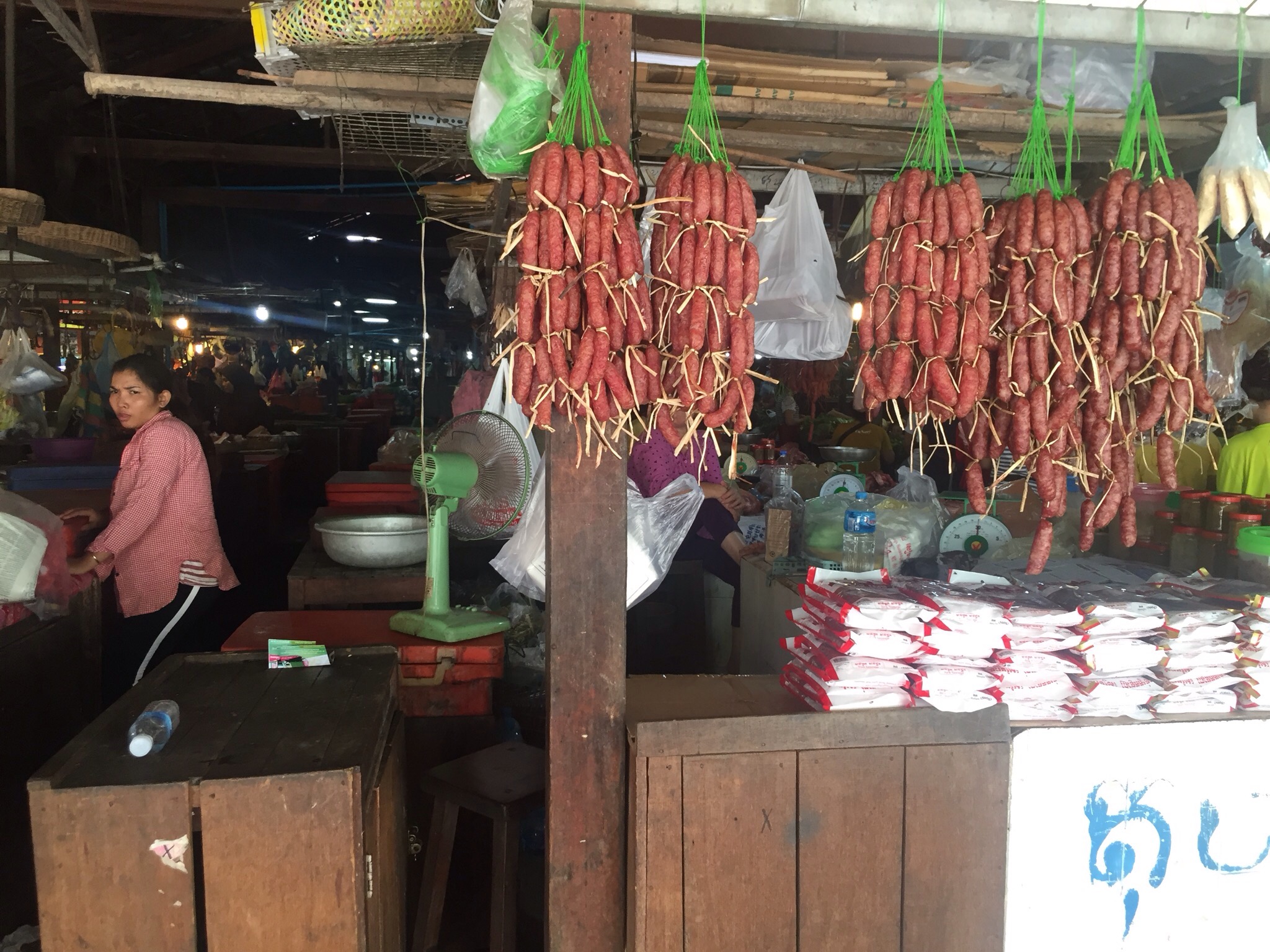
We stopped at a local market and tried some delicious street food! When I was younger, I would eat all of that stuff and not think twice, but I’m a little more cautious now since I really don’t want to get sick so it was nice to have a guide to help us eat stuff that was “safe” to eat. I’m getting soft in my old age. We had steamed rice cakes, puffed bread,  and my favorite, battered deep fried bananas. YUM. 


We turned the corner of the market and jumped as the fish sellers had tubs of fish STILL MOVING for sale as they slowly asphyxiated. You’d pick your fish or meat, the sellers would crack it open on a handy slab of rock and prepare the fish for you, while the flies had first dibs. Mmmm, fish with a side of maggots. The kids were a bit squeamish about this all, and scurried through the fish and meat stalls without stopping much. 


Onward to our next rest stop, a roadside stand to eat cambodian fish noodle curry, Num banh chok, which was incredible. The flavors were so fresh and unlike anything I’d had in a restaurant so far. 

the boy chows down on cold noodle salad


stopping at the side of the road for a snack of sticky rice and beans, grilled in bamboo


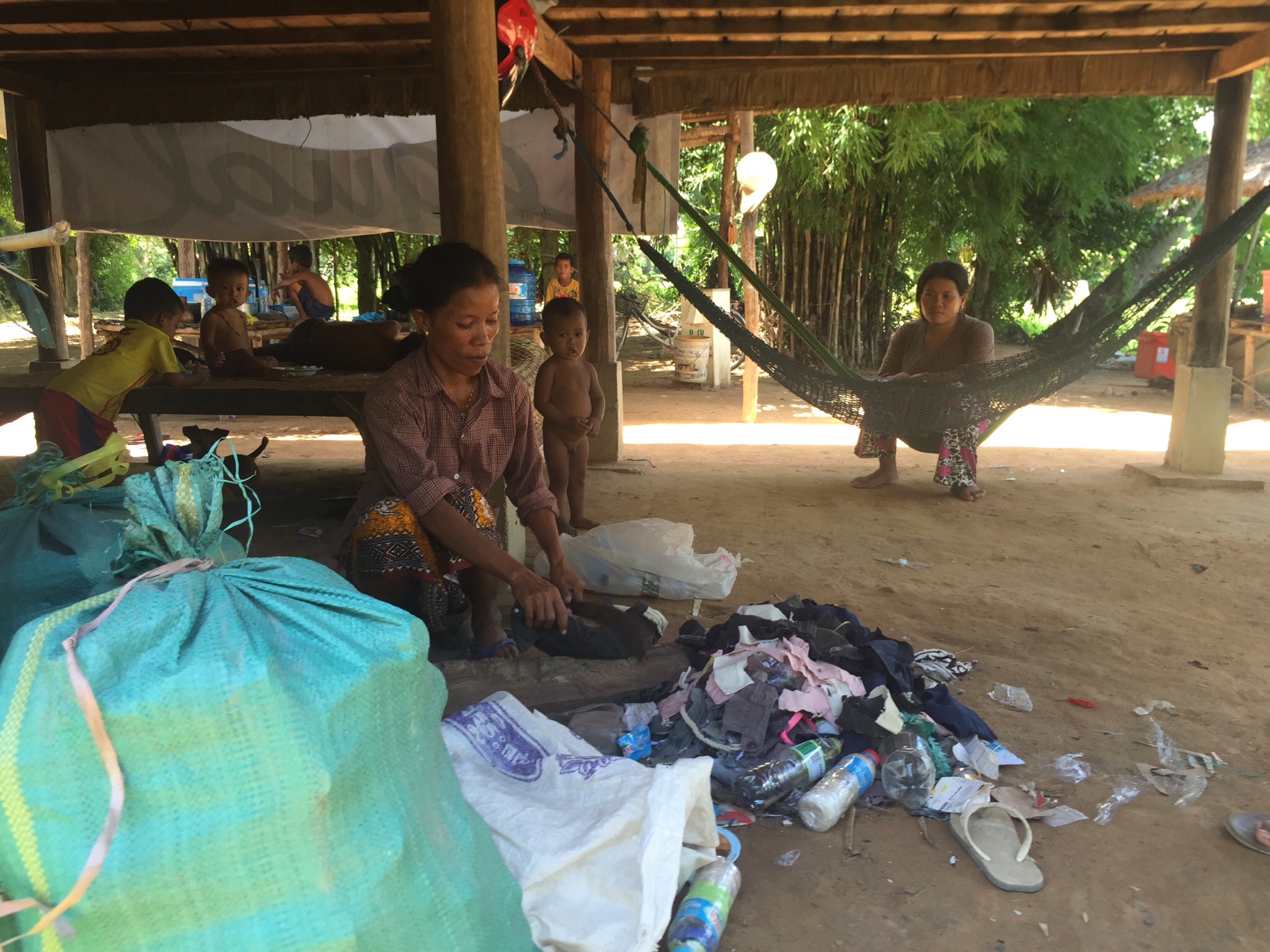
We finished our 30 km bike ride at a raised house, where we were met by Lee, a young man who works for an NGO called Husk. Husk has a setup in Cambodian villages where they try to create sustainable patterns in poverty level one and two citizens (earning < $2.50/day) to break the cycle. As part of this, they have created a school in Cambodia for supplemental English education for local kids. To be accepted at the school, the kids must attend public school full time as well. For many local villagers, this is unrealistic because they need the kids to be out making money, especially during tourist season when they can send the kids out to beg or sell postcards and trinkets. For this reason, they strongly encourage against buying from children – if tourists keep buying from kids, it perpetuates the cycle of poverty as they will be sent out to beg instead of kept home from school. This isn’t a perfect solution, as then the families may not have enough money to survive. To support vulnerable families they have a few options. One is that the Husk building cores are made of plastic bottles stuffed full of fabric and other plastic bags. These are put into a chicken wire core and cemented over to make walls. They pay or trade for these bottles, and on our walk around the village we saw women hacking fabric into strips with a machete and stuffing them into plastic bottles.  (There’s lots of kids around as they’re on break right now, not just not going to school.)


There’s also a seamstress shop where they make toys and other soft items to sell to raise money. Husk chooses it’s villages carefully, avoiding those that have corrupt chiefs who would only line their own pockets with cash and aid. They also are trying to create a second generation of leaders – we met young women from the village who could not speak any English a few years ago, and were now teachers at the school! They also teach environmental stewardship, encouraging the use of trash bins instead of litter. The work they are doing there is truly fantastic, and we’ve all committed to helping out more as we can. 

The super friendly ladies of the sewing workshop. With the help of the guide to translate, we shared a lot of laughter with them!


After this, it was a ride and then a boat trip to kayaking! There are a few floating village communities on Tonle Sap Lake, the most famous of which has now become a tourist zoo, according to what I’ve read. Where we went was nothing like that, and other than one or two occasional tourist boats speeding through, we saw little of it. We started with a kayak tour through a mangrove forest, where our guide kept scooping his hand through the water to catch large water snails which he planned to fry up for his dinner! He offered a few to us, but being the generous souls we are, we did not want to take any of his snails and declined.


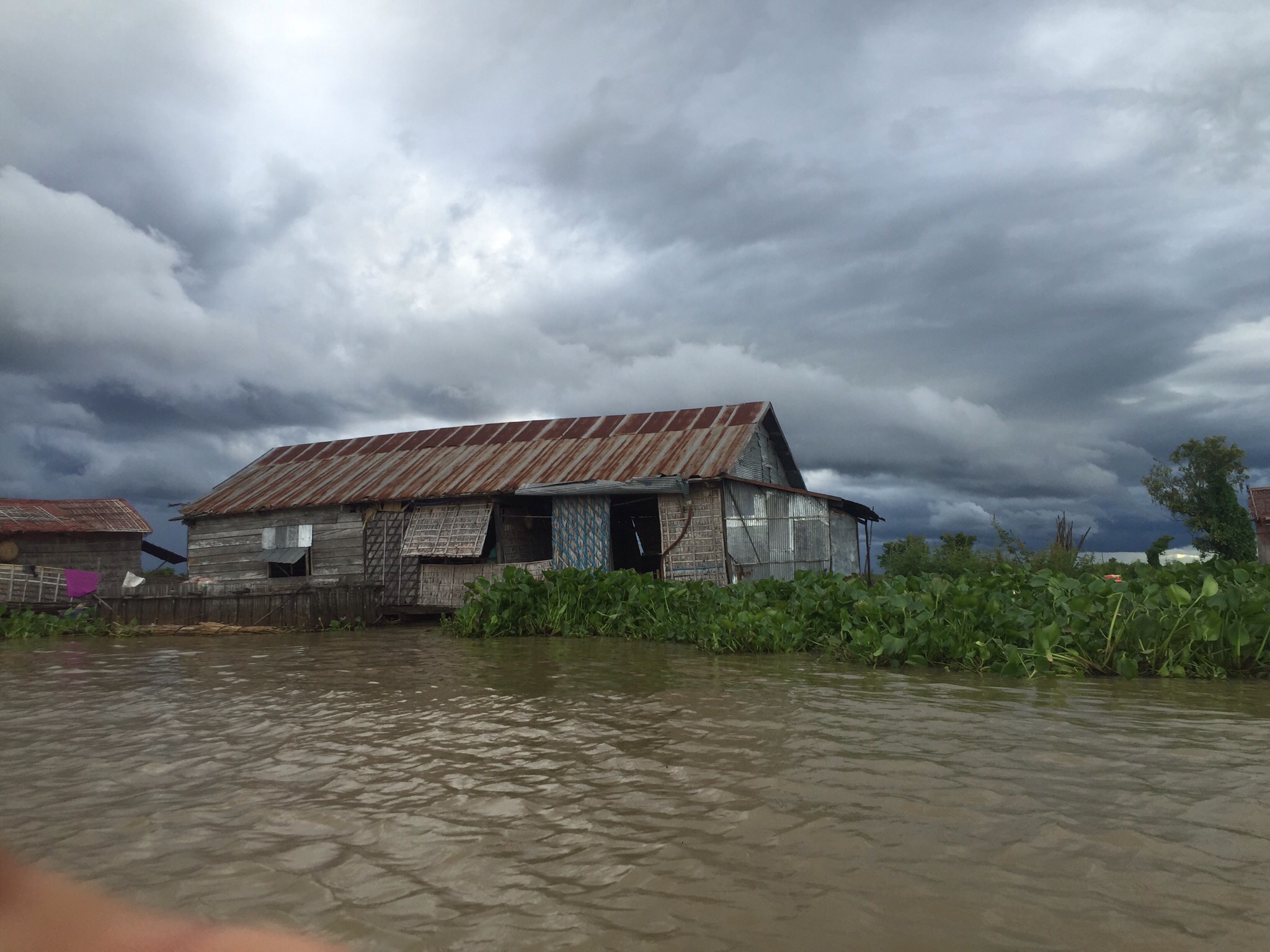
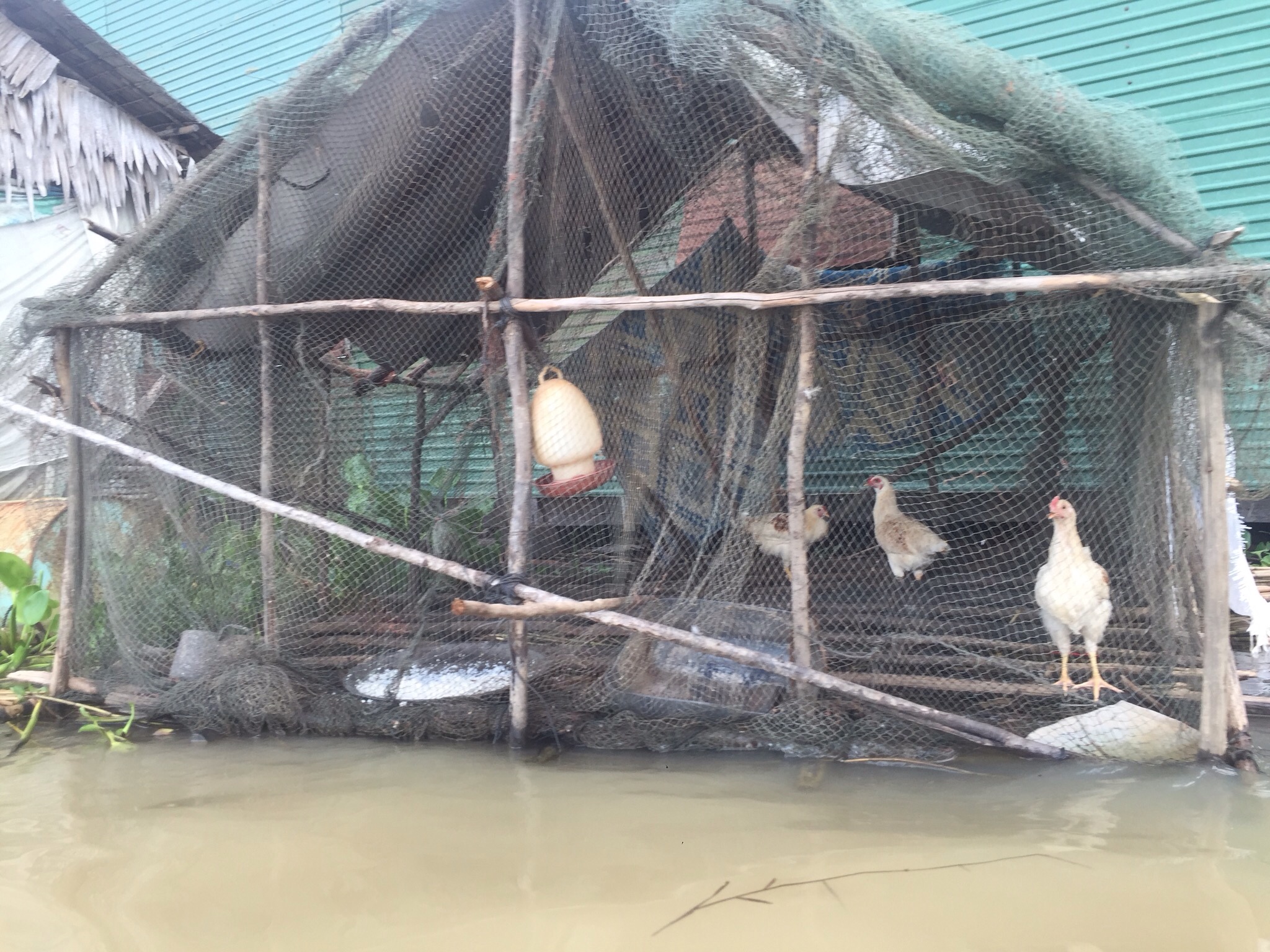
 We came back to paddle through the floating village, and it’s not extreme to say that the village absolutely blew my mind. The houses are suspended on bamboo rafts, and move according to the water levels in the lake which varies greatly by season. People have everything on rafts – there are small restaurants, convenience stores, even chickens & pigs living on the water!


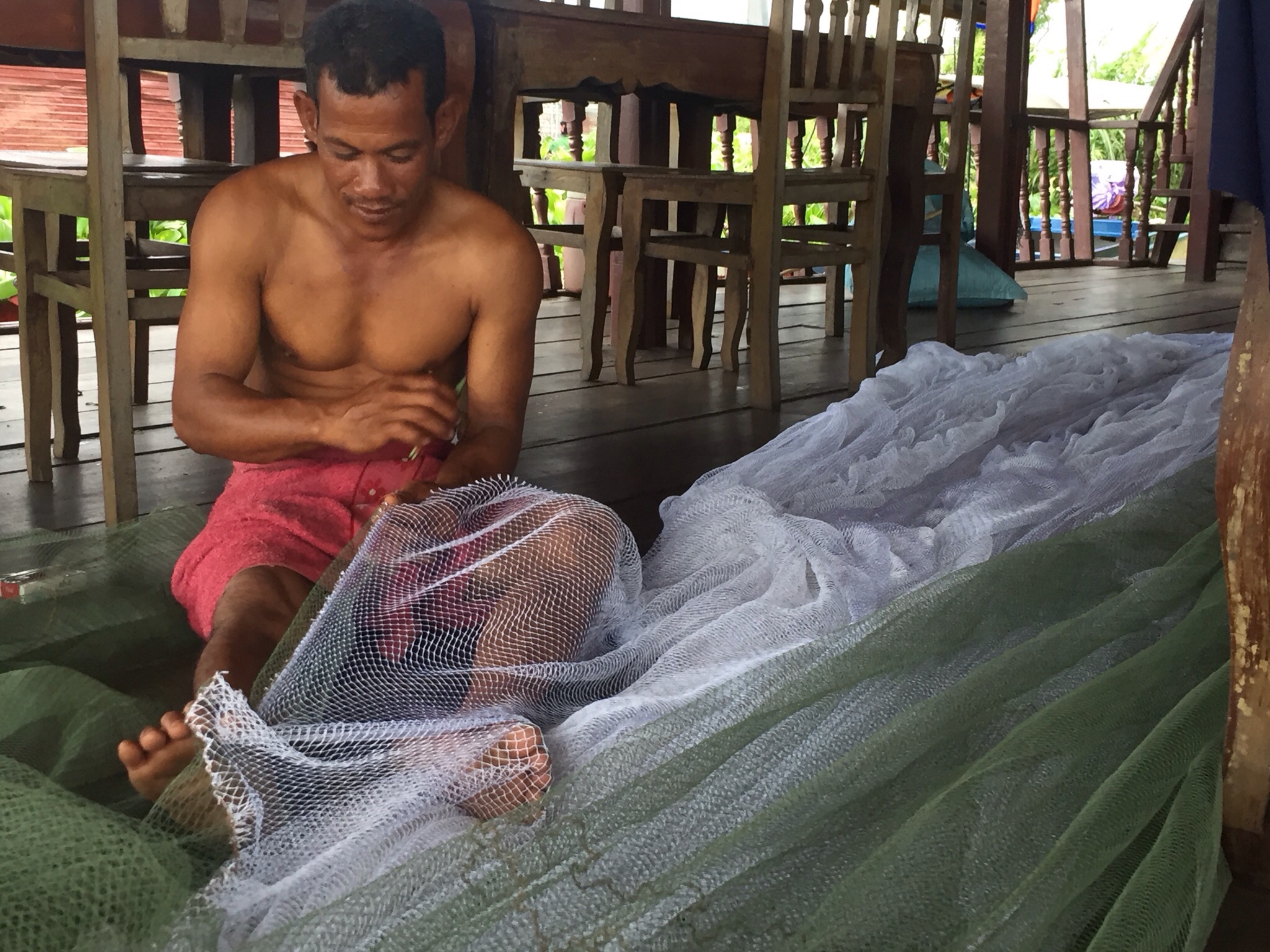
mending fishing nets


 We passed by a fixed building which was a school. As the season gets wetter, the houses move farther away from them and kids may have to paddle their boats for 2 km to get to school every morning. It was something that none of us could really imagine, living out on the water, rarely touching solid land. Weddings happen in the houses by moving a house or two and a restaurant together to have enough room for a party. It’s something I’m still thinking about, in that the way of life was something almost unimaginable for me before. I mean, the small villages with farms and chickens and naked children running about…I expected that and have a vague notion of what that life looks like, even before we got a closer view today. But never have I seen anything like the people who live their life on the water, rowing from home to home or village to village, waiting for the rains to come to know when it’s time to tow the houses to a different spot. 
A note about poverty tourism: the phenomenon of (usually) Western tourists paying to see people living in poverty is a controversial one and raises the question of exploitation. Do we go into the villages as a form of entertainment and something to discuss while we have an expensive meal back in the city? I don’t know that I would call it entertainment, but for us it was deeply illuminating, even for what we thought we knew. I think that you can come to places like Cambodia and see the temples and the museum and leave, eat in the tourist district, stay in very comfortable hotels, and not get a sense of how many people live here. I think it’s actually important to visit places like the villages, and it was important to me that my children see homes and lives in the world that look nothing like ours. As much as possible, before taking a picture of someone I would ask if it was okay, by indicating with my camera, and almost everyone was happy to be in a picture. I also asked our tour guides if it would be okay to take pictures, and since they clearly knew the people in the villages I figured it would be okay. Nearly everyone we met or swam by in the villages we would exchange a friendly “hello” and namaskar, and if we had questions they could be relayed through our guide. They also get money by charging entrance fees at the boat docks which are shared among the residents, and so your tourism does help to support the community here. I always wonder what would it be like if I was gardening in my front yard and a busload of tourists drove up, decamped, snapped pictures and then left. For many reasons, we avoid tours like this, and this is the main one. 

Grasshopper tours employs Cambodian cycle guides who love their country and want to share it with you on a small scale level, which is a very different feeling. So, no I don’t feel bad about this. I think we’re all better off seeing more of the world and how people live in it, and also doing our best to do it responsibly and in a way that treats them as people and not objects. 

-s

In which we visit the temples of Angkor Wat and the laundry luck runs out

Our initial plan had been to spend a few days at the beaches of Sihanoukville, but the monsoon weather laughed at our idea of a few idyllic beach days. Instead we decided to just head to Siem Reap and spend more time there. We left Phnom Penh by way of a six hour bus ride through the Cambodian countryside, reaching Siem Reap in the evening and settling into our hotel for the night. Searching for a hotel in Siem Reap is not for the faint of heart, as there are over 200 hotel options as well as guesthouses and air bnbs. We got so sick of poring over seemingly identical options that we just picked one and booked two days there as a start. Turned out, the rooms were dark and dingy and it was a hotel that seemed to cater exclusively to Chinese tourists. This is not in an of itself a bad thing, but I felt like a secondary tourist attraction at breakfast time when the Chinese would openly stare at me. I guess this is what the statues at Angkor Wat feel like. Huh.
We spent the next day wandering around Siem Reap, orienting ourselves, and finding a new place to stay. Having read travelogues that talk about a pleasant stroll through town and happening upon the perfect little guesthouse, this was what I imagined. Instead, we found ourselves sweating in the tropical heat to check out “air bnb”s that were just hotels, and not very appealing ones at that. I finally looked at a hotel on the side of the river, which was lovely, with wooden ceilings and a quaint, airy feel. I actually bargained a bit for the price (!) and we had a new place to stay.

Siem Reap is far more pleasant than Phnom Penh. While there are still every manner of vehicle going every which way on the streets, there are far fewer of them and you can actually breathe the air. I was surprised by how touristy Siem Reap is. The main drag is actually called “Pub street” and is decorated with lanterns. I’m sure in the wee hours of the night this becomes a rowdy alleyway! There’s still plenty of actual town life, as seen in the market pics below. 

old market in Siem Reap

Yesterday we went to visit the temples of Angkor Wat, and saw “the big three,” Angkor Wat, Angkor Thom and Ta Prohm. Our tour guide gave us the option to leave at 5 am for sunrise or 9 am if we wanted to leave later. Eric gave me a look when I chirped, “Oooh, the sunrise tour at 5!” However, I made the executive decision that we’d do it. I mean, when will we ever  be here again? We all sleepily made our way out of the room with all our luggage as we were checking out of that place and met our guide, San Pork, who was funny, energetic and a delight to spend the day with. Once at the ticket booth, they asked to see the kids’ passports to verify they qualified for the under 12 free ticket. Everyone looked at me as I am the official holder of the passports. I looked at everyone with a “Oh, sure!” smile on my face and took one step back to go to the car to get them. At this point, I froze and the blood drained out of my face as I realized I had left the passports in the hotel room safe, which was about a twenty minute drive away. As I am dark skinned, the draining of the blood did not change my outward appearance, but I assure you it happened. Eric just looked at me like I was a rank idiot.
Our guide smooth talked the ticket sellers into letting us visit, we called the hotel (who didn’t understand me at all and just thought I wanted to book another night), and then we took off for Angkor Wat.
Angkor Wat is a 900 year old temple in the middle of a vast set of temple complexes and ruins and is known as the largest religious site in the world. Each wall surrounding the temple is nearly a kilometer long, and it’s oriented in cardinal directions. I wonder how ancient peoples did this – did they have some type of compass or did they just watch for the movement of the sun?
Sunrise, unfortunately, was not happening due to the thick cloud cover, but this did make the morning cooler. We sat at a little outdoor overpriced tourist restaurant and the kids and I ordered bread and butter, expecting a few pieces of toast. Instead, we each had a full sized baguette plopped in front of us, balancing precariously on a tiny plate, while the chickens clucked around us hopefully. We looked at each other and just started laughing. We ate what we could and bagged up the rest as San said we could give it to some kids along the way.
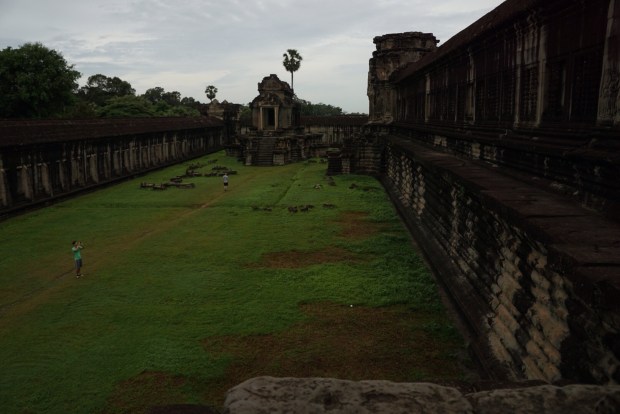
Angkor Wat is, of course, beautiful. Every superlative you’ve heard is accurate. Sandstone walls covered in green lichen surround courtyards. The external walls are carved in stunning bas relief sculpture depicting Hindu epics and myths. Angkor Wat has had significant restoration efforts over the years, hampered by the civil war and looting, and there is still a long way to go.

img_1135-1

DSC03439

vincent came with us to Angkor Wat! The roving macaque monkeys frightened him a bit.

img_1136-1

Churning of the sea of milk bas-relief sculpture

at the very center of Angkor Wat


We left Angkor Wat, retrieved our passports, and then drove to Prom Preah, noted for the trees that have seemingly eaten up the temple there and also for Angelina Jolie cavorting about them half dressed as Lara Croft in Tomb Raider. When Angkor Wat was initially found prior to restoration, it looked much like this. The trees burrow themselves into the foundations of the stone, and split it apart. Eventually, our guide told us, the government will have to cut the trees down to preserve the site. It almost seems a shame in a way, to reckon with the forces of nature to reclaim itself from the stones.

img_1140

DSC03484
Last was Angkor Thom, a later temple on the site which was erected during the time of buddhism. Large peaceful faces gaze out upon you from four sides of each tower – the king did this to preserve the peace between Hindus and Buddhists as the country was in a state of religious transition. Hindu? No problem! These are the four faces of Brahma! Buddhist? All good! These are all depictions of Buddha looking out upon you.


We went back to Siem Reap and checked into our new hotel. We’d been awake and going for eight hours and it was JUST barely 1 PM. Oof. Eric gathered the clothes to drop off at a local laundry and the kids took showers, and after a bit of down time we decided to head into the city. I’ll replay the ensuing conversation for you:
Me: “Hey kids, get dressed so we can get out of here!

Both kids, wearing only a shirt “Umm…we have no pants.”

Me: “Angkor WHAT?!?!”

So, when Eric had been gathering clothes for laundry, the kids were playing a game on the iPad and didn’t want to stop. Instead of actually checking to see what was clean or not, they just chucked ALL of their clothes into the laundry. Which would not be ready until tomorrow. As you might imagine, Eric and I were not pleased with this situation. The boy had to dry his swim shorts off with a hair dryer and we put the girl in a nightdress with a pair of the boy’s boxers underneath and made for the market where we got her a pair of baggy pants for $2.50. Honestly.

In which I learn a lot about rice farming, and drink something excreted by a cat

We awoke to have breakfast at the villa before our tour, a delicious choice of nasi goreng, pancakes, or an omelette served with juice and coffee or tea. The kids have developed quite a taste for tea on this trip and have a cup of black tea with milk and sugar every morning. I asked a doctor if this was okay by looking in the mirror and saying, “Self, is it okay for the kids to have black tea?” And then doing what every doctor does when they don’t really know the answer: I googled it. I’m sure that’s not very reassuring to some of you, but it’s the truth if we don’t have access to UptoDate. Google told me it was okay. Mostly.
We met our fantastic guide, Putu and we were off. This was the second or third Putu we had met, and I’d also seen many businesses with the name Kadek and Ketut around Ubud. I asked if these were common names, and Putu told us that in Bali, names are given according to birth order! Putu/Gede/Wayan is a first born, Kadek/Made is second, Nyoman is third and Ketut is fourth. They also have a given name which follows the order name, but everyone is called by their birth order name primarily.
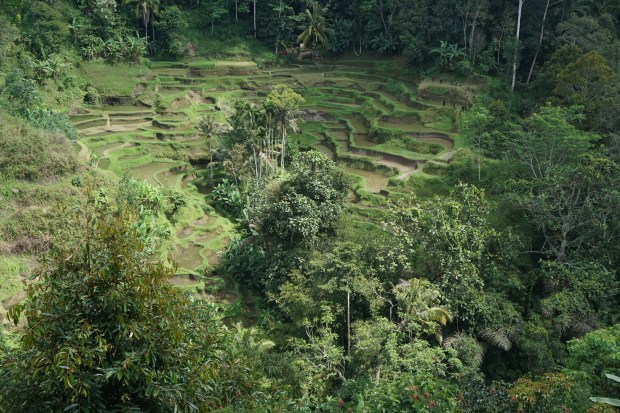
We first went to the famed Tengallalang rice terraces. These are absolutely stunning, not only in their beauty but also their engineering, which is mirrored in all the rice terraces seen in Indonesia. THe girl loved these and frolicked about jumping up and down the levels,until she plunged knee deep into a mud pit. She took a mini bath in the little waterfalls that dot the terrace.

img_1102

The rice fields are terraced in an ingenious method of overflow irrigation. Given that Bali is a wet country with much rainfall and many sources of natural spring water that come from up high, there are irrigation ditches dug around the towns everywhere. I initially thought these were open sewers as this is how they look in India, but it’s actually clean spring water and you’ll see people doing laundry or bathing in the water. The small fields have little outlets dug into the edges to allow water to flow into each subsequent paddy, finally meeting at the bottom in a river. The farmers manage the amount of water each paddy needs by opening up or closing the little outlets with some more mud.  You can see one of the openings in the picture below.

img_1101-1

There are strict water rules in Bali, for instance damming is forbidden as all people need the water flow to feed their rice paddies. The large fields at tengalalang are owned by a community of more than 50 farmers, but most fields you see around are owned by fewer. Once the rice is planted, it doesn’t need a lot of work until it’s ready for harvest, and so most farmers have another skill, such as a handicraft, to earn money since the rice planted in these fields is used mostly to feed their families and is not sold.
After this we visited a coffee plantation and visited the civets. As you may know, the civet is an aggressive jungle cat that eats coffee berries and then poops out the bean a short while later and supposedly the process through the digestive tract makes for a delicious pot of coffee. They collect the beans, clean them, roast them and grind them into a potent coffee. There are concerns over the treatment of the civets – they’re kept in relatively small cages and really, they don’t look happy. My curiosity won the better of me though, and I had to try a cup. I found it to be very dark and almost syrupy in texture, and for an hour or two I felt particularly virile. Rawr. Behind the plantation was another spectacular rice terrace.

DSC03283.JPG

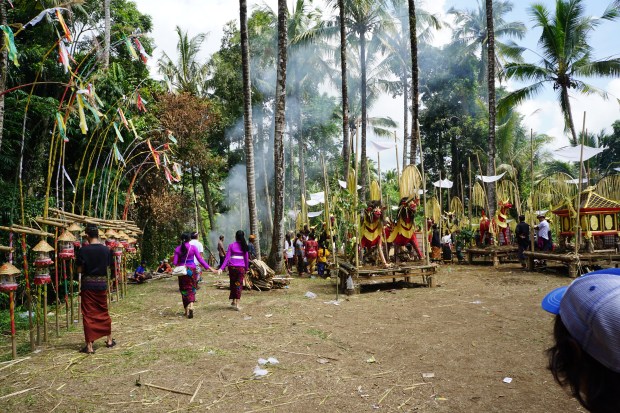
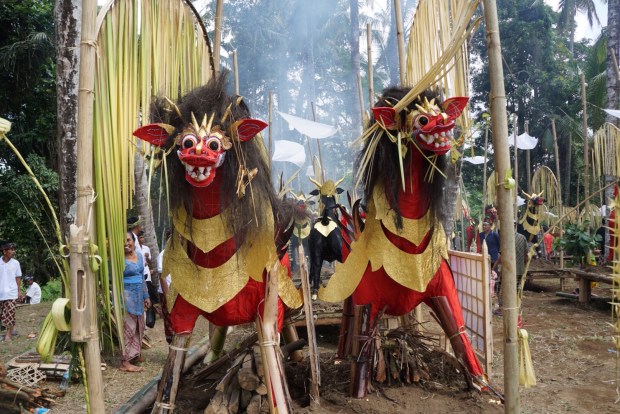
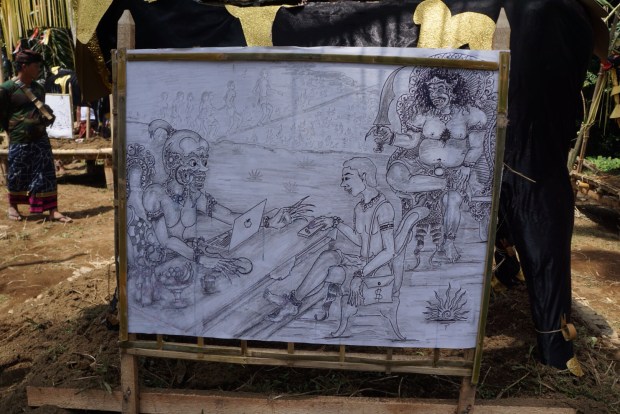
On our way to the first temple, we happened upon a village having a cremation and stopped to visit, more successfully this time, with Putu along to explain. Turns out the large papier mache animals are what the disinterred bones are put into for burning. Each platform is what becomes the pyre itself, and the drawings on the sides of the platforms are meant to represent hell so that we are reminded what happens if we do not behave well in this life and suffer bad karma. It was clearly a large town gathering and many of the village’s residents were out in their dressed up clothes for the event. There wasn’t any actual cremation taking place, because they don’t start the burning until after noon. Aha! This is why nothing was happening at the Ubud cremation either! We were too early.


DSC03298.JPG

img_1103-1img_1104

I particularly like this depiction of hell, where we give money to the devils who run the internet.

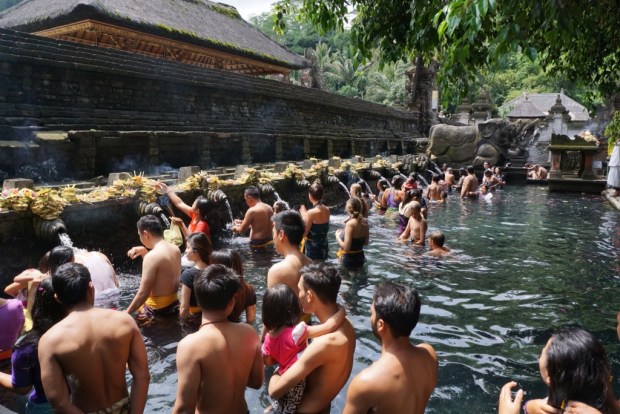
After this we visited the holy spring water temple, where fresh spring water comes pouring out of a row of pipes into a pool, and Balinese and tourist alike come to make their ablutions.

img_1105img_1106-1

These temples are living temples where Balinese regularly come to worship and leave offerings for the Gods. What I found interesting is that on the offering piles to all the Hindu gods were plenty of roast animals! Unlike India, where most Hinduism comes with a side of vegetarianism, that aspect did not make it to Bali. I guess when Ganesha tires of having ladoos and moduk for prasad, he makes his way to Bali for some roast duck!

img_1107-1

The whitish tower in the picture above is carved from pork fat and little satay skewers of roast pork surround it, not to be outdone by the whole duck in the lower part.

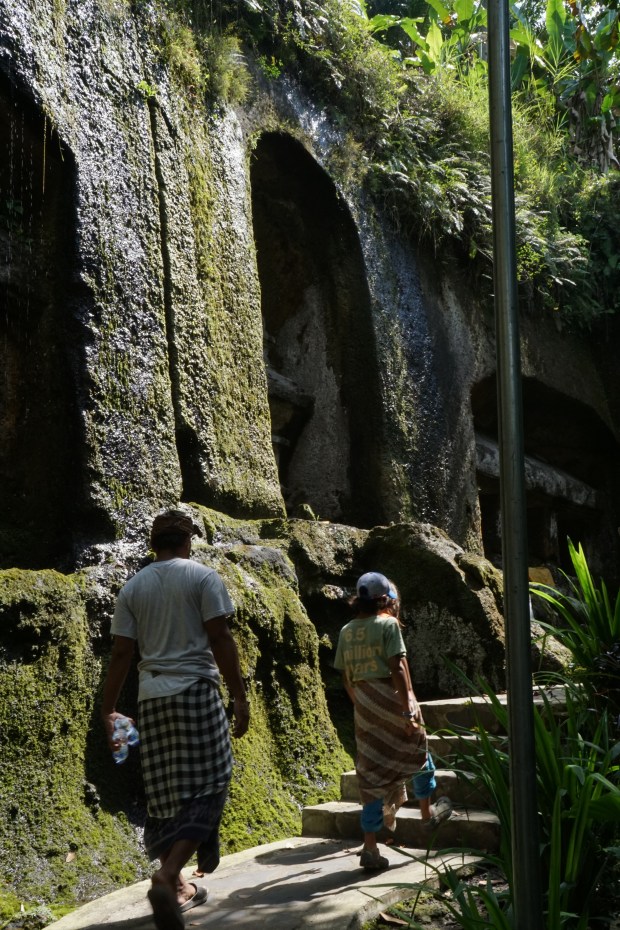
Then to a second temple – the rock temple, an ancient temple carved out of the existing stone with many stone steps to take us downward. This is one of those off a movie set, where decaying stone walls are covered with moss, rivulets of water flowing down the side.

DSC03321

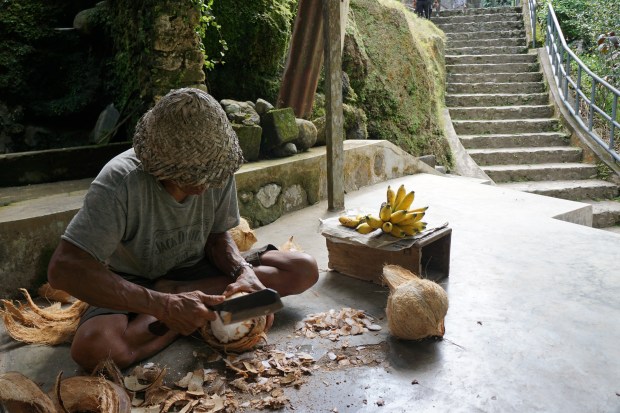
Honestly, we were getting a bit templed-out at this point. It was hot and humid and we felt like we were melting with our clothes sticking to us. On the way out, I purchased a coconut and drank some refreshing water and then nibbled on the meat.

DSC03338.JPG

Our next stop was to the woodcarving area of Mas, where we had driven by on our way from the Airport and fell in love with the large slabs of wood seemingly carelessly stacked in an open air warehouse. How would one of those look as a dining table, we wondered to ourselves? Hmmm… We took a few price quotes and left to ponder the decision.

img_1108

During the day, Putu told us much about Balinese culture and philosophy. All of Bali is focused on your bandar, or community group. Every community has a meeting area and a temple and the rules for how one becomes part of a community through marriage are specific. As Eric talks about in his post about Bali and driving, one of the reasons that we don’t see the aggressive and angry driving you see in the States is because there’s a chance that you may know the other person through few connections, and you’re just not rude to your neighbor. We had a later discussion talking about divorce in the community, which is a difficult thing. The woman fares the worst – first, the couple has to go in front of the elder at the community meeting and discuss the divorce in public. If there is no success with reconciliation and the divorce is granted, the woman is left without a house and has to leave the community as well. If her children are under five, they may be able to stay with her but if not then she would lose custody as well when she had to leave the community. I can see how this can help to stabilize the community, but I couldn’t help but wonder about women who were in truly difficult situations and how trapped this would leave them.
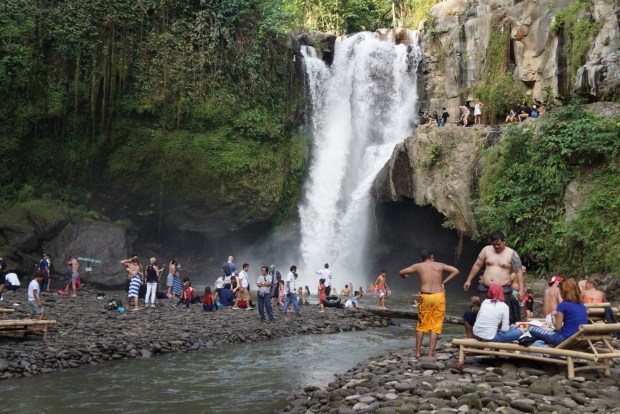
Last place to visit was a waterfall swimming hole. This was awful – there was no place to swim because there were so many people in the swimming hole, plastic trash floated about the base of the river. The tourists there were loud and partying in a most obnoxious way. We took one look, walked around the site and left. Especially after the beautiful and clean swimming holes in Australia, this was not a place we wanted to spend another second. We hustled back into the car to return to our peaceful villa for the night.

img_1109

-s

In which I follow the signs and apologize to the crocodiles.

Well, what can I tell you about the Litchfield park tour that the kids haven’t already done? The crocodile feeding part of the tour was touristy for sure – I did read ahead of time that the jumping action that is exhibited is a natural one for the crocs. They also feed them very little for a crocodile and make them work for it, so it’s not their only source of food, and of the over 6000 crocs in the river there’s only about 150 that feed from them and even those feed sporadically with the tour, so there’s plenty of wildness around. I loved the experience, and especially seeing the raptors feed up close, though I have to admit I feel a little weird about the whole thing hence the need for me to justify myself. It’s just not totally natural. But, oh man, I will never forget the sound a crocodile’s jaws make when they snap shut. 

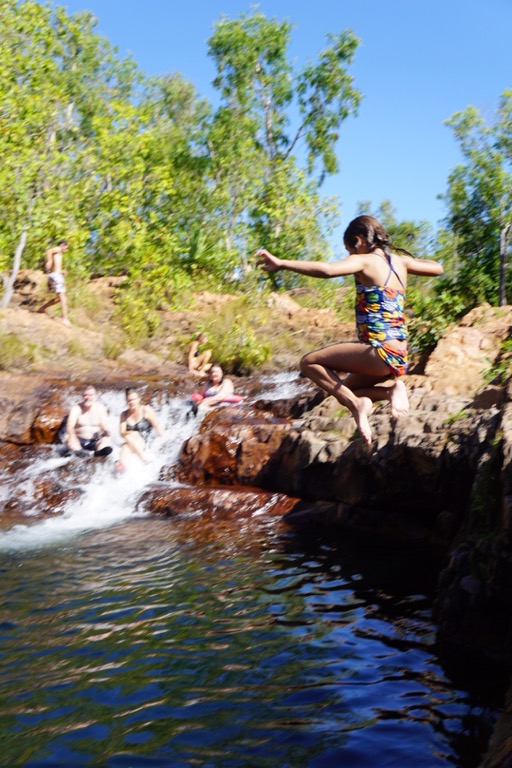
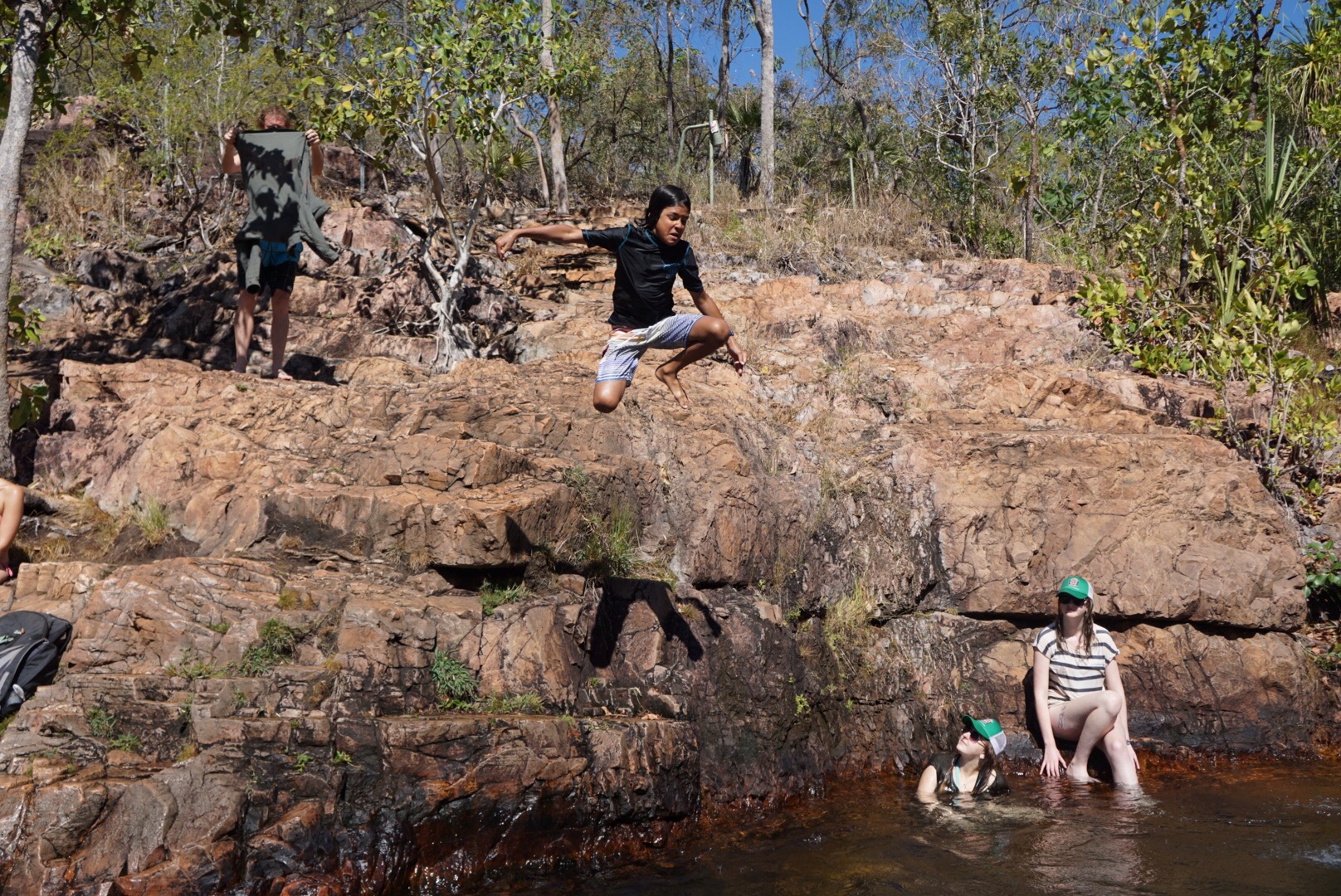
The other part of the trip was visiting the swimming holes, which were absolutely stunning. I’ve never gone somewhere where you jump into a natural pool surrounded by waterfalls that feed into it. Fun fact: it’s the dry season and hasn’t rained in months, but the waterfalls are fed because the stone surrounding them is a porous sandstone that soaks up water during the wet season and then releases it during the dry! The second stop was especially nice, where there was a 10+ meter deep pool that the kids could jump into, and they did, over and over. 


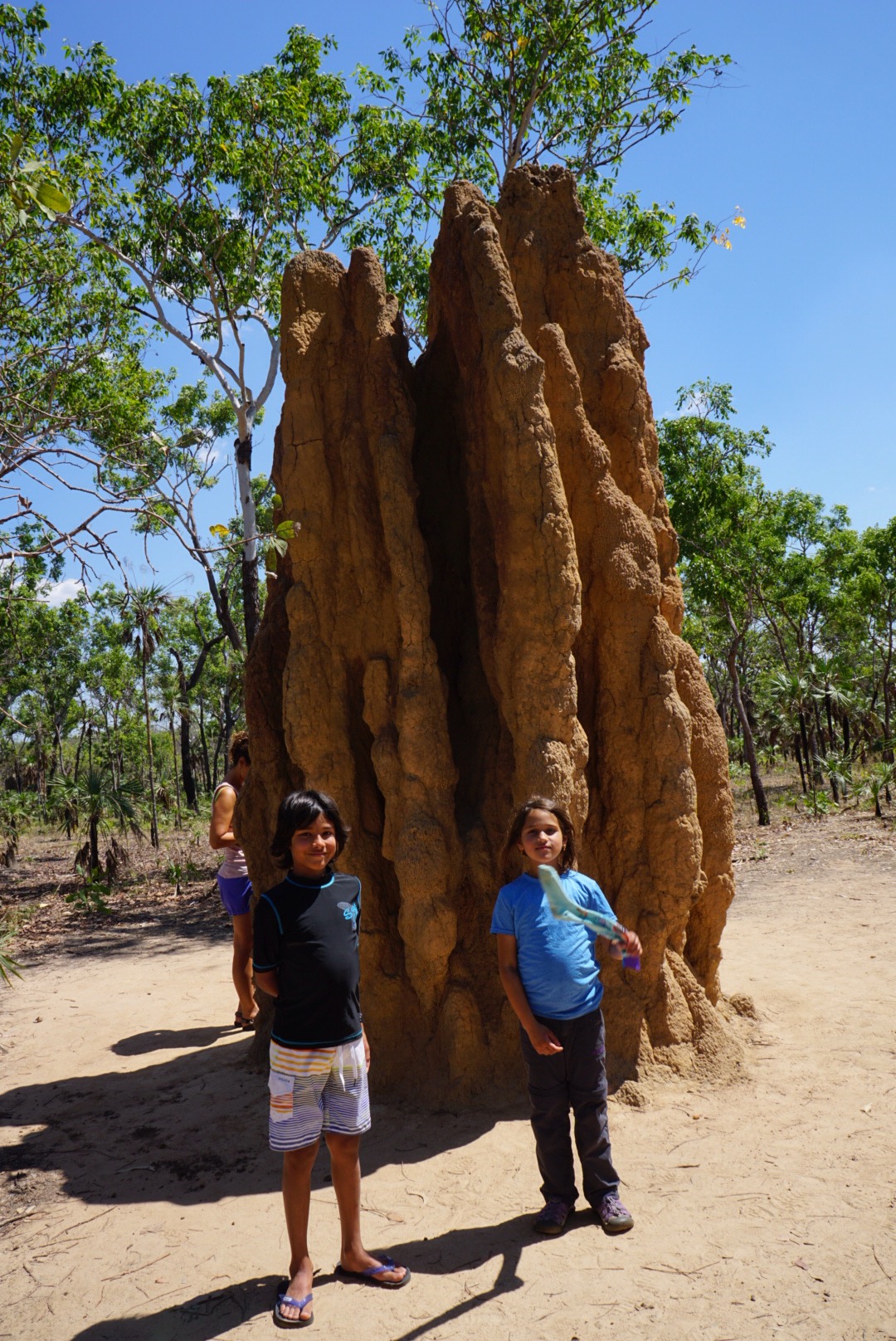
And seeing the massive termite mounds was a thing to behold! There were some fresh areas that the guide crumbled away to reveal scurrying termites, who would have the hole repaired in fifteen minutes. 


The next morning we went to the excellent Northern Territory Art Museum, which has wonderful examples of indigenous art both historic and contemporary. You can really see the differences in the art from different areas. Northern Territory art was done on eucalyptus bark, and used natural pigments and many fine lines as well as larger figures drawn with the same fine outlines, whereas more centrally was the dot paintings which I talked about earlier. Upstairs they had an exhibition of Aboriginal art award winners from a yearly contest – here is one with the artist’s explanation. I love the mixing of modern heroes and ideas into with the traditional dots and plants/myths. 

What we did in Australia was the equivalent, geographically, of flying from San Diego to Seattle, then to Utah, then to Chicago. Think about how different all those places are from one another, and it’s not hard to see the ground we covered here. It’s a big continent! I loved Sydney, Port Douglas and Uluru. Alice Springs was a good place to visit but I wouldn’t want to stay there long. Darwin, our last stop, I found somewhat charmless. Perhaps its the large number of tourists, but people there weren’t particularly friendly overall and the town is poorly laid out. That was the one place I wish I’d done a bit more research on before just staying there for 4 days – I would have instead done a longer jungle tour for a few days or maybe a 2 day tour into aboriginal country instead. One little thing I want to remember to mention is that in Oz and NZ, every single plug had it’s own little on /off switch attached to it. You couldn’t just plug something in, you had to turn on the actual outlet. I wondered if this saves any electricity or not, because if not it was an annoyance. 
Something my dad pointed out to me which I hadn’t realized is that with my trip to Australia, I’ve visited all the continents except Antartica! I guess I know where I’ll be going the next time I take off for an extended trip! 

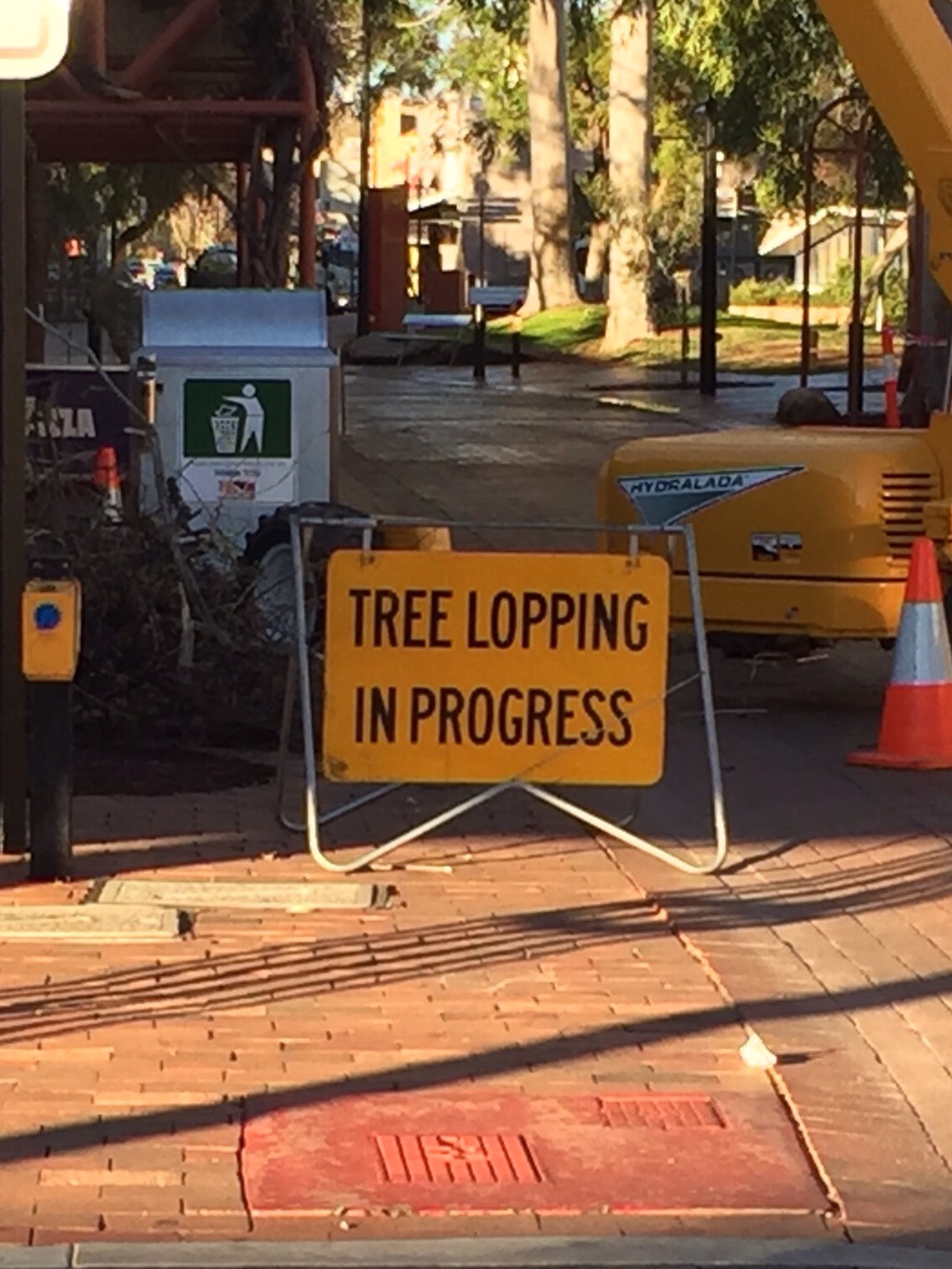
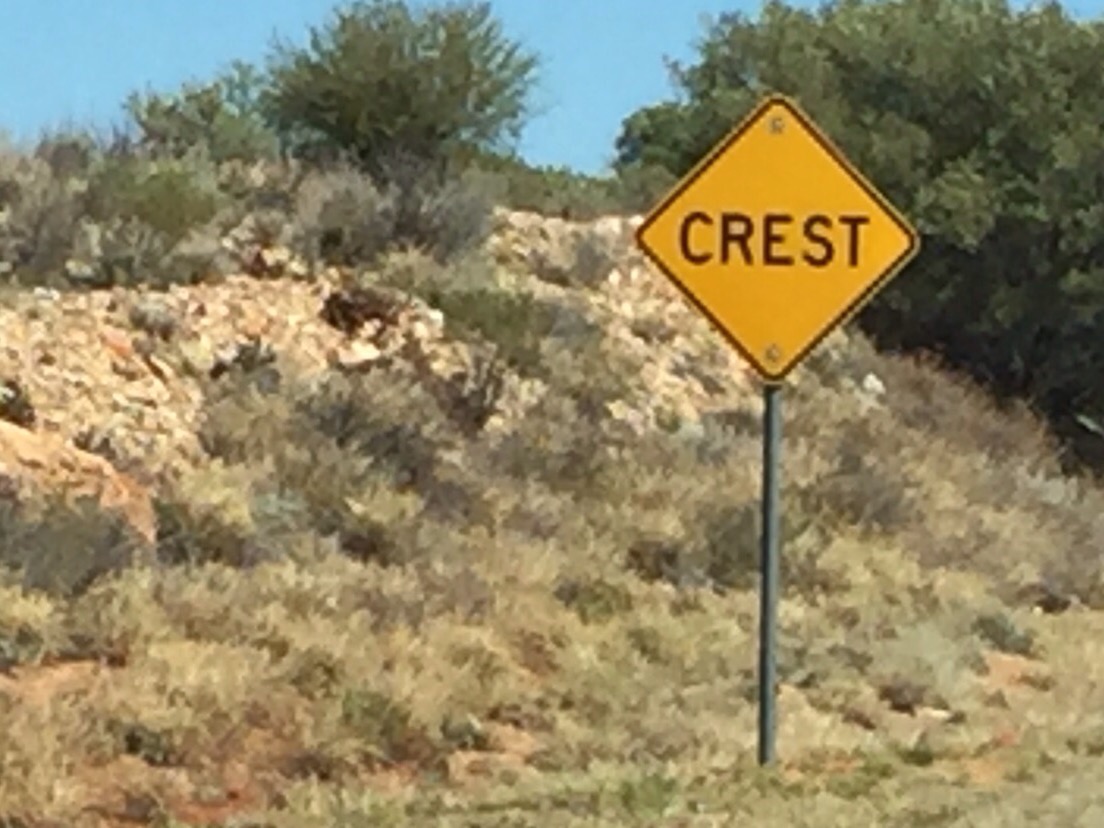
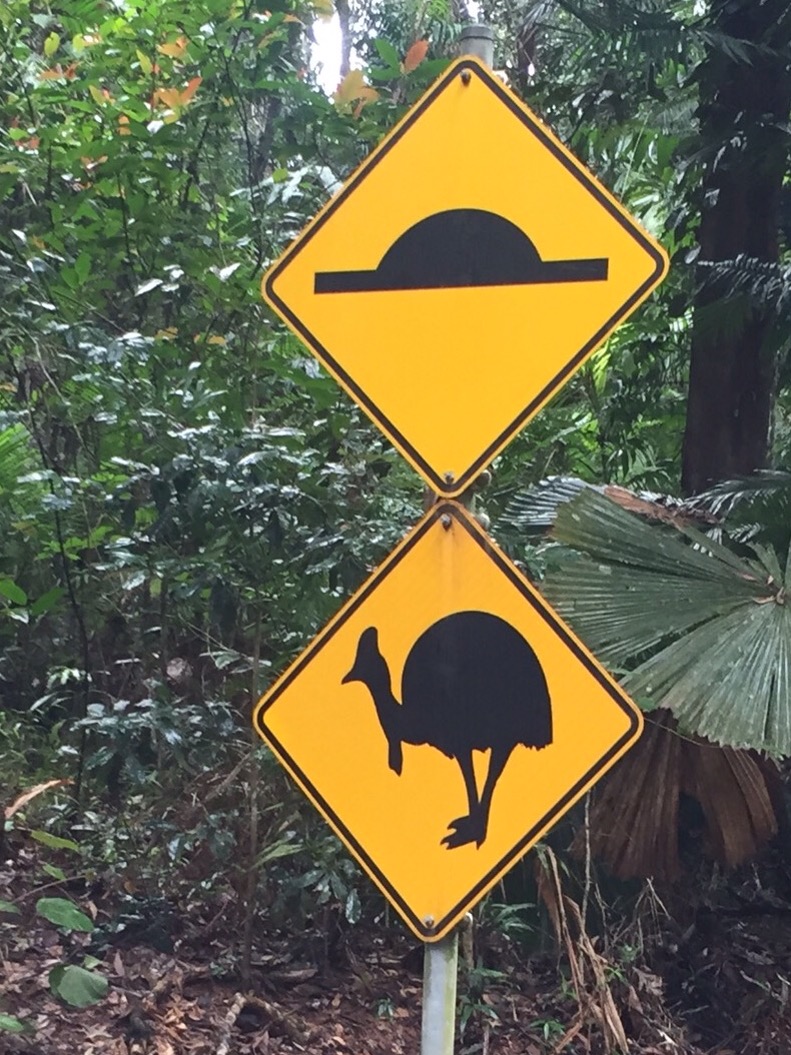
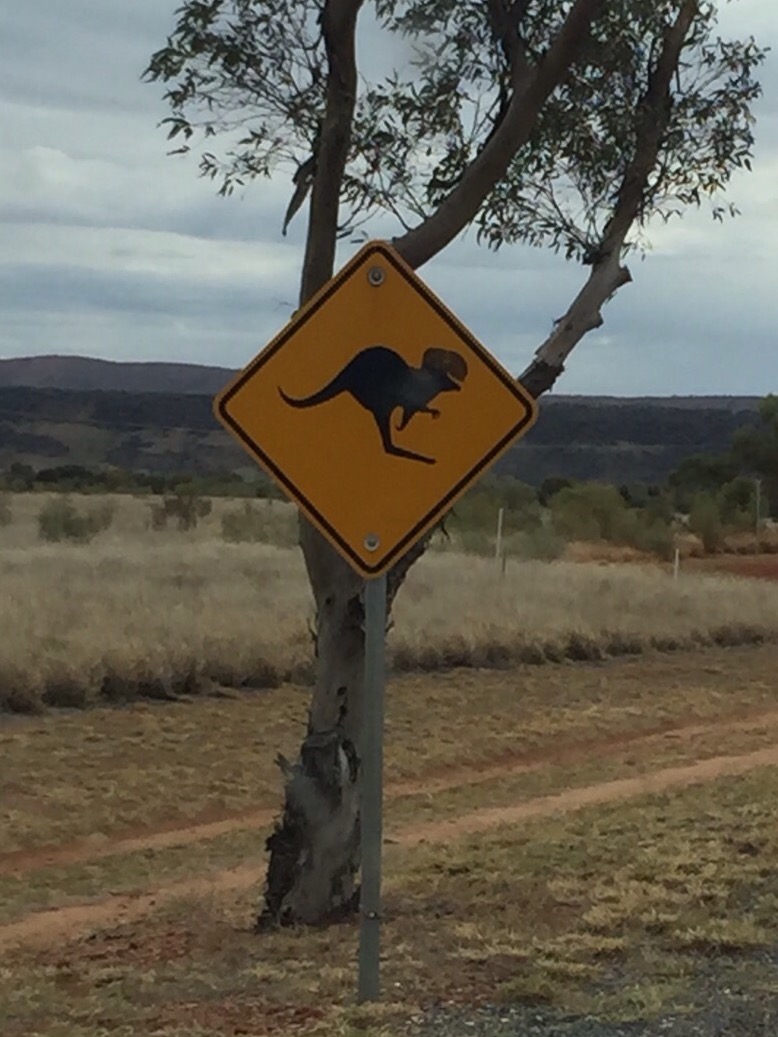
I’ll leave this post with some of the road signs I’ve seen along the way so far, and will then catch up with our trip in Bali.


Doesn’t lopping just sound refined? Also, I think the crane and chainsaw would have been a giveaway even without the sign. 


So, there’s trucks on the road? Imagine that. MIght have been nice to see this sign BEFORE i had to pass ten of them. Then I could have been mentally prepared. 

The road! That hill! There’s an end to it! and usually it was about 100 meteres up ahead. I really thing this is a stealth campaign by proctor and gamble to break the monopoly that Colgate has on the Australian market. 


Speed bumps and cassowaries. You know, the usual. Driving skill: making sure the cassowary doesn’t become the speed bump. 

We saw neither scale of T-rex nor hair of wild kangaroo, despite the signs. It was a disappointment not to see either. 
 

-s

In which we arrive at the Red Centre, and I regress to being an anthro major

We’ve been in the Red Centre of Australia for five days now, and have had two completely different trips during that time. We started our stay here in Alice Springs, then rented a car and drove the 500km (300 mi) to Uluru (Ayers Rock), camped there for two days, then back again. For me, this has been the most profound leg of our trip yet as it has also been for Eric, who writes about it beginning with his post here.
Alice Springs is a town of 28,000 people almost directly in the center of Australia. We landed in Alice Springs on a warm morning, found our hotel and wandered outside to have a look around. Tourist Alice Springs largely focuses on a pedestrian mall in town that covers 5-6 blocks and is lined with restaurants, souvenir shops and aboriginal art galleries.

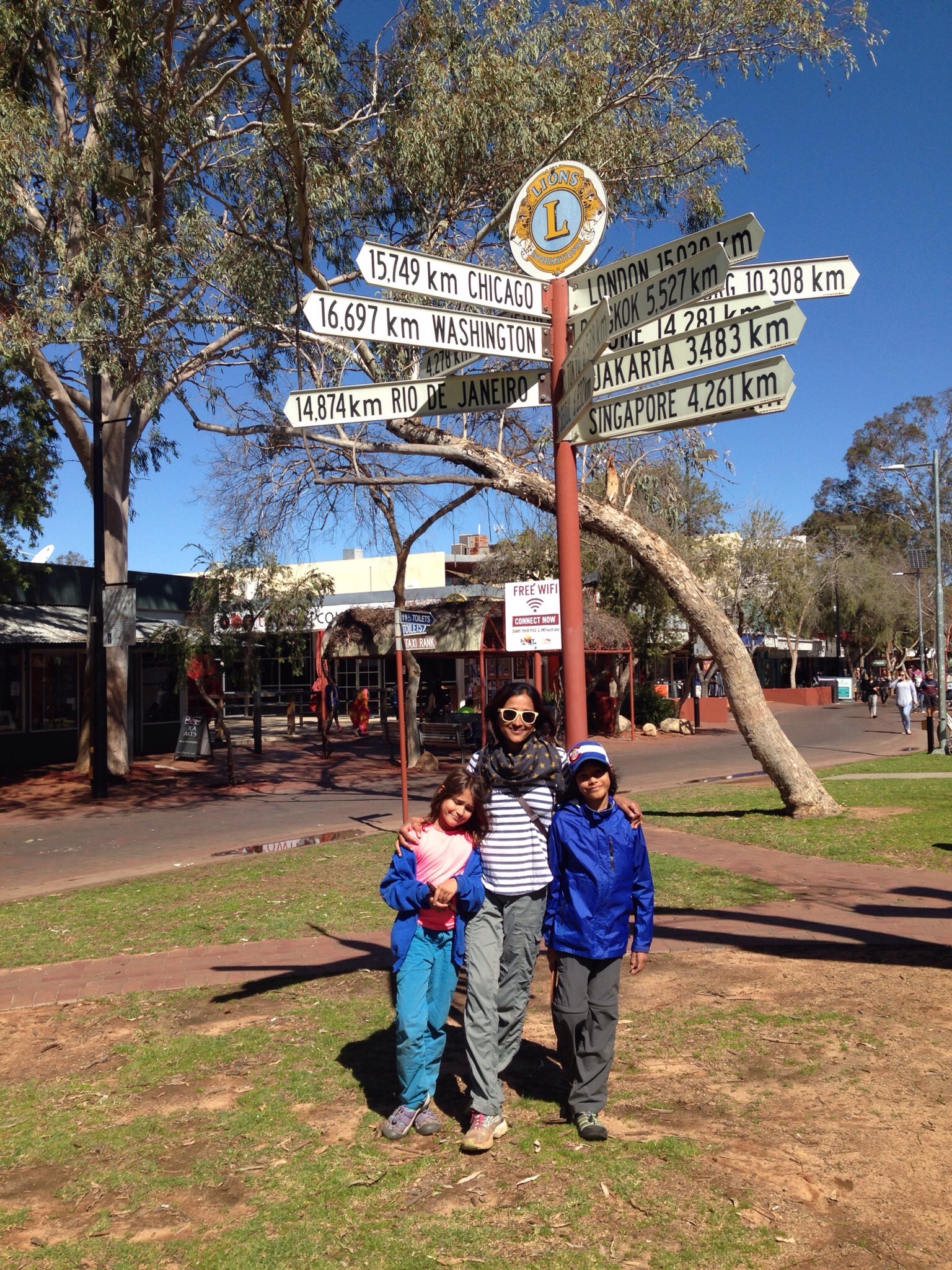
just a little far away from home


 The most striking thing I noticed about the mall, however, was the clear demarcation between the tourists (almost all white) and the aboriginal people walking around. Despite it being a weekday during which school is in session, there seemed to be many young aboriginal children walking around with their families. There generally seemed to be a lot of aboriginal people walking around doing, well, not very much of anything, and obviously very poor. I had known about aboriginal people prior to coming to Australia inasmuch as I knew they existed and had been oppressed. I didn’t know much about the current socioeconomic state of Aborigines at all. (Side note: While I’m aware that there are many different language groups of Aborigines and they are not all the same, the problems facing them are similar enough for my purpose here.) 
While I’ve traveled plenty to developing countries and seen the absolute destitution of communities there, it is always shocking to me to see that degree of poverty in a developed country. The closest I’ve gotten to seeing it in the US was when I spent a month at Whiteriver, a Native American reservation in Arizona. 
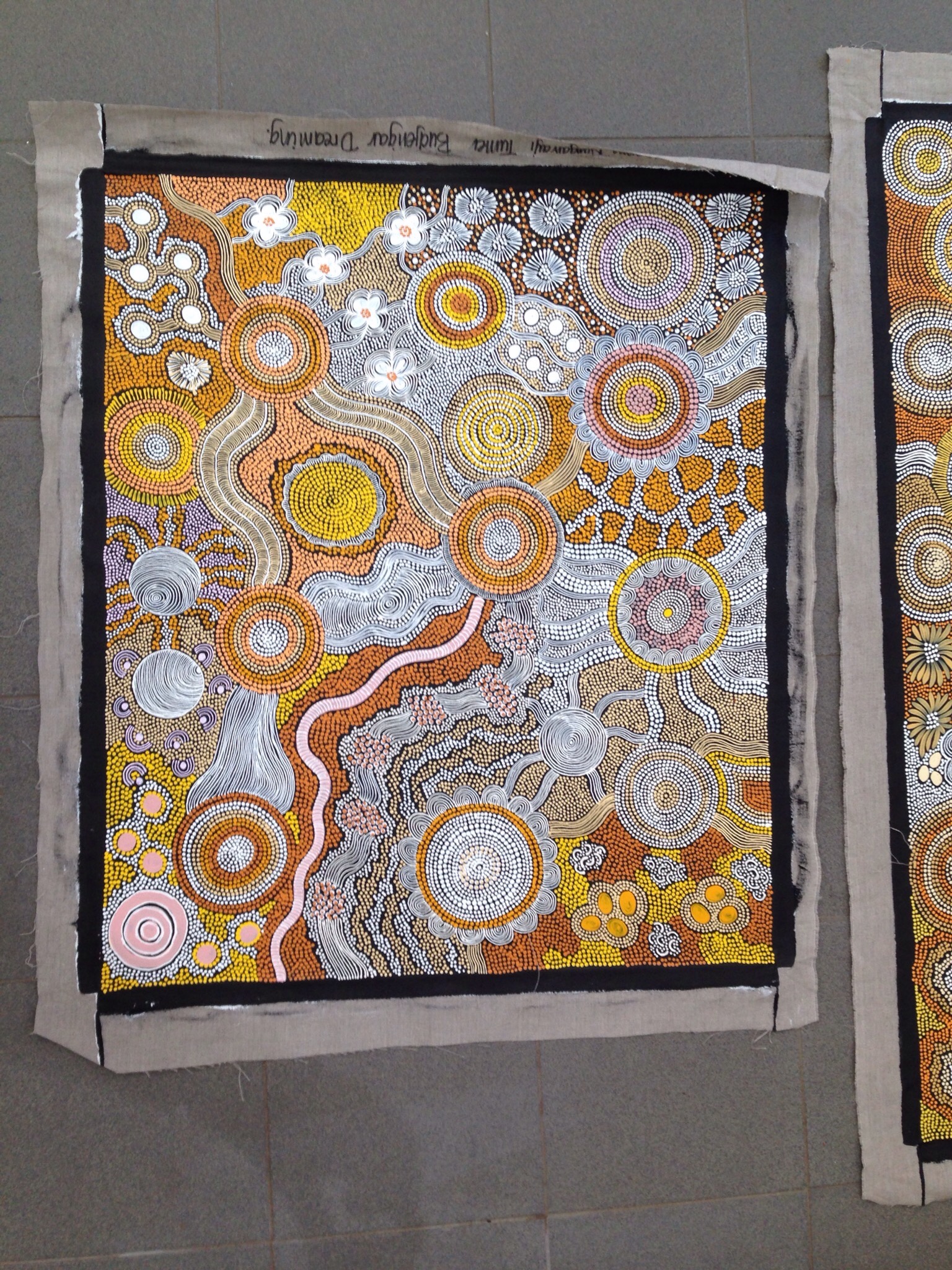
On this day we walked around the mall, finalized our car rental plans for the next day and then went to a wonderful Aboriginal art gallery which was marked by a focus on cooperation with the artists, so that they were fairly paid for their work. We spent a lot of time talking with the owners, Ric and Karl, about the art in their gallery, Yubu Napa, and how they approached the artists in a fair and respectful way and how many of the gallery owners in town would be dismissive of the artists or pay them a pittance or worse, in alcohol. We fell in love with a beautiful piece of art, titled “Budgerigar Dreaming” and bought it for our home. It represents how the indigenous people would search for waterholes in the land and the walkways between them. As it turned out, the artist is the one currently in residence at the Uluru gallery, and we were able to meet her later there, which was very cool. 

The history of Aboriginal peoples begins, over 30-40,000 years ago, though for the purposes of the current situation it starts with the entry of the British population. The nutshell version of this is that the Aboriginal people had been doing quite well for themselves until the arrival of the British in the late 18th century, who brought diseases that decimated the native population and regarded the Aboriginal people as less thaqan human. The British also began to annex land for themselves as they did not feel the Aborigines had any concept of land ownership and then drove the Aboriginal people off their prior territories. The Aborigines were nomadic to a degree but largely stayed within their territorial area – while they did not have a specific home as we think of one now, they did have a large area which was their “home base”. British people brought grazing animals to the land, which reduced resources for native animals and plants the Aborigines depended upon, and provided easy hunting for the Aboriginal people which enraged the settlers. 
Later on, many mixed race aboriginal children were forcibly taken from their families to be sent to educational “camps” and instructed in the ways of the civilized Europeans. Needless to say, these were not pleasant places to be and stories of abuse are rampant. The practice ended only as recently as 1969. Aboriginal people didn’t have the full right to vote until 1964! Does any of this sound familiar? It seems to me nearly identical to what happened in America with the Native American population there, at least when looked at with broad strokes. 

Aboriginal populations today have high rates of poverty, poor health, and a shorter life expectancy than non-Aboriginal populations. Only 59% complete education to a 12th grade level. Substance and alcohol abuse are rampant in the communities. More darkly, domestic violence, child abuse, and sexual abuse including sexual abuse of children is rampant, and felt to be under reported even so. Even worse, some of the articles I’ve read suggest that this is now so entrenched in culture that it is felt to be normal and not seen as bad by many communities. A few articles I’ve read have said that even prior to colonization, violence and abuse were part of Aboriginal culture, and that it has only magnified with the poverty and alcoholism of the current community. 

Our tour guide at Uluru, James, who is of the Anangu, said that the school in the area only went to 6th grade – for further education they would have to move to Adelaide, and even then the school located there was of poor quality. Many aborigines today do not possess a high degree of literacy, which prevents them from having jobs. Moreover, there are cultural issues which don’t mesh with the western world’s expectations – James told us of an example where he put in for his two weeks leave to go home for a ceremony. Six weeks later, the ceremony was still ongoing and had not completed, however he had to basically tell his grandfather that he had to leave else he would lose his job. When he came back, there had unsurprisingly been a lot of tension with his bosses – where had he been for those four extra weeks? Amazingly, he didn’t get fired – I can’t imagine any job where you could just not show up for four weeks! The government has now authorized “ceremony leave” for five days at a time, which doesn’t seem enough for man Aboriginals. To me, this anecdote demonstrated the significant cultural gaps that exist. Still…it’s a largely western world that we live in now and there has to be some way to find a balance between the two. 
I’m aware that all of this is from a outsiders perspective, and that I’m sure I’m barely scratching the surface of anything. The overall impression I have of Aboriginal culture is that of an impenetrable society, and yet it’s deeply sad to see people living as many of them currently are. I’m not invoking the idea of the noble savage or to suggest that Aboriginal peoples lived in a pristine world in harmony with nature and themselves before the white man arrived, but only to say that the current situation is troubling. 
-s
 

In which we find ourselves alone in a rainforest

The last thing we wanted to see in this area was the Daintree Rainforest. Listed as an Unesco world heritage site, it is the largest rainforest on the Australian continent and contains an impressive number of species in it. 
There are many tours to take to the rainforest, and while I considered these for the guided aspect, they are not cheap. Given that we’d spent a lot of cash on the Reef tour and that we could go through the rainforest on our own, we chose to drive up and see ourselves about the place. 
The rainforest is only accessible from the south by driving your car onto a ferry which ports you across the river. Immediately after you cross the river you are in dense rainforest. You can’t see further than maybe 10 feet into the forest in any direction, other than the road ahead. There’s signs all over like this: 


Which mean, “Cassowary crossing”! I’ve been taking pictures of fun signs I’ve seen here in Australia and will compile them all at some point. 
We took the first turn off and found an area with a guided Boardwalk tour and also a 2.7 km hike through the rainforest which the sign said was for “Adventurous people only.” Well, are we adventurous or not? Off we went into the muddy red trail. About 5 minutes into the trail, you are in deep rainforest. You hear loud cackling birds, small cheeps, song birds (one sounded like “pomp and circumstance”) and occasional scurry sounds. The forest floor is cool and shaded, with light just peeking through the upper canopy layer. There are no people around at all, and there were times I was pretty scared, especially when there would be a loud kee-rak cry just off to my left. The eerie thing is, because the animals all live in the canopy, you don’t see any of them, just hear them. 


We drove a bit further down and went onto a couple more boardwalk trails which are well trampled by people. My favorite was a strangler fig, a tree which grows when a bird poops in the canopy and its seeds push roots all the way down to the floor to take root and then the seeds put out vines to encircle the tree. Eventually, the original tree rots inside as the fig kills it, leaving only the sculptural cage of the fig. So beautiful.


Near the end, it seemed that we weren’t going to see a cassowary in the wild after all, despite all the road signs, but then just off to the side there one was! We pulled over to get a picture but didn’t want to get too close. There was a small cafe there and the owner and her friend came out to see, asking each other, “Is that Nelson?” “No, it’s a female.” I love that they have names for the cassowaries in the park. Lulubelle talks a bit about cassowaries in her post

That night we watched Michael Phelps win his 20th gold and the stunning USA gymnastics team, before turning in for the night and for an early morning flight to Alice Springs and our camping trip to Uluru. 

-s

In which we swim with the fishes, and live to tell the tale

As I’d said previously, the main reason I came to this part of the country was to see the Great Barrier Reef! Once we got here, it turns out that Eric doesn’t like boats and thus didn’t want to go along! He instead took a side trip to Mossman Gorge, which he talks about in his post here. 
The Great Barrier Reef is the largest coral system in the world, and is about the size of the country of Japan! It is constantly under threat from pollution, tourists (like me), overfishing and most importantly, climate change. This year there were headlines all over the world about another possible mass bleaching event due to warmer than usual ocean temperatures. Coral bleaching is when the coral, due to stress, expel the algae that lives within it and with which it has a symbiotic relationship. While bleached coral isn’t dead, it’s more vulnerable and may not recover. I was worried about heading out to the reef only to see massive fields of bone-white coral, but that thankfully wasn’t the case.
The kids and I boarded a boat and headed out. The wind speed was 20 knots or so which means nothing to me other than that the ride out felt like a roller coaster! None of us got seasick, thankfully. On the way out, we saw 2 humpback whales breaching off to the right! So amazing to think of these large creatures making their way in the ocean so close to us. It’s one of the things I love about snorkeling so much – on the surface all you see is brownish water, and the minute you put your head underneath an entire hidden world opens up to you. I’ve gone scuba diving once and loved that too, but you have to be 12 for that so it wasn’t an option this time.
We snorkeled at 3 different sites on Opal Reef. The boy did fine but the girl had some difficulty with her gear for the first dive, and kept stopping and yelling to me, “I’m having a very salty experience!!” She ended her snorkel session a bit early, which I have to tell you was fine by me since it meant I could really enjoy the rest of it. Parents, you know how it is – you can’t always fully pay attention to whatever it is you’re there to see if half your attention is on making sure your kid is okay and not, oh, drowning in the Pacific Ocean. It was beautiful underwater. There were bright parrotfish, sunfish and some little iridescent blue fish that swum about in waves. I saw giant clams, clownfish, and sea cucumbers! 
The coral, well, it wasn’t all that brightly colored to tell you the truth. Not bleached, but not brilliant. One of the tour operators gave a talk on this later – as it turns out, the bright colors we’re used to seeing in pictures are obtained by using a strobe flash and can’t be seen by the naked eye, especially on a cloudy day. If you can see bright colors underwater, that is bad and a sign of stressed coral. All the coral we saw were largely healthy shades of pale orange, pink, green and brown. I’ve read some reviews of other snorkel sites that say the coral is very bleached, and I wonder if it’s because they wrongly think, as I did, that we should be seeing luminous colors underwater. 
The second dive site was also pretty. I gave my underwater camera to the girl so she’d be more into it given her tough time the first dive… And then all of a sudden I looked down and saw one of the batteries fall out and sink to the bottom of the ocean. The camera flooded with water as did the SD card, and all the pictures I took on my first dive were lost. Sigh. I began to be frustrated by this, but then realized that I could either focus on the frustration of the loss of the camera or let it go and enjoy myself, and I had to choose the latter. Which means, dear readers, no pictures from this outing! 
By the third dive, the girl had gotten the hang of things and the sun came out and we could really see more colors of the coral! I had really wanted to see a reef shark or a turtle, but none were to be found this day. I stayed in the water as long as I possibly could, to just feel like a fish for one day and see them darting through the coral. We rode home, briny, happy and tired. 

-s

In which we finally get to warm weather and are captured by the Australian Authorities (in a way) 

We had a travel day from Sydney to Cairns, our first domestic flight of the trip! The most salient feature for me was that not a single person checked my ID. Anywhere. We arrived in Cairns and immediately felt an unfamiliar sensation…warmth. After 10 days of drizzle and cold this was a welcome change. We went to find some lunch, when the boy said his stomach wasn’t feeling well. We all knew by now where this was heading, except for Eric who said “I think your stomach doesn’t feel good because you need to eat more.” I asked, “have we learned nothing from our experience last week?!” And the boy ate nothing, which turned out to be a wise decision shortly after this. 
My main interest in going to Cairns was to be able to snorkel the Great Barrier Reef. However, whenever I told people I had planned to go to Cairns, the universal reaction was a groan of disgust. An Aussie friend of ours told us that we should at least go to the Daintree rainforest if we were going to go there. I did a little searching and found that there’s a town called Port Douglas up the coast from which one can do rainforest and reef tours, and booked there instead. Thank God. We pulled into Cairns just for a bite to eat and immediately hated it. It had all the charm of the Jersey Shore, and I don’t mean the nice part of the Shore. No one was friendly, the buildings were ugly, and you know how you can just get a feel from a place? Cairns did not have a good one. 
We got out as quickly as we could and drove to Port Douglas, with a slight pullover for the boy to throw up, after which he was much improved and immediately starving. Weird bug. Our hotel in Port Douglas is an incredibly nice 3 bedroom suite overlooking 4 small pools and with a hot tub on the balcony! Sweet! Port Douglas, as it turns out, is a tony little resort town where we fit in juuuust fine.

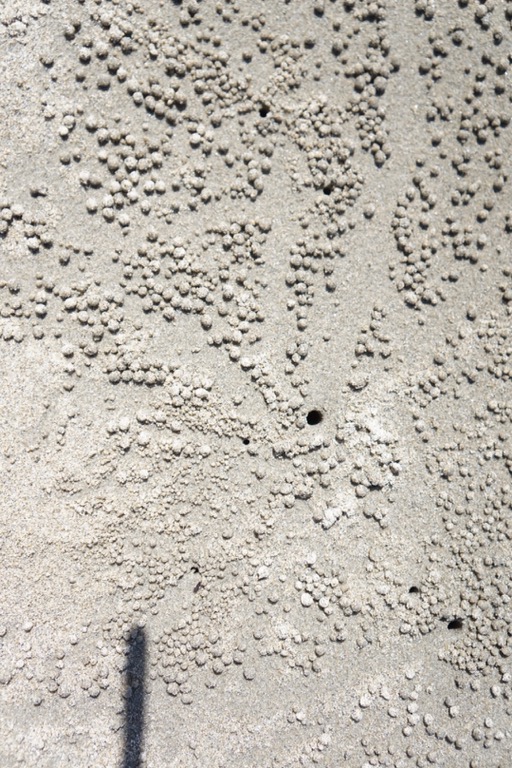
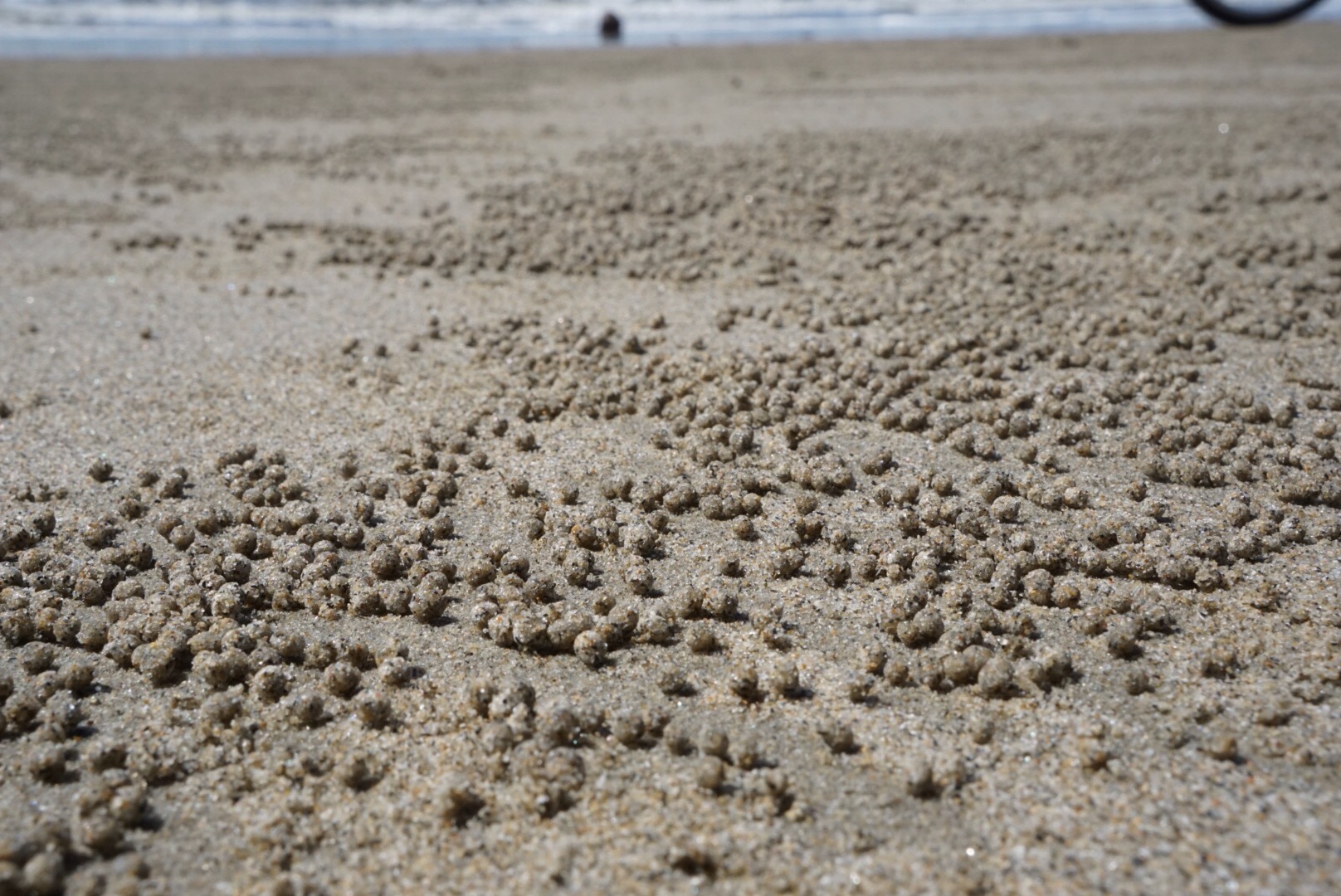
  The next day we took a day off from ‘traveling’  and just went to the beach, where we saw all these cool patterns made with little sand spheres! I later learned that these are made by creatures called sand bubbler crabs. I thought they made the little balls by digging their holes and then spitting out the sand, but it turns out this is how they eat! During low tide, they emerge from their burrows and sieve the sand for meiofauna which they eat, then expel the unwanted sand in neat little balls. As they do this radially from their burrow hole, it forms incredible patterns in the sand. They’re efficient little critters and can cover the entire beach in a few hours of low tide. 


We’ve been spending our evenings watching the Olympics, which is another experience in Australia! Given that the focus is on Australian athletes we’re seeing all sorts of fun events that are not featured at all in the US. Our favorite has becomes women’s rugby sevens! I have NO IDEA what is happening during the game, but there is SO much action on the field it is fun to watch. Also, those women are tough as shit. Especially when you compare them to the lame men’s soccer players who seem to whine and cry when they stub their toe every five minutes, it’s impressive. We’ve also watched a fair amount of fencing, horse jumping, trap shooting, and water polo! 

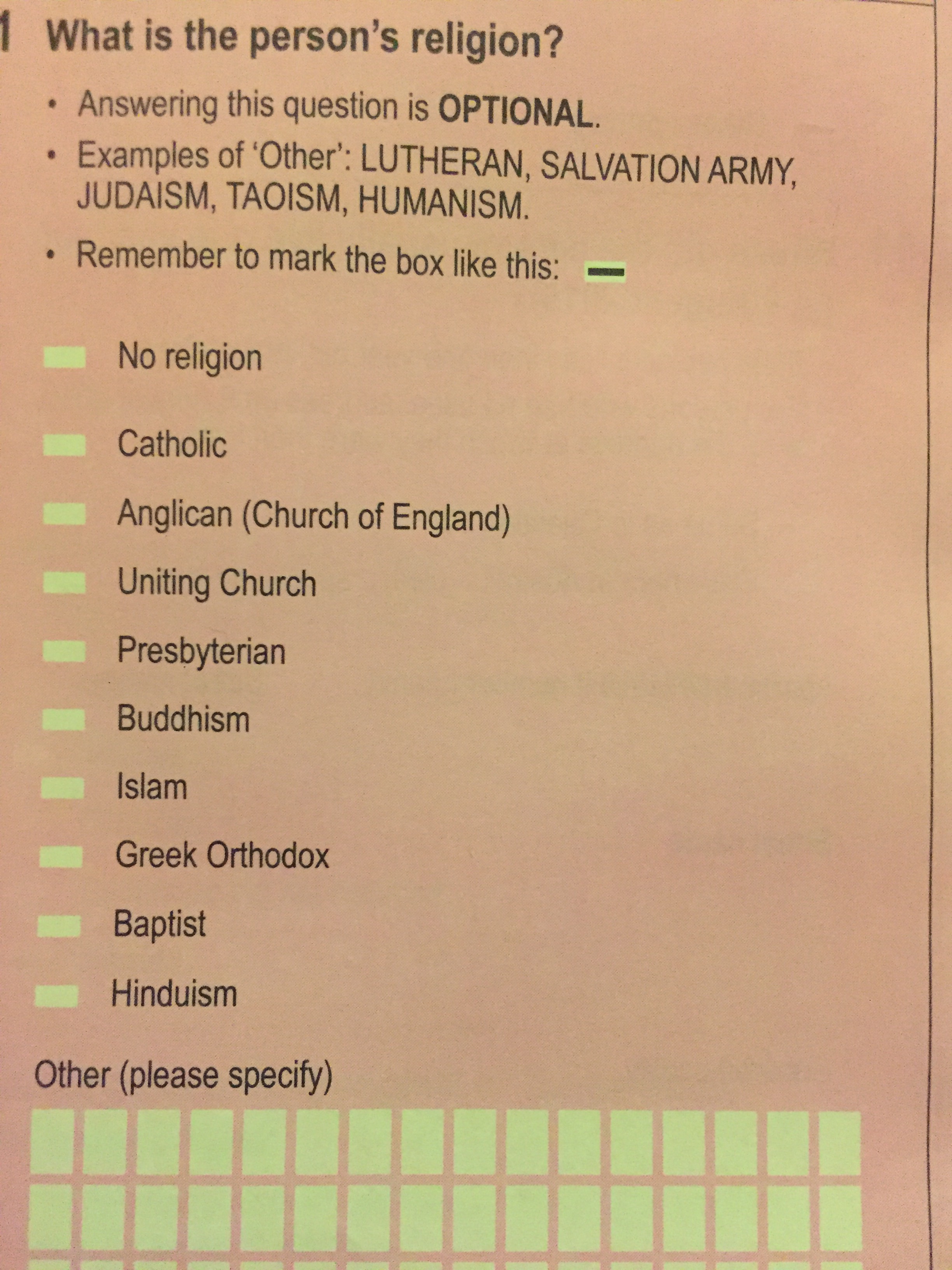
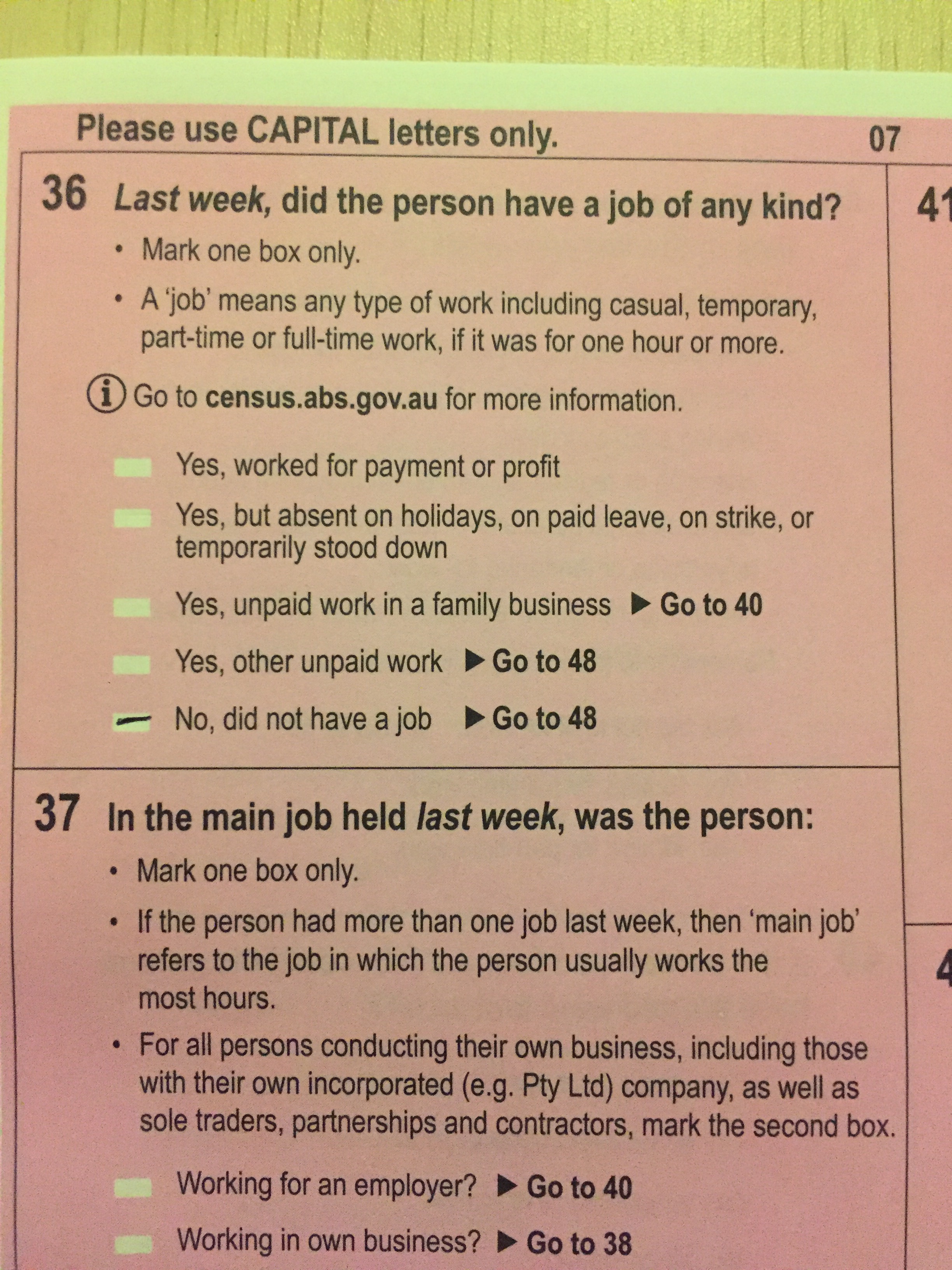
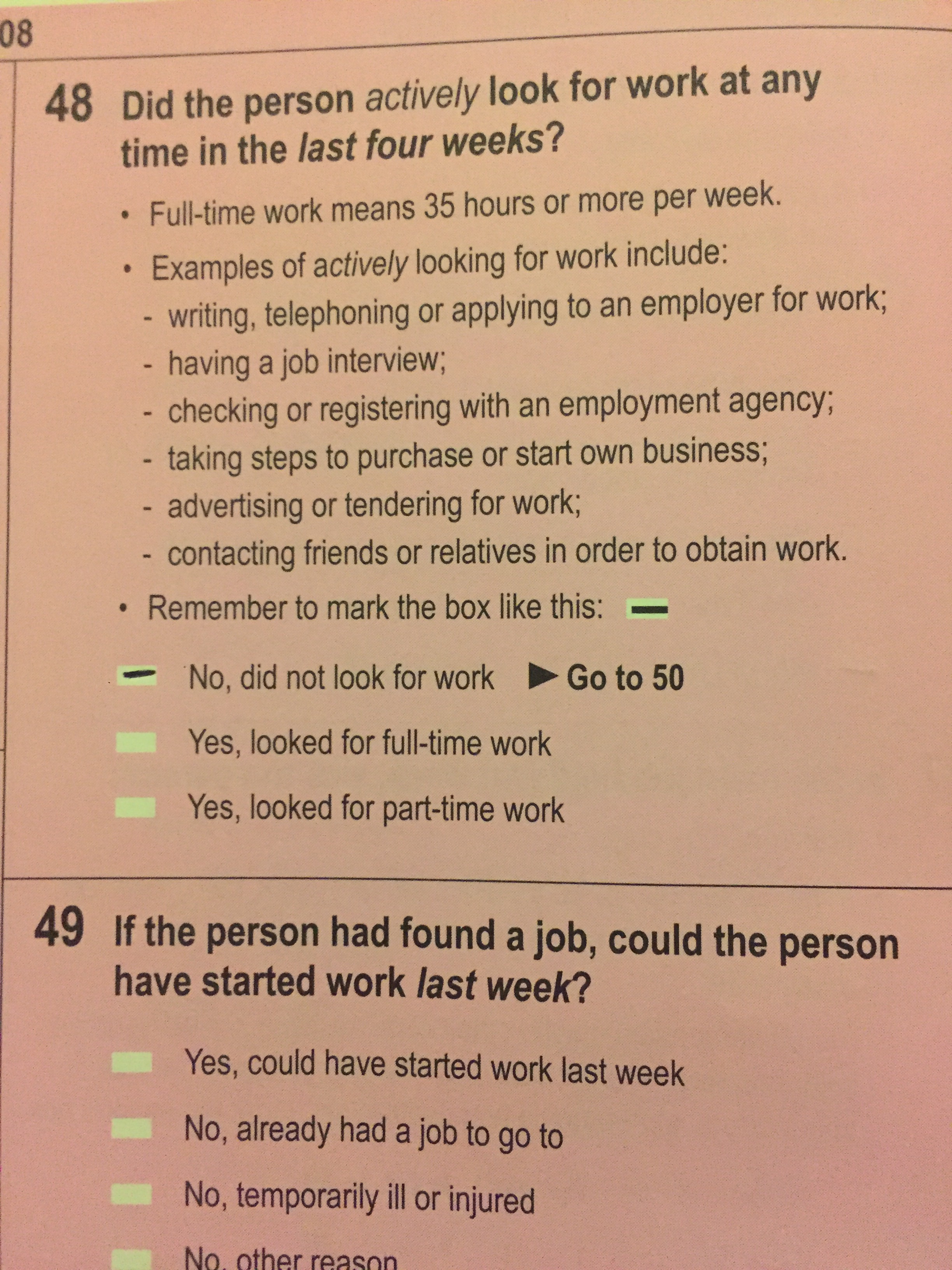
We also happen to be here during the Australian census time, and apparently even international tourists are supposed to answer! Here’s some of my favorite questions: 


So many white ethnicities! Eric answered “German” and “Czech.” I like that there’s just “Australian”. We don’t have that option in the States, now do we? I also liked how Salvation Army is a common enough religion to be on the main list. 

And I’ll leave you with my two favorite questions.


No comment required. 🙂

-S